
Things to note during the installation of bridge cranes
During the installation of bridge cranes, operating specifications and safety requirements must be strictly followed to ensure the normal operation of the equipment and safe operation. The following are the main things to note during the installation of bridge cranes:
1. Preparation before installation
Site inspection: Confirm that the conditions of the installation site meet the requirements, ensure that the track installation surface is flat and clean, and check whether there are obstacles that affect the installation and operation of the crane.
Equipment inspection: Before installation, all parts of the crane should be inspected to ensure that the parts are complete, the size and specifications meet the design requirements, and there are no deformation, damage and other problems.
Installation tool preparation: Ensure that lifting equipment (such as cranes, wire ropes, etc.), measuring tools (such as levels, tape measures, etc.), welding equipment, bolts and other installation tools and consumables are complete.
Safety protection measures: Develop detailed safety operating procedures, provide necessary safety protection equipment, such as safety helmets, safety ropes, etc., and ensure that on-site operators understand and comply with safety regulations.
2. Track installation
Track foundation preparation: Ensure that the track foundation is stable, the embedded parts of the track must meet the design requirements, and anti-corrosion and waterproofing treatments are done well.
Track installation accuracy requirements: When installing the track, ensure that the parallelism, horizontality and straightness of the track meet the design requirements. Common standards include:
- The track spacing error should be controlled within ±2 mm.
- The horizontality deviation of the track should be less than 1/1000.
- The track joints should be smooth to ensure the smooth operation of the trolley.
- Fix the track: Fix the track with bolts or welding, and add stoppers to prevent the bridge crane from derailing.
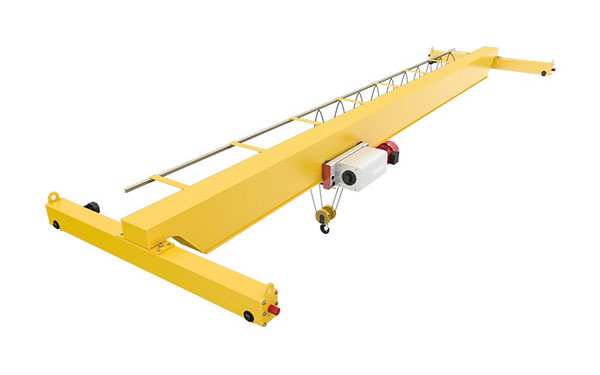
3. Installation of bridge and end beam
Butt joint of bridge and end beam: Align the bridge and end beam to ensure that the connection is tight and seamless. The bolts should be tightened in place and anti-loosening washers or nuts should be used.
Horizontal and vertical calibration: During installation, the horizontal and vertical accuracy of the bridge must be ensured to avoid unstable operation of the crane or side tension due to installation errors.
4. Installation of lifting mechanism
Installation of main lifting mechanism and trolley: Fix the main lifting mechanism and trolley on the bridge according to the design drawings to ensure that the trolley travel mechanism can slide smoothly on the track.
Wire rope installation: Wrap the wire rope correctly on the drum as required, and ensure that it is evenly wound to avoid problems such as wrong winding and knotting of the wire rope.
5. Electrical equipment installation
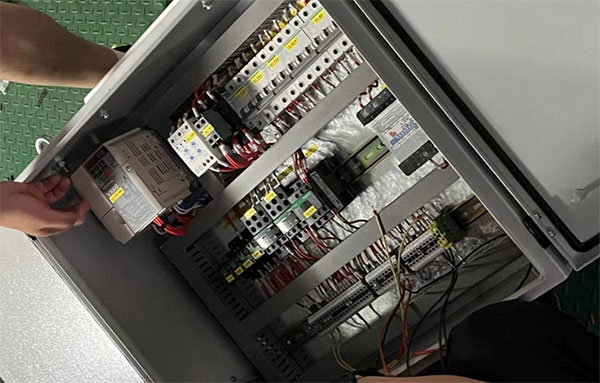
Cable wiring: Install the cable according to the design requirements, ensure that the cable wiring is neat and compact, and take protective measures for the cable to prevent wear or other mechanical damage.
Electrical control system: Ensure that electrical equipment such as electric control cabinets, switches, sensors, inverters, etc. are correctly installed according to the drawings and are reliably grounded.
Limit switch installation: Install the limit switch of the crane according to the travel requirements to ensure that the crane automatically stops when it reaches the limit position to prevent accidental collision.