
Designing overhead cranes for hazardous and extreme environments
Key Design Features of Overhead Cranes for Hazardous, Corrosive and Extreme Environments: Ensuring Safety and Reliability
Overhead cranes are critical to many industries, especially those working in hazardous and extreme environments. These industries, such as oil and gas, mining, and chemicals, require specialized crane designs to handle unstable conditions such as explosive gases, corrosive substances, and extreme temperatures. This article will explore the unique design features of cranes built to withstand such environments and showcase real case studies from these industries.
The purpose of this blog is to highlight how overhead cranes can be designed to ensure their safety and reliability in hazardous environments, ensuring that operations continue smoothly even under the harshest conditions.
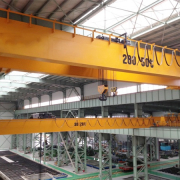
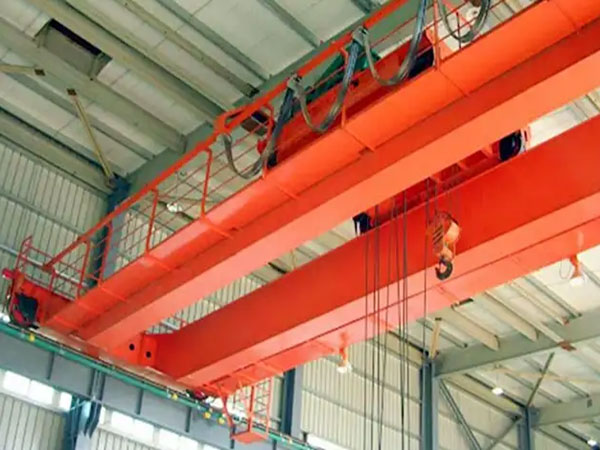
Explosion Proof Double Girder Overhead Cranes for Hazardous Environments
Hazardous and Extreme Environments
Explosive Environments
In industries such as oil and gas, there is always a risk of explosive gases and vapors in the air. If not properly managed, these hazardous conditions can cause fires or explosions. Therefore, overhead cranes used in these environments need to be designed to operate safely without generating sparks or heat that could ignite hazardous materials.
- Common Examples: Offshore Oil Rigs, Refineries, Gas Plants.
- Hazard Factors: Flammable Gases, Vapors, Dust Particles.
Corrosive Environments
Corrosion is a significant concern when cranes are used in environments where salt water, chemicals, or other corrosive agents are present. Over time, exposure to these elements can weaken metal components, leading to expensive repairs and downtime. Cranes in such environments must be manufactured with corrosion-resistant materials and coatings to prevent rust and deterioration.
- Common Examples: Chemical Plants, Coastal Areas, Marine Operations.
- Hazard Factors: Salt Water, Acids, Industrial Chemicals.
Extreme Temperature Conditions
Overhead cranes must maintain their strength and functionality whether in extremely hot or cold conditions. Hot environments, such as steel mills or foundries, can cause materials to lose strength and lead to failure if the crane is not designed to withstand high temperatures. Similarly, in cold environments, parts can become brittle, causing equipment failure.
- Common examples: steel mills, arctic or high altitude areas, cold storage warehouses.
- Hazard factors: extreme heat, extreme cold weather, temperature fluctuations.
Key design features for hazardous and extreme environments
Explosion-proof design
For environments where explosive gases, fumes or dusts are present, cranes must be equipped with explosion-proof components to ensure that the air cannot be ignited by sparks or electrical faults. These cranes are often designed with sealed electrical enclosures, fire-proof wiring and other safety features to control any potential explosions.
Key Features:
- ATEX and IECEx certifications for explosion-proof equipment.
- Fire-proof electrical enclosures prevent sparks.
- Spark-resistant materials and components.
Corrosion resistance
Cranes designed for corrosive environments are designed with materials that resist rust and damage from chemicals, salt water and other corrosive substances. Stainless steel, galvanized coatings and specialized paints are often used to protect the crane structure and extend its service life.
Key Materials:
- Stainless steel and galvanized coatings provide long-lasting protection.
- Special anti-corrosion paints and coatings for enhanced durability.
- Regular maintenance and inspections to prevent corrosion accumulation.
High-Temperature Resistance
Crane systems designed for extreme temperatures must use materials and coatings that prevent structural degradation. High-temperature cranes often employ heat-resistant coatings and specialized alloys to ensure the crane can operate safely in high-temperature environments. Conversely, cranes used in cold environments require lubricants and materials that will not freeze or crack at low temperatures.
High-Temperature Cranes:
- Heat-resistant coatings and alloys for high temperatures.
- Insulation and cooling systems protect critical components.
Low-Temperature Cranes:
- Low-Temperature Lubricants that Remain Fluid in Freezing Conditions.
- Special Materials that Do Not Become Brittle in Sub-Zero Temperatures.
Safety Considerations for Cranes in Hazardous Environments
Safety Standards and Certifications
To ensure that overhead cranes can operate safely in hazardous environments, they must meet stringent safety standards and certifications. These standards include global standards such as ISO, ASME and ATEX, which set requirements for cranes used in explosive, corrosive and extreme temperature conditions. Regular inspections and certifications are mandatory to ensure that the crane remains safe and compliant throughout its lifecycle.
Major Standards:
- ISO 9001 for general safety.
- ATEX certification for explosive atmospheres.
- ASME B30.2 for overhead crane safety.
Safety Features
Safety is paramount in hazardous environments, and cranes are equipped with a variety of safety features to protect operators and prevent accidents. These features include overload protection to prevent lifting beyond the crane’s capabilities, emergency stop systems, and limit switches to ensure the crane operates within safe limits. In addition, fire extinguishing systems and remote operation controls are often integrated for added safety.
Major Safety Features:
- Overload protection to prevent dangerous lifting.
- Emergency stop system to allow for immediate response if problems arise.
- Limit switches ensure safe movement within defined limits.
- Fire suppression systems quickly resolve potential fires.
- Case Study: Cranes for the Oil & Gas, Mining and Chemical Industries.
Oil & Gas Industry
In the oil and gas industry, cranes are used in environments where explosive gases and liquids are present. For example, offshore oil rigs rely on specially designed cranes to protect against sparks and electrical faults that could ignite volatile gases. These cranes are often required to move large equipment, such as drilling pipes and tanks, and must be able to withstand harsh weather conditions and corrosive salt water.
- Example: Offshore oil rig cranes lift heavy drilling equipment.
- Design Features: Explosion-proof electrical systems, corrosion-resistant materials, weather-resistant coatings.
Mining Industry
The mining industry requires cranes to operate in dusty, high-humidity environments, often underground or in remote areas. In these environments, cranes must be designed to lift heavy materials such as ores, tools and machinery, while also protecting against corrosion and maintaining reliable performance in harsh conditions. Overhead cranes used in mining operations must be able to withstand dust, moisture and chemicals such as sulfur and acid.
- Example: Overhead cranes in underground mines lift mining tools.
- Design features: Dust-proof, corrosion-resistant materials, enhanced load capacity.
Chemical industry
Crane used in the chemical industry must be explosion-proof and resistant to corrosive chemicals such as acids, bases and solvents. These cranes are often used to move large chemical containers or equipment that can be dangerous if not handled properly. The crane is designed to ensure that it does not trigger any chemical reactions or ignite hazardous materials.
- Example: Cranes used to move hazardous chemicals in chemical processing plants.
- Design features: Explosion-proof components, corrosion-resistant coatings, safety features to prevent chemical leaks.
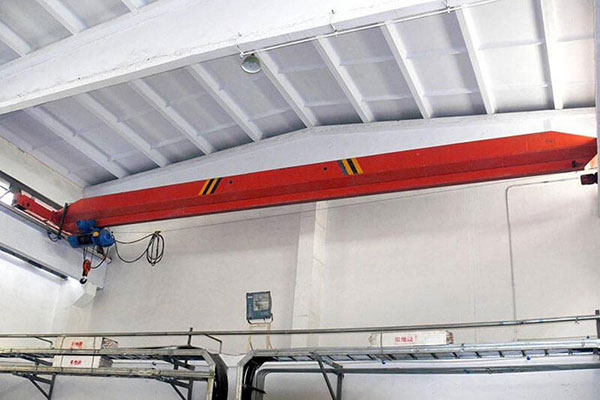
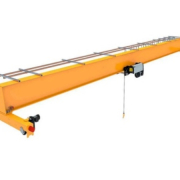
Explosion-proof bridge crane single beam design
Advantages of specialized overhead cranes for hazardous and extreme environments
Improve security
By integrating advanced safety features and complying with strict regulations, overhead cranes in hazardous environments can significantly reduce the risk of accidents and injuries. These cranes are designed to operate safely in even the most hazardous conditions, keeping workers safe and preventing equipment damage.
Main advantages:
- Adhere to safety standards for worker protection.
- Reduce the risk of accidents through explosion-proof and anti-corrosion design.
- Enhance fire protection and emergency response systems.
Improve efficiency and reliability
Special purpose cranes are designed to work in challenging environments without frequent breakdowns. Their rugged design ensures they can handle heavy loads and extreme conditions without interruption, which helps keep operations running smoothly and efficiently.
Main advantages:
- Increased uptime and reduced downtime due to reliable operation.
- Improve load handling and operational efficiency.
- Long-lasting design that supports high-frequency boosting.
Long service life and low maintenance costs
Overhead cranes built for hazardous environments are more resistant to wear and tear through the use of durable materials and coatings. This reduces maintenance requirements, extends service life, and lowers a company’s overall operating costs.
Main advantages:
- Use corrosion-resistant materials to extend the service life of the crane.
- Reduces the need for frequent repairs and replacements.
- Over time, total cost of ownership decreases and ROI increases.
- Future trends of overhead cranes for hazardous environments
Innovative materials and coatings
As technology advances, new materials and coatings are being developed to improve crane performance and durability in hazardous environments. These innovations are designed to provide better protection against corrosion, heat and wear, making cranes more reliable and durable.
Notable innovations:
- Next generation anti-corrosion materials.
- High-temperature alloys suitable for use in extremely hot environments.
- Lightweight material that maintains strength under harsh conditions.
Automation and remote monitoring
Automation is changing the way cranes operate in hazardous environments. Remote monitoring enables operators to track crane performance from a safe distance, enabling predictive maintenance and real-time troubleshooting. This reduces the need for operators to be directly involved in hazardous situations.
Future features:
- Remotely monitor crane status and performance.
- Predictive maintenance using artificial intelligence and machine learning.
- Increased use of automated cranes for safer, more efficient operations.
Sustainability
As the industry becomes more focused on sustainability, crane manufacturers are increasingly looking for ways to reduce their environmental impact. This includes using environmentally friendly materials, designing energy-efficient cranes and minimizing waste throughout the crane’s life cycle.
Sustainable practices:
- Eco-friendly coatings and materials.
- Energy efficient crane motors and control systems.
- Recycle and reuse crane manufacturing materials.
In conclusion
Designed for hazardous and extreme environments, overhead cranes play a vital role in industries where safety, efficiency and durability are critical. By incorporating explosion-proof designs, corrosion-resistant materials and high-temperature-resistant components, these cranes can handle the harshest working conditions while ensuring worker safety. As technology continues to evolve, we can expect more innovative features and designs to improve crane performance and reliability in hazardous environments.