
Portable Gantry Crane Classification and Expert Buyer’s Guide
Portable gantry cranes are versatile lifting solutions designed to be easily moved and installed in various locations. Unlike permanent installations, these cranes can be disassembled, relocated and adjusted to meet different needs. They are often used to lift and move equipment, materials or products within workshops, warehouses and construction sites. Their design emphasizes mobility, easy assembly and adaptability to different lifting tasks.
Portable gantry cranes play a vital role in various industries due to their flexibility and practicality. In manufacturing, they help to move heavy machinery and parts with precision. In warehouses, they are used to transport goods and materials quickly and efficiently. They can be easily relocated and reconfigured as project requirements change, which is a great benefit on construction sites. In automotive repair and assembly, these cranes support the lifting and positioning of vehicle components. Their widespread use highlights their value in improving operational efficiency and safety in various environments.
The Basics of Portable Gantry Cranes
What is a Portable Gantry Crane?
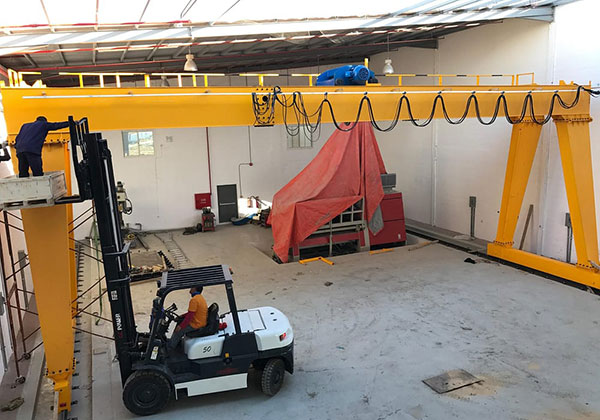
A portable gantry crane is a type of lifting equipment designed to provide a flexible, mobile solution for handling heavy objects. Unlike fixed gantry cranes, portable gantry cranes can be easily assembled, disassembled and relocated. They usually consist of a horizontal beam supported by two or more vertical legs that are equipped with wheels or castors for mobility. The cranes are designed so that they can be used in a variety of environments, from workshops and warehouses to construction sites and maintenance areas.
Design and mobility features
Design
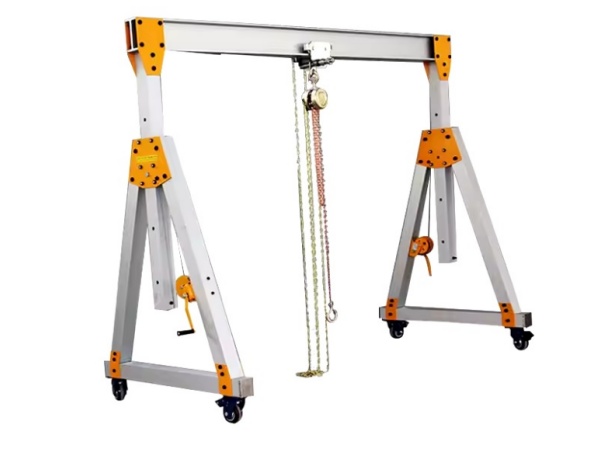
The design of portable gantry cranes emphasizes ease of use and adaptability. The main components include:
Horizontal beam: The horizontal beam supports the lifting mechanism and can be made of materials such as steel or aluminum. It is designed to bear the weight of the load being lifted.
Vertical legs: Provide support and stability. The height and span of the legs can usually be adjusted to suit different lifting needs.
Wheels or castors: These wheels allow the crane to be easily moved on the ground or surface. Depending on the model, the wheels may be fixed or swivel to enhance maneuverability.
Lifting mechanism: This can be a manual chain hoist or an electric hoist, depending on the configuration of the crane and the requirements of the user.
Mobility
The maneuverability of portable gantry cranes is one of their main advantages. Their design allows for:
Easy repositioning: The crane can be moved from one location to another, making it ideal for environments where tasks or loads vary.
Simple assembly and disassembly: Portable gantry cranes are designed to be quickly assembled and disassembled without the need for extensive tools or technical expertise.
Adjustability: Many models feature adjustable heights and spans, allowing them to be customized for different lifting tasks and work environments.
Common Applications and Use Cases
Workshop and Manufacturing Environments
In workshops and manufacturing plants, portable gantry cranes are used to lift and position heavy machinery, components, and materials. They simplify tasks such as assembly, maintenance, and repair, increasing efficiency and reducing the risks of manual handling.
Warehouses
In warehouses, portable gantry cranes help move and stack goods, especially in areas where space is limited or overhead cranes cannot be installed. Their mobility allows them to be easily moved to different locations in the warehouse as needed.
Construction Sites
On construction sites, these cranes are useful for lifting and transporting construction materials, tools, and equipment. They are easy to move and reconfigure, supporting dynamic site operations and varying project requirements.
Maintenance and Repairs
For maintenance and repair tasks, portable gantry cranes offer a flexible solution for lifting and moving heavy equipment or machinery. Their adjustability and ease of use make them ideal for performing repairs in tight or awkward spaces.
Automotive and Aerospace
In the automotive and aerospace industries, portable gantry cranes are used to lift vehicle components, engines, and other heavy parts. They provide the flexibility needed for a variety of assembly and maintenance tasks, helping to simplify operations in these high-precision areas.
Overall, portable gantry cranes are versatile tools that improve productivity and safety in a variety of applications, providing practical solutions for lifting and handling tasks in different environments.
Main Classification Criteria for Portable Gantry Cranes
Hoist Types
The type of hoist is an important classification criterion for portable gantry cranes, affecting their efficiency, ease of use, and suitability for different lifting tasks. There are two main types of hoists used in portable gantry cranes: manual chain hoists and electric hoists.
Chain Hoists
Advantages and Limitations
Advantages:
Cost-effective: Manual chain hoists are generally cheaper than electric hoists, making them an affordable choice for many applications.
No power supply required: They can be operated manually, so they can be used in places where electricity is not available.
Simple: Their mechanical operation is simple, reducing the risk of electrical problems and simplifying maintenance.
Limitations:
Low efficiency: Manual chain hoists require manual labor to lift the load, which is labor-intensive and slow compared to electric hoists.
Limited load capacity: Typically, manual chain hoists are used for lighter loads. They may not be suitable for heavier lifting tasks that require higher capacity.
Physical strength required: The operator needs to manually pull the chain, which is physically demanding, especially for frequent or heavy lifting tasks.
Typical use cases
Small workshops and garages: Ideal for environments where occasional lifting is required and power may not be immediately available.
Maintenance and repair: Suitable for lifting smaller parts and tools, manual operation is suitable, and cost-effectiveness is a priority.
Low duty cycle applications: Suitable for tasks with less frequent lifting and less physical stress on the operator.
Electric Hoist
Efficiency and Load Capacity
Efficiency:
Efficient: Electric hoists greatly reduce the manpower required for lifting, making operations faster and more efficient. Electric hoists are powered by electricity, which increases lifting speed and overall performance.
Consistent performance: Electric hoists provide consistent lifting capacity without fatigue, ensuring reliable operation during long periods of use.
Load Capacity:
Greater Load Handling Capacity: Electric hoists generally have a higher load capacity than manual chain hoists. They are designed to handle heavier loads with ease, making them suitable for demanding applications.
Various Options: Electric hoists are available in a variety of capacities, allowing users to select the model that best suits their specific lifting requirements.
Power Considerations
Power Dependency: Electric hoists require a reliable power source to operate. Electric hoists are not suitable for use in locations where electricity is unavailable or unstable.
Power Requirements: Make sure the power source meets the specifications of the electric hoist to avoid operational issues. This includes voltage, current, and frequency considerations.
Safety and Maintenance: Regular inspections of power and electrical connections are essential to prevent electrical hazards and ensure safe operation. Additionally, in locations where electricity is unstable, a backup power source or generator may be required for uninterrupted use.
By understanding these classification criteria, buyers can make an informed decision based on their specific needs, balancing factors such as cost, efficiency, and power requirements to select the most appropriate portable gantry crane for their application.
Adjustability
Adjustability is an important feature of portable gantry cranes, affecting their flexibility and versatility in a variety of lifting applications. Portable gantry cranes are available in both adjustable and non-adjustable models, each offering different benefits depending on its design and intended use.
Adjustable Models
Height and Span Adjustment
Height Adjustment: Adjustable portable gantry cranes feature a mechanism that allows the user to modify the height of the crane beam. This is particularly useful for accommodating different lifting needs and work environments. For example, if tall machinery or overhead work requires a higher lifting capacity, the height adjustment feature can be used to increase the height of the crane.
Span Adjustment: Some adjustable gantry cranes also offer span adjustment, which enables the user to adjust the distance between the crane legs. This flexibility allows the crane to accommodate workspaces or equipment of varying widths, thus accommodating a variety of tasks and settings.
Adjustment Mechanisms
Dowel Pins: These cranes use removable pins to secure the beam at the desired height. The process involves lifting the beam to the desired position, aligning the beam with pre-drilled holes, and then inserting pins to lock it in place. This method is simple and is commonly used on many portable gantry cranes.
Rocker: Another adjustment mechanism is the rocker system, which involves a hand-cranked device to raise or lower the beam. Once the desired height is reached, the position is secured with a pin. This system allows for precise control of height adjustment and is often used on more complex models.
Hold-downs: Some models use hold-downs that allow height adjustment via a mechanical hold-down action. Height is adjusted by engaging the hold-down mechanism, which is then secured with a pin to maintain the selected height.
Non-Adjustable Models
Fixed Height and Span
Fixed Design: Non-adjustable portable gantry cranes have a fixed height and span that cannot be changed. This fixed design simplifies the construction of the crane, which can make it more cost-effective than adjustable models. These cranes are often used in environments where lifting height and width requirements are consistent and do not change frequently.
Cost Benefits and Use Cases
Cost Advantages: Non-adjustable portable gantry cranes are generally less expensive than their adjustable counterparts. Since there is no adjustment mechanism, the overall cost is lower, making these models an affordable option for many applications.
Use Cases: Non-adjustable cranes are ideal for environments where lifting requirements are standard and unchanging. They are often used for:
Small workshops: Consistent lifting heights and spans are sufficient for daily tasks.
Fixed production lines: Equipment and materials have predictable sizes and locations.
Basic Maintenance Tasks: Lifting needs are simple and do not require frequent adjustments.
By understanding the differences between adjustable and non-adjustable portable gantry cranes, buyers can choose the model that best suits their operational needs and budget. Adjustable models offer enhanced flexibility for a variety of tasks, while non-adjustable models provide a cost-effective solution for consistent lifting requirements.
Mobile Gantry Crane Materials
The materials a portable gantry crane is made of play an important role in determining its load-bearing capacity, durability, weight, and overall cost. The two main materials used are steel and aluminum, each of which offers unique advantages for different applications.
Steel Gantry Crane
Load-Bearing Capacity and Durability
Load-Bearing Capacity: Steel gantry cranes are known for their high load-bearing capacity. The inherent strength of steel allows these cranes to handle heavier loads, making them suitable for lifting considerable weights. They are often chosen for industrial applications where sturdiness and reliability are critical.
Durability: Steel is extremely durable and can withstand tremendous pressure and shock. This makes steel gantry cranes ideal for use in conditions that require frequent use and demanding conditions. The wear resistance of steel ensures a longer service life and less frequent replacement.
Ideal Applications
Heavy Manufacturing: Steel gantry cranes are often used in heavy manufacturing plants where they need to be used to lift large, heavy machinery or materials.
Construction Sites: They are ideal for construction sites where heavy building materials and equipment often need to be lifted.
Automotive Industry: In automotive manufacturing and repair plants, steel cranes are used to handle engine components and other heavy parts.
Aluminum Gantry Crane for Sale, Portable Gantry Crane for Sale
Aluminum Gantry Crane
Weight and Cost Efficiency
Weight: Aluminum gantry cranes are much lighter than steel gantry cranes. The reduced weight makes them easier to move, transport and install, increasing their versatility. The lighter design is particularly beneficial for applications that require frequent relocation or temporary setup.
Cost Effectiveness: Aluminum gantry cranes are generally more cost-effective than steel cranes, both in terms of material cost and overall weight. The lower cost of aluminum makes these cranes an economical choice for certain applications, especially where high load capacity is not a primary requirement.
Applicable Environments
Cleanrooms: Aluminum is often used in cleanroom environments due to its corrosion resistance and non-reactive properties. In cleanrooms where maintaining a contamination-free environment is critical, aluminum gantry cranes are the preferred choice to avoid the risk of corrosion and particle contamination.
Light Applications: They are ideal for environments where lifting needs are moderate and the crane will not be subjected to extreme stresses. Examples include small workshops, laboratories, and areas with limited space.
Temporary Installations: Aluminum cranes are lightweight and suitable for temporary installations or activities that are easy to assemble and disassemble.
By choosing the right material for a portable gantry crane, buyers can ensure that the crane meets their specific needs in terms of load capacity, durability, weight, and cost. Steel cranes offer strength and durability for heavy-duty tasks, while aluminum cranes offer a lighter, more economical solution for less demanding applications.
Crane Travel of a Portable Gantry Crane
The crane travel mechanism of a portable gantry crane has a significant impact on its usability and efficiency. Crane travel refers to how the crane moves along its designated path, whether by powered or manual means. Understanding the differences between powered and manual crane travel can help select the model that best suits your needs.
Electric Crane Travel
Motorized Movement and Its Benefits
Electric Travel: Electric crane travel involves the use of an electric motor to drive the crane along its path. This electric system automates movement, allowing the crane to traverse its tracks or rails with minimal manual operation. Electric travel systems are often integrated into the design of the crane to increase operating efficiency and ease of use.
Benefits:
Increased Efficiency: Electric cranes move faster and more steadily than manual systems. This is particularly beneficial in environments that require high productivity and quick repositioning of loads.
Reduce Labor: By automating movement, electric cranes reduce the amount of physical effort required from the operator. This minimizes the risk of fatigue and strain-related injuries, making operation more comfortable and safer.
Precise Control: Electric travel systems allow for precise control of crane movement, enabling accurate positioning and adjustments. This is useful for tasks that require fine adjustments or careful placement of loads.
Consistency: Motorized movement ensures consistent speed and performance, which can improve overall workflow and productivity in busy work environments.
Manual Travel of Cranes
Manual Travel and Considerations
Manual Travel: Manual crane travel requires the operator to manually push or pull the crane to move it along its path. This is achieved using wheels or casters that roll on the ground or on tracks. Manual travel systems do not rely on electricity, making them simpler and often more cost-effective.
Considerations:
Physical Exertion: Manual crane travel requires more physical effort from the operator, which can be tiring, especially when moving heavy loads or long distances. This is an important consideration for environments that require frequent relocations.
Lower initial cost: Manual systems are generally less expensive than electric systems because they are simpler in design and have no motorized parts. This can be an affordable option for smaller businesses or budget-conscious buyers.
Flexibility: Manual cranes offer greater flexibility in certain situations where precise control of the speed and direction of movement is required. Operators can quickly adjust based on immediate needs or space constraints.
Maintenance: Manual systems have fewer parts to maintain, which reduces the risk of mechanical failure associated with motors and electrical systems. However, physical wear and tear on wheels and casters still requires regular inspection and maintenance.
When choosing between electric and manual crane travel for portable gantry cranes, consider factors such as the desired efficiency level, the physical demands on the operator, and the overall budget. Electric crane travel increases efficiency and reduces labor, making it suitable for demanding applications, while manual crane travel provides a more economical and flexible solution for lighter, less frequent tasks.
Operation of Portable Gantry Cranes
The operation of portable gantry cranes can be divided into tracked and trackless systems. Each method has its own advantages and considerations that affect how the crane adapts to different working environments and applications.
Track-Based Operations
Advantages of Electric Models
Increased Stability: Track-based operation is when the crane moves along fixed rails or tracks. This provides greater stability and alignment during movement, which is particularly beneficial for electric models that rely on precise maneuvering.
Smooth Operation: Electric gantry cranes equipped with a track system achieve smooth and consistent movement. The tracks help guide the crane and reduce friction and wear on components, which improves reliability and efficiency of operation.
Increased Load Capacity: A stable track system can support heavier loads by evenly distributing weight on the track. This setup helps prevent excessive stress on crane components, which improves their lifespan and performance.
Reduced Maneuvering Effort: For electric models, the track system simplifies the moving process by driving automatically. This reduces the need for manual adjustments and allows for precise positioning of the load with minimal effort.
Maintenance and Space Requirements
Maintenance: Track systems require regular maintenance to ensure that the tracks remain aligned and free of debris. The tracks need to be inspected for wear and tear, and any obstructions or damage should be promptly addressed to prevent operational issues.
Space Requirements: Track-based systems require a dedicated space to install the tracks. This setup is less flexible because the crane is restricted to the path of the tracks. Proper planning is required to ensure that the tracks are installed in the most effective position to accomplish the intended task.
Trackless Operations
Flexibility and Common Uses
Flexibility: Trackless operations refer to gantry cranes that do not rely on fixed tracks or rails. Instead, these cranes are equipped with wheels or casters that allow them to move freely on a variety of surfaces. This flexibility provides a variety of advantages in different operating scenarios.
Ease of Installation: Trackless portable gantry cranes can be easily repositioned without the need for track installation. This makes them suitable for environments where the crane’s position needs to be changed frequently, such as temporary worksites or areas with dynamic setups.
Adaptability: These cranes can operate on a variety of surfaces and layouts, including uneven floors or irregularly shaped workspaces. Their mobility allows them to be used flexibly in different areas within a facility.
Common Uses: Trackless gantry cranes are commonly used in:
Workshops and Factories: Frequent repositioning and flexibility to cope with different tasks and workflows are required.
Construction Sites: The ability to move the crane to different locations is critical for all stages of construction.
Events and Temporary Installations: Suitable for settings where the crane needs to be easily moved between different locations or configurations.
Trackless operation offers great flexibility and adaptability, making it ideal for dynamic environments where fixed track installations are impractical. However, it is important to consider that trackless systems may require more frequent adjustments and maintenance to ensure smooth movement and optimal performance.
By understanding the operating characteristics of tracked and trackless gantry cranes, buyers can select the system that best suits their specific needs, balancing factors such as stability, flexibility, maintenance requirements, and space constraints.
Practical Tips for Buyers
When considering purchasing a portable gantry crane, it is important to carefully evaluate a variety of factors to ensure that the crane meets your specific needs and provides long-term value. Here are some practical tips to guide you through the purchasing process:
Evaluate Your Needs
Evaluate Load Requirements
Determine Load Capacity: Determine the maximum weight you need to lift and make sure the portable gantry crane you choose can easily handle this load. Overloading a crane can lead to safety issues and equipment damage.
Consider Load Type: Consider the type of loads you will be handling. Are they heavy and bulky, or light and precise? The crane should be designed to accommodate the type of material or equipment you plan to lift.
Space and Mobility Considerations
Measure the Workspace: Evaluate the dimensions of your workspace to ensure the crane will fit within the available area. Consider the height and span of the crane, especially if you need an adjustable model to accommodate different space constraints.
Evaluate mobility needs: Decide whether you need a tracked or trackless crane, depending on how often you need to move the crane and the types of surfaces the crane will operate on. Trackless cranes offer greater flexibility but may require more maintenance and adjustments.
Cost vs. Features
Budget Considerations
Set a budget: Determine your budget range and look for a portable gantry crane that offers the best value within that range. Keep in mind that while a lower initial cost may be attractive, it’s important to consider the long-term costs associated with maintenance and potential operating inefficiencies.
Evaluate total cost of ownership: Consider not only the purchase price, but also ongoing costs such as maintenance, energy consumption (for electric models), and potential repairs. Cranes with higher upfront costs may have better durability and lower maintenance costs.
Balance costs with desired features
Feature prioritization: Determine which features are most important to your operation. For example, if adjustability is critical to your mission, you may want to invest in a crane with height and span adjustment, even if it means a higher cost.
Evaluate trade-offs: Balance the features you need with your budget constraints. If certain features are not essential to your operation, you may be able to choose a more basic model that meets your primary needs while staying within your budget.
Maintenance and Support
The Importance of Manufacturer Support
Check support services: Make sure the manufacturer offers adequate support and service options. This includes providing replacement parts, repair services, and troubleshooting customer support.
Warranties and Service Agreements: Review the terms of the warranty and any available service agreements. A good warranty can provide peace of mind and prevent potential defects or problems.
Maintenance Tips to Extend Lifespan
Regular Inspections: Inspect the crane regularly to detect any wear and tear or potential problems before they become serious issues. This includes checking for any signs of damage, lubrication needs, and ensuring that all parts are functioning properly.
Follow Manufacturer Guidelines: Follow the maintenance guidelines provided by the manufacturer. Proper maintenance procedures, such as cleaning, lubrication, and calibration, can extend the life of the crane and ensure safe operation.
Training and Use: Make sure the operator receives proper training on how to use and maintain the crane. Proper operation and handling are essential to prevent damage and ensure safety.
By following these practical tips, you can make an informed decision when purchasing a portable gantry crane. Evaluating your needs, balancing cost with functionality, and ensuring proper maintenance and support will help you select the right crane for your application and ensure its longevity and performance.
Case Studies and Success Stories
Case Study: Manufacturing Plant
Challenge: Large manufacturing plants face challenges in efficiently handling heavy components within a limited footprint and with frequent production line changes. Existing handling systems were not adequate for the dynamic demands of the production environment.
Solution: The plant selected a portable gantry crane with an electric hoist and track system. Key features of the solution include:
Electric hoist: Provides increased lifting efficiency and higher load capacity, which is critical for handling heavy components.
Track-based operation: Enables precise, stable movement along fixed tracks, reducing the risk of errors and improving operational accuracy.
Adjustable height: Allows the crane to adapt to different heights for different production lines, enhancing flexibility.
Implementation: The installation of the electric hoist and track-mounted gantry crane had minimal impact on current operations. The system configuration fits the existing workspace while optimizing the use of floor space.
Result: The manufacturing plant’s productivity increased significantly. The increased efficiency of the electric hoist shortens cycle times, and the stability of the track system minimizes operating errors. Maintenance requirements are minimal due to the crane’s rugged construction and high-quality components. Overall, the investment in a portable gantry crane resulted in a smoother production process and more efficient utilization of factory space.
Success Story: Cleanroom Environment
Challenge: The cleanroom environment in a high-tech facility required a portable gantry crane that could handle lightweight components without compromising the cleanliness of the workspace. The crane needed to be easy to move and operate while maintaining strict environmental control.
Solution: An aluminum portable gantry crane and manual hoist were selected for the cleanroom environment. Features of this solution are:
Aluminum construction: The lightweight nature of aluminum makes the crane easy to operate, ideal for maintaining the strict hygiene standards of the cleanroom.
Manual lift: Provides sufficient lifting capacity for lightweight components while avoiding the complexity and potential contamination risks associated with electrical systems.
Trackless operation: Allows for flexible positioning and movement within the cleanroom, adapting to the changing layout and requirements of the workspace.
Implementation: The aluminum gantry crane integrates seamlessly into the cleanroom operation. Its lightweight design allows for easy repositioning, and the manual hoist ensures controlled and precise lifting of components.
Result: The aluminum portable gantry crane meets all the requirements of the cleanroom environment. It maintains the necessary cleanliness standards while providing the required load capacity. The crane’s cost-effectiveness keeps facilities within budget, and its operational flexibility improves the overall efficiency of cleanroom processes. Successful implementations demonstrate how a well-selected portable gantry crane can significantly improve operational efficiency in a professional environment.
These case studies highlight the practical benefits of selecting the right portable gantry crane for a specific application. By understanding real-world applications and results, buyers can make more informed decisions and choose solutions that best meet their unique needs and challenges.
Choosing the Right Supplier
Choosing the right portable gantry crane supplier is critical to ensuring you receive a high-quality product and reliable support. Here are key considerations for evaluating manufacturers and understanding warranty and service offerings:
Evaluating Manufacturers
Key Factors to Consider
Reputation and Experience: Research the manufacturer’s reputation in the industry. Look for companies with a proven track record of producing reliable and high-quality portable gantry cranes. Industry experience generally indicates a greater understanding of customer needs and stronger quality control processes.
Product Range and Customization: Evaluate the range of products offered by the manufacturer. A diverse product line can provide more options and flexibility to meet your specific needs. Additionally, check if the manufacturer offers customization options to tailor the crane to your unique requirements.
Quality Assurance: Look for manufacturers that adhere to strict quality control standards and certifications. Quality assurance processes help ensure that the crane meets safety and performance standards. Certifications such as ISO or CE can be an indicator of commitment to quality.
Customer Reviews and Testimonials: Check other customers’ feedback to gauge satisfaction with the manufacturer’s products and services. Positive testimonials and high ratings can provide insight into the manufacturer’s reliability and customer service.
Importance of Quality and Reliability
Manufacturing Quality: Make sure the manufacturer uses high-quality materials and solid manufacturing techniques. A well-made crane will provide better performance, durability, and safety.
Performance and Safety: Verify that the manufacturer’s cranes meet industry performance and safety standards. Reliable cranes reduce the risk of operational issues and improve workplace safety.
Understanding Warranties and Services
Warranty Coverage
Warranty Coverage: Check the warranty coverage offered by the manufacturer. A comprehensive warranty should cover major components, such as the frame, lift, and other critical parts. Make sure the warranty terms include provisions for defects, repairs, and replacements.
Duration: Check the warranty duration to understand how long the warranty will last. The longer the warranty period, the stronger the quality of the crane and the manufacturer’s confidence in its products.
Conditions and Exclusions: Understand any conditions or exclusions that may affect the warranty. This includes understanding what is covered and what circumstances may void the warranty, such as improper use or unauthorized modifications.
After-Sales Support
Customer Service: Evaluate the level of customer service provided by the manufacturer. Reliable support should be provided to resolve any issues or questions that arise after purchase. This includes providing easy contact options and a responsive service team.
Maintenance and Repair: Confirm if the manufacturer offers maintenance and repair services or support. Getting expert help is essential to resolving any operational issues and ensuring the longevity of the crane.
Training and Documentation: Make sure the manufacturer provides adequate training and documentation for the crane. This includes user manuals, safety instructions, and operator training to ensure proper use and maintenance.
By carefully evaluating manufacturers and understanding their warranties and services, you can make a more informed decision and choose a vendor that not only provides high-quality portable gantry cranes but also provides the support needed to maintain their performance and reliability.
Conclusion
In the world of portable gantry cranes, it is critical to make an informed decision to ensure you choose the right equipment for your specific needs. Here is a review of the key points discussed and the next steps to take:
Summary of Classification Criteria
Type of Crane: Portable gantry cranes come with either a manual chain hoist or an electric hoist. Manual chain hoists are cost-effective and versatile, but have lower efficiency and load capacity than electric hoists, which are more efficient and suitable for heavier loads but require a power source.
Adjustability: Adjustable models allow for height and span adjustments, which is beneficial for adapting to different work environments. Non-adjustable models offer fixed sizes but are generally more cost-effective.
Material: Steel gantry cranes are known for their high load capacity and durability, making them ideal for heavy-duty applications. Aluminum gantry cranes are lighter and more cost-effective, making them ideal for environments such as cleanrooms, where a lower load capacity is sufficient.
Crane travel: Tracked operation provides stability and smooth movement for electric models, while trackless operation provides flexibility for a variety of surfaces and environments, but may require more frequent adjustments.
The importance of making an informed decision
Selecting the right portable gantry crane requires consideration of factors such as load requirements, space, mobility, and budget. Understanding the different classification criteria can help select a crane that fits your specific operational needs and ensures long-term value.
For personalized advice and further assistance in selecting the ideal portable gantry crane for your application, please feel free to contact us. Our team of experts is always available to guide you and answer any questions you may have.
Selecting the right portable gantry crane can significantly impact the efficiency and safety of your operations. Contact us today to discuss your needs and receive expert advice for your specific requirements. We are here to assist you and help you make the best choice to ensure you get the most out of your investment.