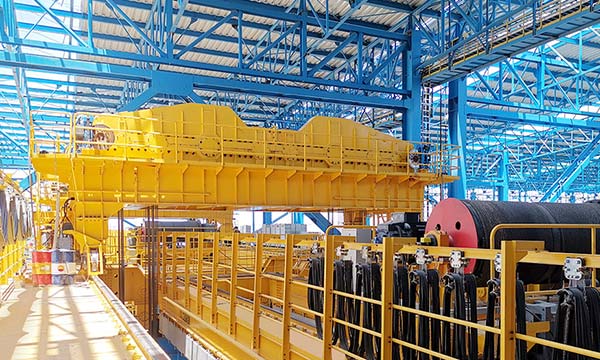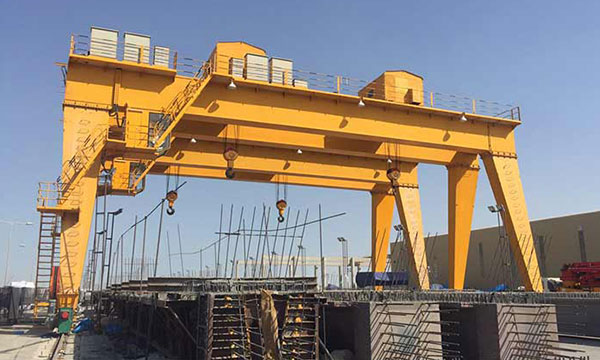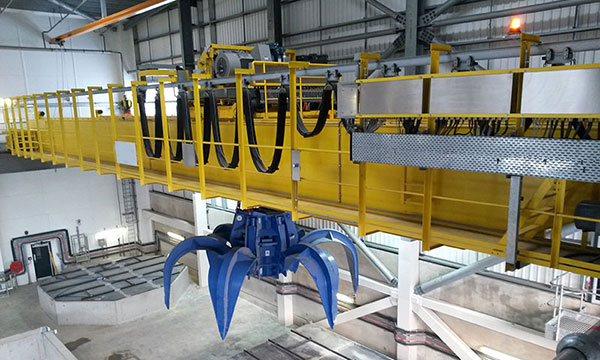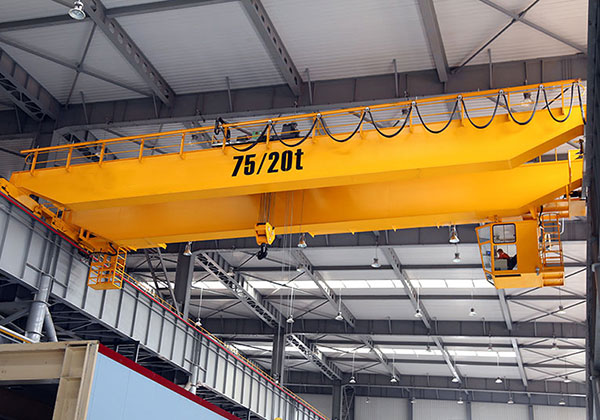

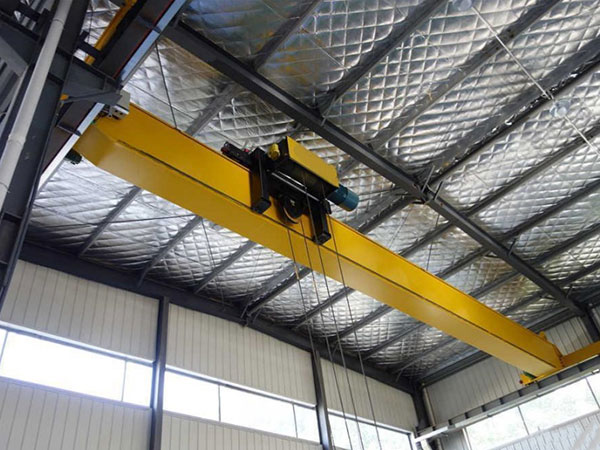
Description
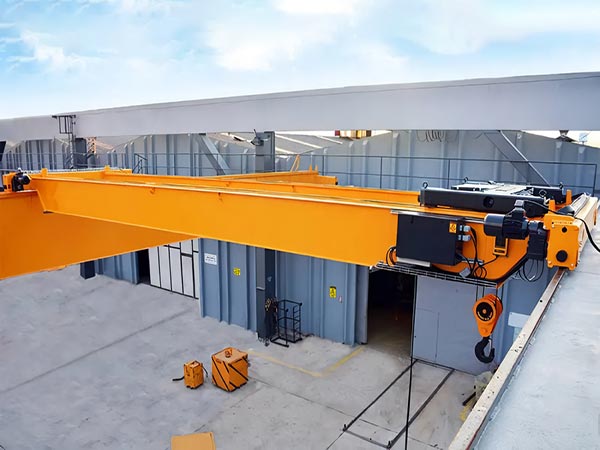
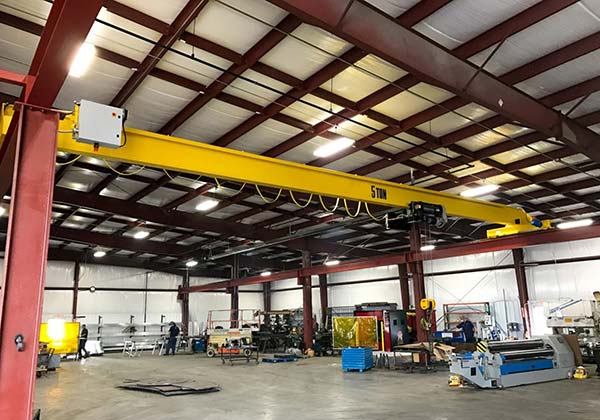
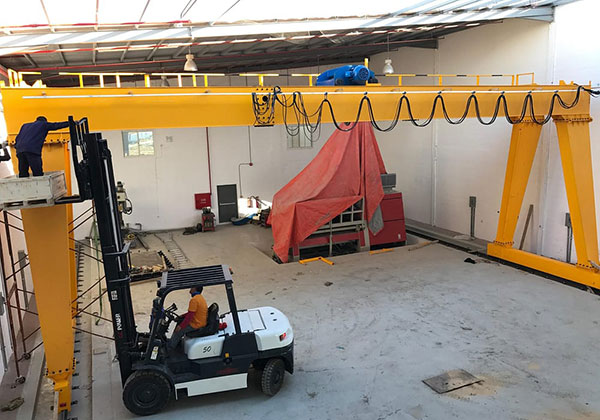
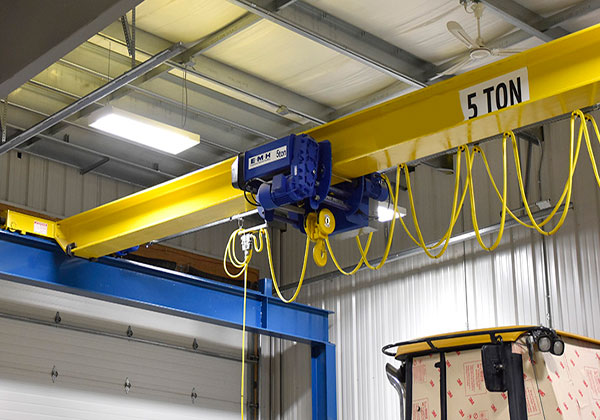
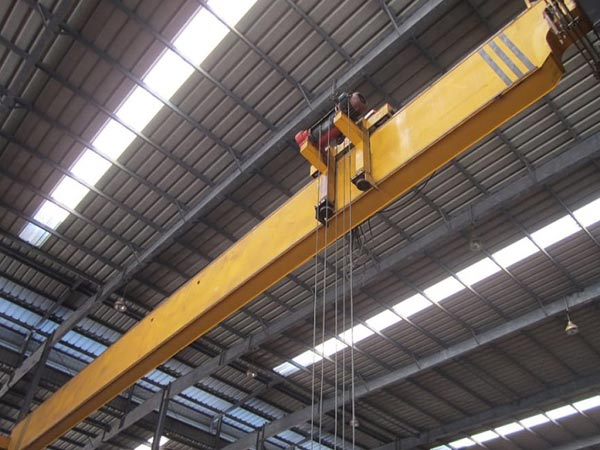
Single-girder bridge crane is a kind of lifting machinery, named because its structure is similar to a bridge. It consists of a single linear bridge capable of longitudinal movement along a track to cover the work area below for material handling. The crane’s bridge is usually supported on elevated rails on both sides, and the space under the bridge is open, allowing the crane to operate without being hindered by ground equipment. This structural design is both simple and practical, which is an important reason for its wide application.
Components of girder bridge crane
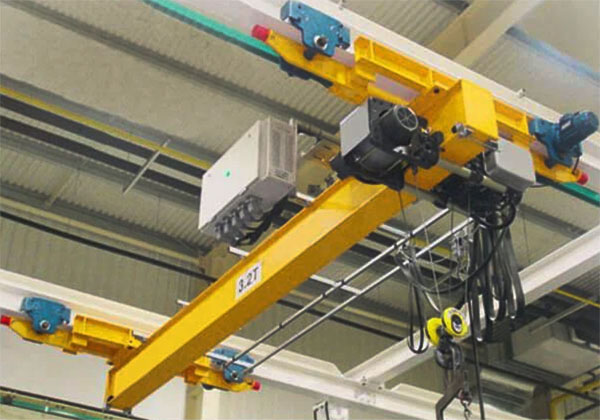
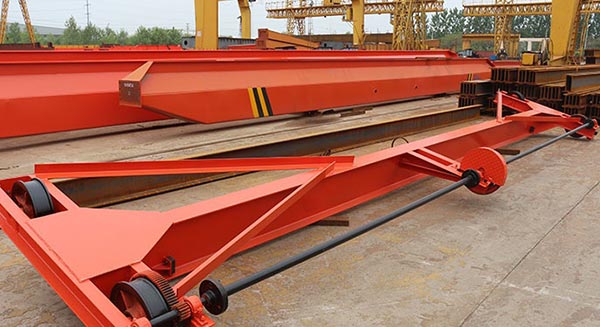
1. Main beam: The main beam is the main load-bearing component of the crane bridge, usually in the form of box, I-shaped or round tube structure. It spans over the workshop or warehouse, and is connected to the end beams at both ends to form a complete bridge structure. The main beam bears all the load from the lifting trolley and the items it lifts, and transfers it to the end beam and lower support structure.
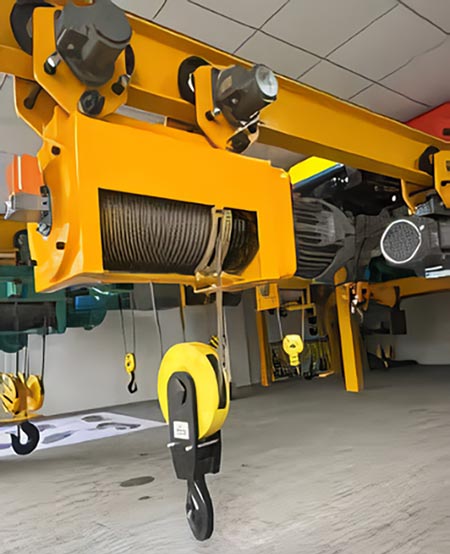
2. Wire rope electric hoist: including trolley operating mechanism, lifting mechanism and related electrical systems. The electric hoist is suspended under the bridge and can move laterally along the main beam. The electric hoist lifts items through its lifting mechanism and can move along the main beam direction to achieve precise placement and handling of items.
3. Remote control: The remote control of a single-girder bridge crane is mainly used to remotely control the lifting equipment to improve operational convenience and safety. The use of the remote control allows the operator to operate from a location far away from the hoisted objects, reducing accidental injuries that may be caused to the operator during the hoisting process.

4. Crane operating mechanism: including drive motor, reducer, transmission shaft, wheels, brakes and other components. This mechanism is responsible for the longitudinal movement of the entire crane bridge along the elevated track. The wheels are driven to rotate by a motor and a reducer, allowing the crane to move along the track and cover the lifting operations of the working area below.
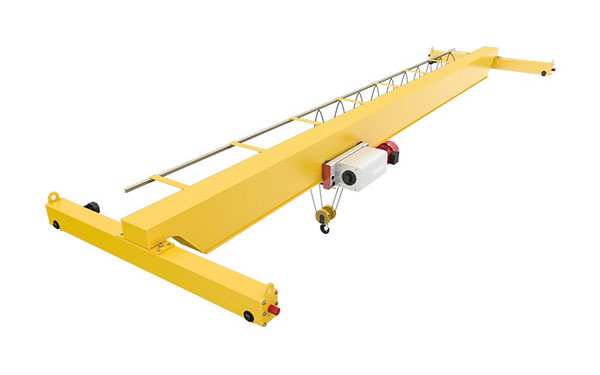
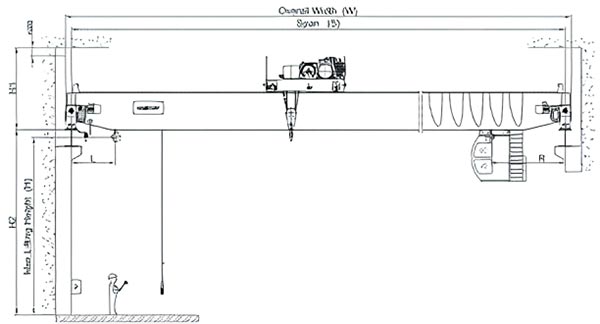
5. Sketch:
Application of girder bridge crane
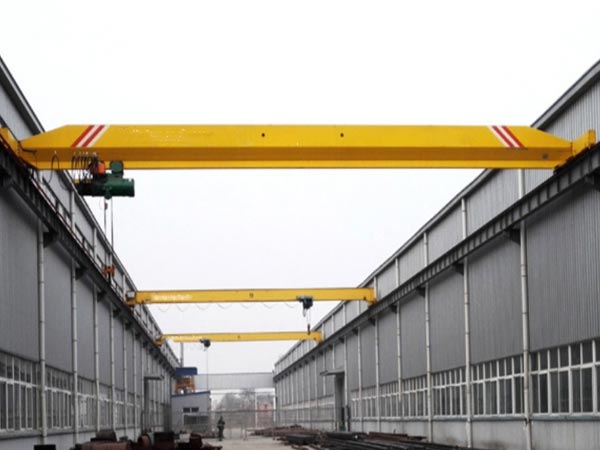
1. Industrial and mining enterprises: In the production workshops of various industrial and mining enterprises, single-girder bridge cranes are mainly used for the input of raw materials and the output of finished products, as well as for the transfer and assembly of materials between various links in the production line. This application improves production efficiency and reduces labor costs.
2. Steel and chemical industry: In the steel industry, single-girder bridge cranes are widely used for hoisting and handling heavy steel products such as steel plates and steel coils. They can work stably in high temperature and dusty environments to meet the needs of steel production.
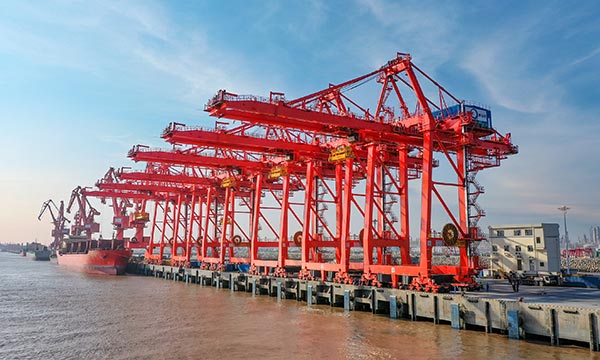
3. Railway transportation: In railway freight yards, single-girder bridge cranes are used for loading and unloading containers and bulk cargo. They can efficiently complete the transfer of goods between railways and roads and speed up logistics.
4. Logistics turnover: In modern logistics warehouses, single-girder bridge cranes are used to store and retrieve various goods. They can move flexibly between elevated shelves to achieve precise access to goods and improve warehouse operation efficiency.
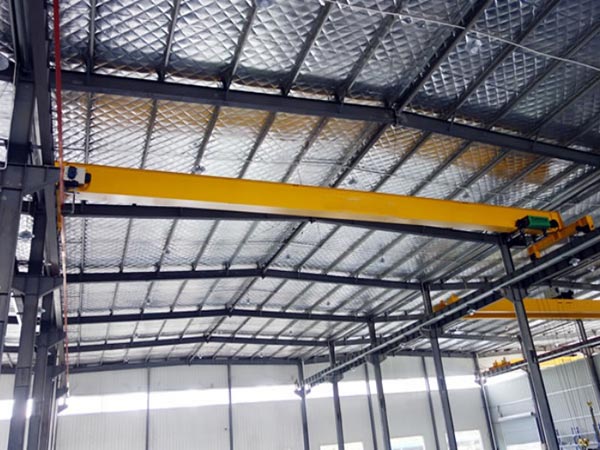
Advantages of girder bridge crane
Simple design: Single-girder bridge cranes usually consist of one main girder and two end beams, forming a simple linear bridge structure. This design not only simplifies the manufacturing process but also reduces material and labor costs.
Large space coverage: The bridge of the single-girder bridge crane runs longitudinally along the elevated track and can cover most of the space in the workshop or warehouse, making the lifting operation more flexible.
Easy maintenance: Due to its simple structure and fewer wearing parts, the single-girder bridge crane reduces the frequency of replacement and the workload of maintenance. Routine maintenance and inspection work becomes easier to perform due to the simplicity of the structure, without the need for complex equipment or large amounts of manpower.
Applicable to multiple industries: Single-girder bridge cranes are widely used in indoor and outdoor industrial and mining enterprises, steel and chemical industries, railway transportation, ports and terminals, and logistics turnover and other fields. Whether it is manufacturing or logistics, it can provide efficient lifting solutions.
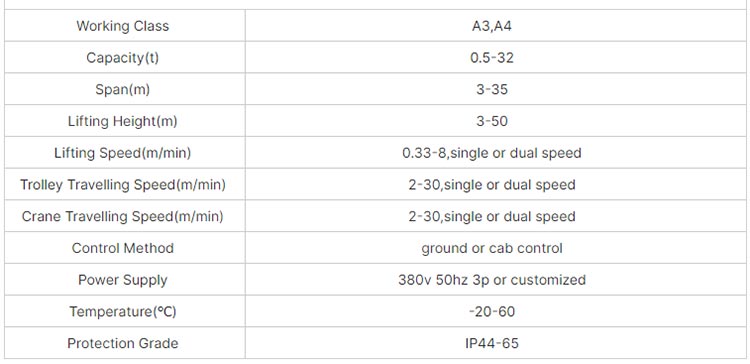
Main technical data
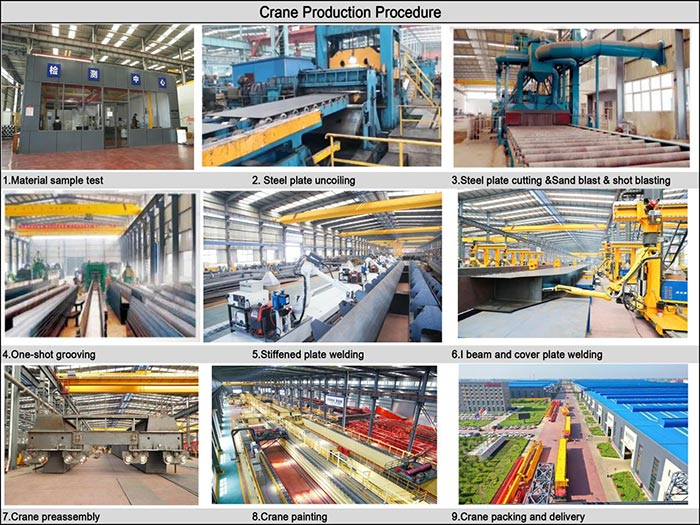
Crane production procedure
1. Demand Analysis and Design: Communicate with customers to understand their operating environment, load requirements, working frequency and other requirements. According to the requirements, design the overall plan of the crane, including the main beam, end beam, trolley, lifting system and other major components. Carry out detailed structural design to ensure structural strength and stability.
2. Material procurement: Purchase steel, aluminum alloy, transmission components, electrical components, etc. required for manufacturing cranes. According to design requirements, purchase standardized components such as motors, reducers, brakes, etc. Carry out quality inspection on purchased materials and components to ensure compliance with standards and design requirements.
3. Manufacturing and processing: Cut, weld and process steel to manufacture main beams and end beams. Manufacture components such as the frame, guide wheels, lifting devices of the trolley. Produce or assemble various components of the electrical control system, including contactors, relays, sensors, etc. Weld steel structure components to ensure connection strength and stability. Perform mechanical processing on components, such as drilling, milling and turning, to ensure the size and accuracy of components. Paint or coat components to protect steel from corrosion and wear.
4. Assembly: Assemble the main beam, end beam, trolley, lifting system and other components according to the design drawings. Connect the electrical control system to the mechanical components, including cable routing, wiring and debugging. Perform preliminary system debugging, check the coordination and function of each component, and ensure the normal operation of the system.
5. Testing: Perform static load test to check the load-bearing capacity and stability of the crane under static conditions. Perform dynamic operation test to check the performance of the crane in actual operation, including lifting, lowering, running speed, etc. Test the functions of various safety devices, such as limit switches, overload protection, sound and light alarm systems, etc.
6. Inspection and acceptance: Conduct a comprehensive inspection of the manufacturing and assembly quality of the crane to ensure compliance with design standards and technical requirements. Perform functional acceptance with the customer to confirm that the performance and functions of the crane meet the customer’s needs.
Global Market

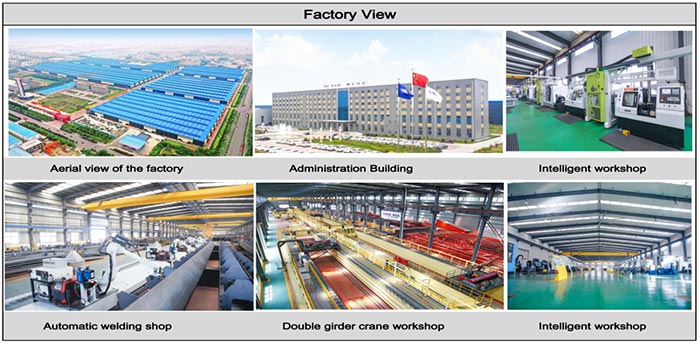
Workshop view
The company has installed an intelligent equipment management platform, and has installed 310 sets (sets) of handling and welding robots. After the completion of the plan, there will be more than 500 sets (sets), and the equipment networking rate will reach 95%. 32 welding lines have been put into use, 50 are planned to be installed, and the automation rate of the entire product line has reached.