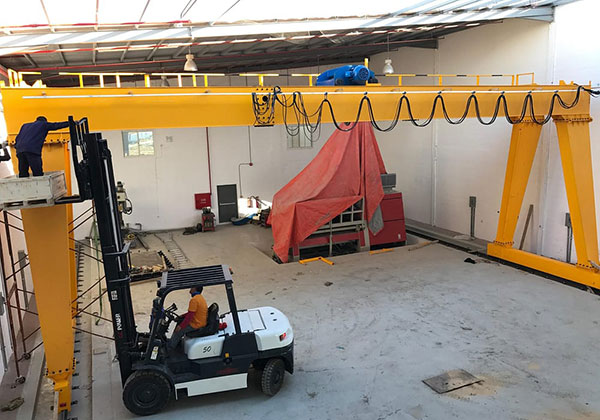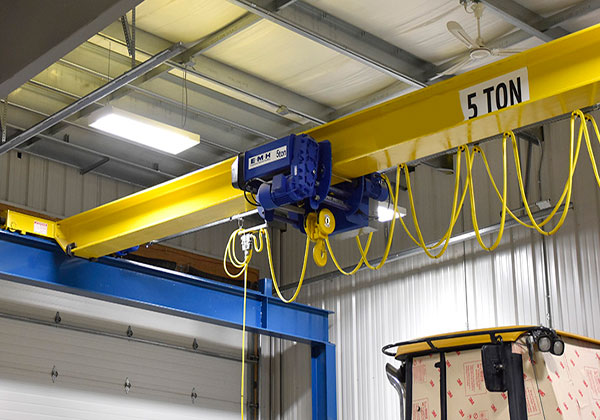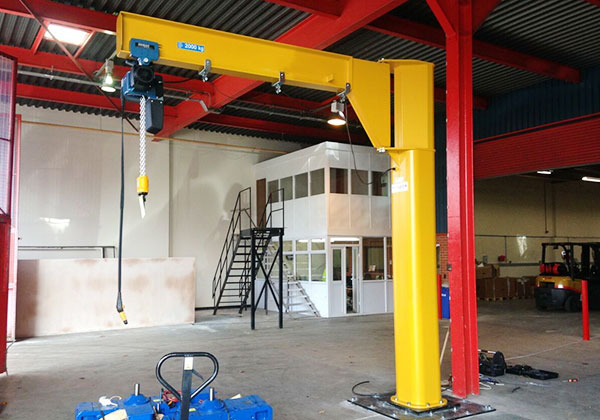

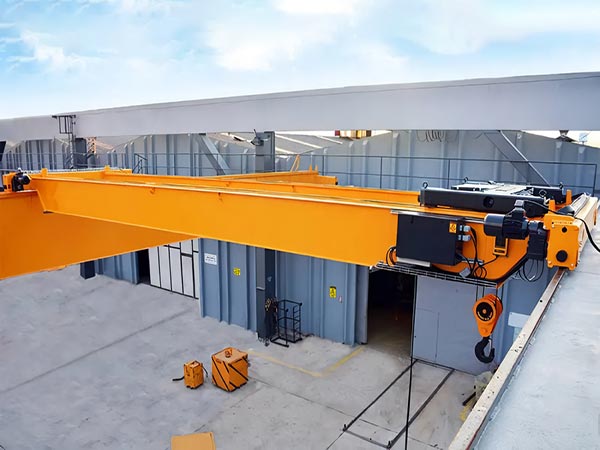
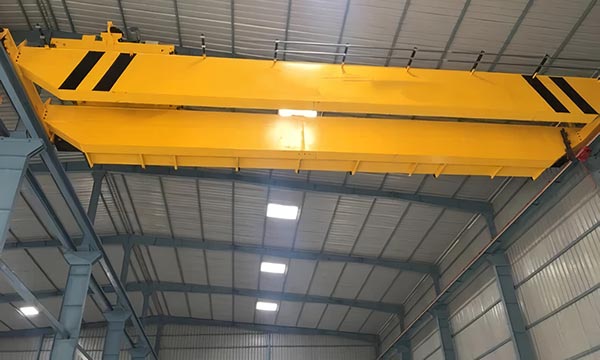

Description
Warning: mysqli_query(): (HY000/1194): Table 'wp_options' is marked as crashed and should be repaired in /www/wwwroot/excelcrane.com/wp-includes/class-wpdb.php on line 2349
Warning: mysqli_query(): (HY000/1194): Table 'wp_options' is marked as crashed and should be repaired in /www/wwwroot/excelcrane.com/wp-includes/class-wpdb.php on line 2349
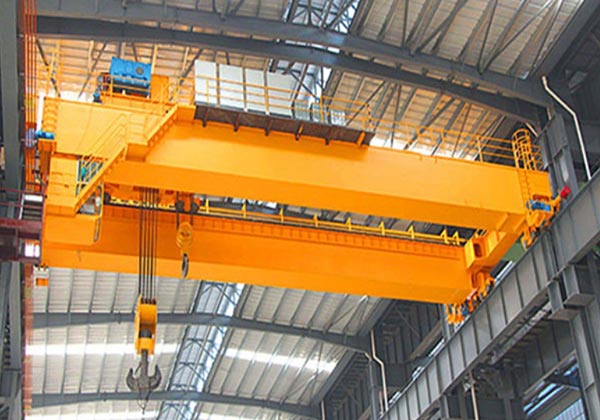
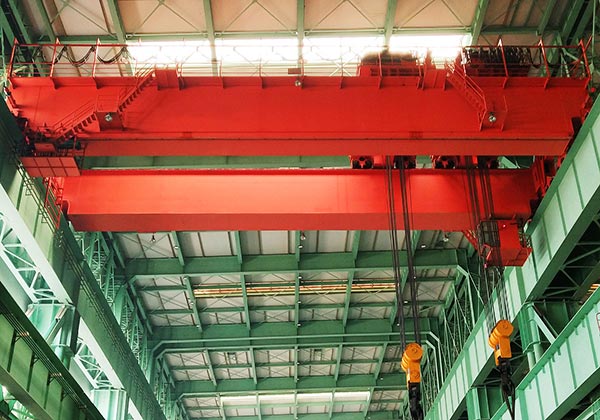
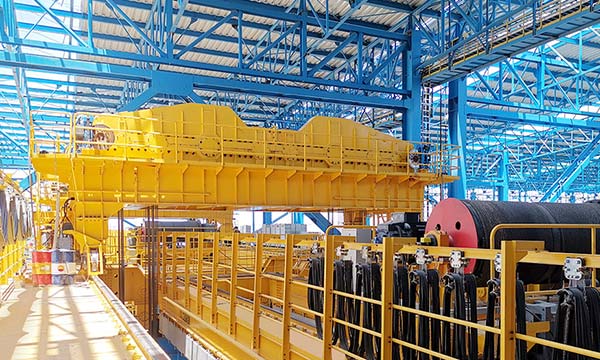
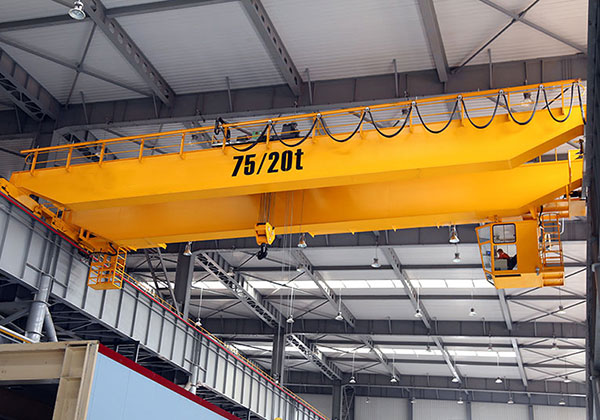
Double-beam bridge cranes are composed of bridge, lifting mechanism, trolley running mechanism, trolley running mechanism and electrical control system. The bridge is usually composed of two parallel main beams and end beams to form a rigid frame structure, and the trolley runs between the two main beams. The double-beam bridge crane runs longitudinally along the fixed track through the bridge, and the trolley runs horizontally along the bridge to realize the three-dimensional space movement of the material. The lifting mechanism is responsible for the vertical lifting of the material to ensure that the material can be safely and accurately transported to the designated location.
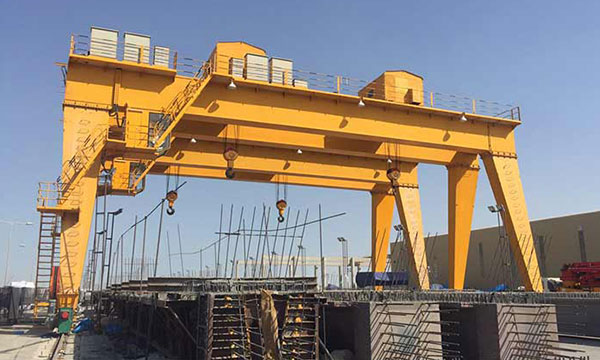
Double-beam bridge cranes are suitable for manufacturing, metallurgical industry, port transportation, warehousing and logistics and other fields, especially in scenes where large or heavy materials need to be frequently transported. According to different use environments and requirements, double-beam bridge cranes can be divided into different types, such as ordinary double-beam bridge cranes, explosion-proof double-beam bridge cranes, metallurgical double-beam bridge cranes, etc. In addition, it can also be customized according to the specific requirements of customers, such as adding special hoists, automatic control systems, etc.
The double-beam structure of this crane provides greater carrying capacity and is suitable for handling heavy materials. The bridge design allows it to cover a larger operating area, especially suitable for large sites. Its structural design is stable, with little shaking during lifting operations and smooth operation. At the same time, it can be equipped with a variety of lifting mechanisms and accessories as needed to meet different operating requirements.

Components of double beam crane
1. Main girder
The main beam of a double-beam bridge crane is usually composed of two parallel steel structure beams, which are divided into the main beam and the secondary beam. The main beam mainly bears the load of the crane, and the secondary beam assists the main beam to share part of the force. The box-type main beam is the most common form. The cross-section of the main beam is a closed box-shaped structure, which is usually welded with high-strength steel plates. The box-type structure has good torsion and bending resistance and can withstand large loads and lateral forces. The I-shaped main beam, which is usually used for cranes with smaller tonnage, has a main beam cross-section similar to the letter “I”. The I-shaped main beam has a simple structure and low manufacturing cost, but its load-bearing capacity and torsional stiffness are relatively low.
The main beam is usually made of high-strength low-alloy steel with good welding performance, strength and toughness to ensure that it will not break or deform under heavy load conditions. The design of the main beam needs to consider many factors, such as the rated load, span, working environment, etc. of the crane. During the design, precise calculations and simulations are usually performed to ensure the strength and stability of the main beam under various working conditions.
During the manufacturing process, the main beam usually adopts automated welding technology to ensure welding quality and consistency. After the manufacturing is completed, strict inspections are required, such as ultrasonic flaw detection and static load test, to ensure that the quality of the main beam meets the design requirements.

2. Lifting System
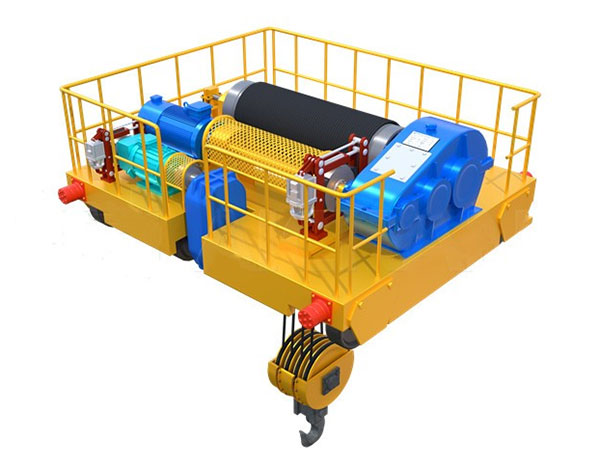
The lifting system usually consists of the following main components:
- Motor: Provides power for the lifting action, usually a three-phase AC motor with high power and high torque output to meet the needs of lifting heavy objects.
- Reducer: Connected between the motor and the drum, it is used to reduce the speed of the motor output and increase the torque, so that the crane can lift and lower heavy objects smoothly. Common types of reducers include planetary gear reducers and worm gear reducers.
- Drum: Used to wind the wire rope. As the drum rotates, the wire rope is rolled up or lowered, thereby achieving the lifting and lowering of heavy objects. The drum is usually connected to the motor through a reducer.
- Wire rope: Used to directly carry and lift heavy objects. The wire rope has high strength and wear resistance to ensure that it will not break during use.
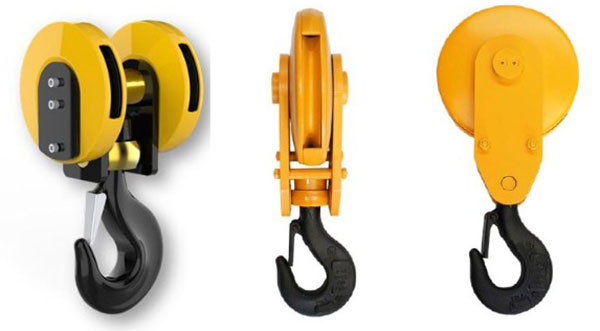
- Hook: Connected to the end of the wire rope, it is used to grab and carry heavy objects. The hook usually has a safety lock device to prevent the heavy object from accidentally falling off.
- Brake: Installed on the motor or reducer, it is used to control and stop the lifting movement. The brakes automatically lock when no operation is performed, ensuring that heavy objects do not slide down due to gravity.
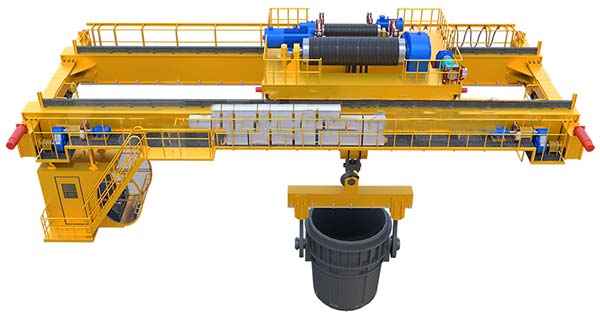
3. End Carriages
The end beam is usually a box-shaped or I-shaped structure, welded from high-strength steel, with good rigidity and strength. The main components of the end beam include:
- Crossbeam: The crossbeam is the main load-bearing part of the end beam, connected at both ends of the double-beam bridge crane to support the main beam.
- Wheel set: Installed at the bottom of the end beam, it consists of a set of trolley wheels to support the crane and run along the track. The wheel set usually includes a driving wheel and a driven wheel, where the driving wheel drives the crane to move along the track through an electric motor.
- Buffer device: Buffer devices are usually installed at both ends of the end beam to reduce the impact force of the crane when it runs to the extreme position and protect the safety of the structure and track.
4. Crane traveling mechanism
The crane running mechanism usually consists of the following main components:
- Drive device: including motor, reducer and coupling. The motor provides power, the reducer reduces the speed and increases the torque, and the coupling connects the motor and reducer to transmit power.
- Wheel set: The wheel set is installed under the end beam of the crane and directly contacts the I-beam track. The wheel set usually includes a driving wheel and a passive wheel. The driving wheel drives the crane to move through the drive device, while the passive wheel rotates freely and follows the movement of the driving wheel.
- Track: Usually an I-beam track, laid on the floor or beam of the factory. The track provides a running path for the crane to ensure that the crane moves smoothly in the set direction.
- Braking device: including electromagnetic brakes or hydraulic brakes, which are used to control the start, stop and emergency brake of the crane to ensure the safety of the crane during operation.
- Buffer device: installed at both ends of the crane to prevent collision when the crane runs to the extreme position of the track, reduce impact force, and protect the crane and track.
The basic working principle of the crane running mechanism is to drive the wheel set through the motor to move the crane along the laid track. When the operator issues a movement command, the motor starts, drives the reducer and coupling to rotate, and transmits power to the wheel set. The wheel set rolls along the track, allowing the crane to move horizontally in the factory building to reach the predetermined position.
5. Trolley traveling mechanism
- The trolley running mechanism is powered by the motor of the drive device, driving the trolley to move horizontally on the track on the main beam. The movement of the trolley is precisely controlled by the control system to ensure that it can reach the specified position. The lifting mechanism is responsible for the lifting and lowering of materials, and cooperates with the lateral movement of the trolley and the longitudinal movement of the car to realize material handling in three-dimensional space.
- On the one hand, the trolley running mechanism enables the crane to move left and right on the main beam, expanding the operating range of the crane. On the other hand, the trolley frame supports the lifting mechanism to ensure the stability of the material during lifting. At the same time, through the precise control system, the trolley can be accurately positioned on the main beam to ensure accurate and efficient material handling operations.
- The trolley running mechanism can be customized and improved according to different usage requirements. For example, in work situations that require higher precision and automation, it can be equipped with advanced automatic control systems and sensors to achieve automatic positioning and operation of the trolley. In addition, in special environments, such as high temperature, high humidity or corrosive environments, the materials and designs of the trolley running mechanism may require special treatment to improve durability and reliability.
- In order to ensure the normal operation of the trolley running mechanism and extend its service life, daily maintenance is very important. Lubricate wheel bearings, reducers and other moving parts to reduce wear and friction. Check wheels and tracks regularly for wear to ensure smooth operation. Replace any abnormal wear or damage. Check the electrical connections of motors, brakes and control systems regularly to ensure they are functioning properly.
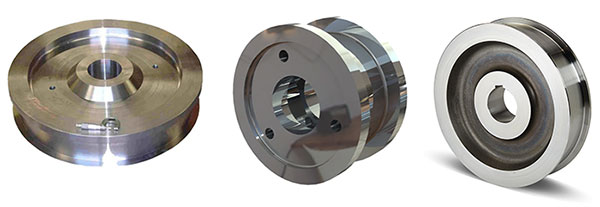
6. Crane wheel
- Support and load-bearing: The wheels bear the entire weight of the crane and evenly distribute the weight to the ground through the track.
- Movement and positioning: The wheels use the power of the drive device to achieve smooth movement and precise positioning of the crane’s trolley or car on the track.
- Guidance and stability: The wheel rim design ensures that the wheels do not slide sideways or derail when running on the track, maintaining the stability of the crane.
7. Crane hook
1) Types of hooks
- Single hook: The most common type of hook, usually used for small and medium tonnage cranes. The single hook has a simple structure and is suitable for most conventional lifting tasks.
- Double hook: It consists of two symmetrically arranged hooks, usually used for larger cranes or operations requiring higher stability. The double hook can share more loads and improve the stability of the lifted materials.
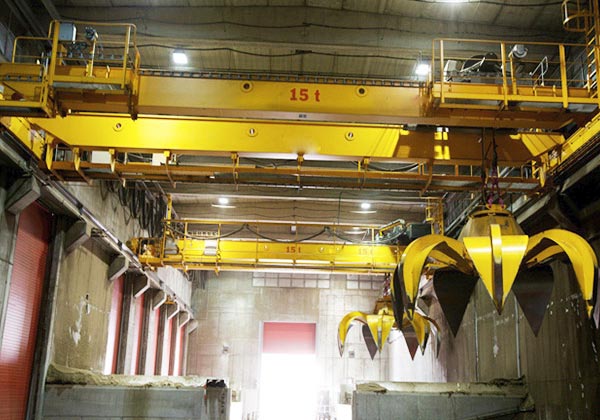
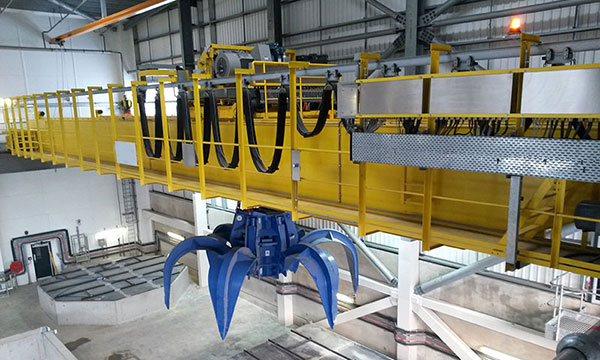
- Grab hook: It is used to grab and carry bulk materials such as ore, sand and gravel. The grab hook has multiple grab devices and is suitable for special material handling needs.
2) Functions and functions of hooks
- Material grabbing: The hook can effectively hang various types of materials for safe handling through the shape and design of its hook body.
- Load support: The hook bears the entire weight of the material and distributes it evenly to the lifting system to ensure safety and stability.
- Positioning accuracy: Through the precise hook design, it can ensure that the material is accurately positioned in the working area of the crane to avoid deviation.
8. Motor
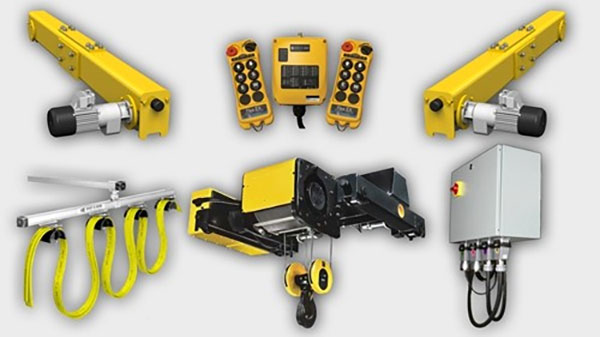
- Providing power: The motor provides power for the hoisting system, the trolley running mechanism and the trolley running mechanism. Depending on the different components of the crane, the power and specifications of the motor will also vary.
- Adjusting speed: By adjusting the speed of the motor, the lifting speed of the hoisting system, the running speed of the trolley and the trolley can be controlled. Modern motor systems are usually equipped with frequency converters to achieve smooth speed control.
- Ensuring stability: The stable operation of the motor ensures the stability and reliability of the crane during operation.

9. Sound and light alarm system & limit switch
1) Sound and light alarm system
- Warning function: The sound and light alarm system is used to issue sound and flash warnings during the operation of the crane to alert the operator and surrounding personnel to possible dangers or abnormal conditions of the equipment. For example, when the crane starts to operate, fails, or approaches the limit position, the system will sound an alarm.
- Improve safety: Through sound and light signals, the prominence of warnings is improved to help avoid accidents caused by improper operation or neglect.
2) Limit switch
- Prevent over-limit: The limit switch is used to monitor the range of motion of the crane to prevent the crane components (such as hooks, wheels, etc.) from exceeding the designed range of motion, thereby avoiding collisions, damage to equipment or accidents.
- Automatic stop: When the equipment components approach the set limit position, the limit switch will automatically cut off the power supply or sound an alarm to stop the further movement of the crane.

10. Safety Devices
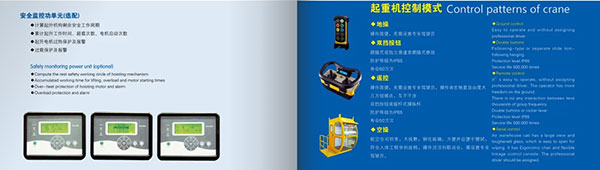
- Overload protection device: monitors the load of the crane to prevent equipment damage or safety accidents caused by overloading.
- Electrical protection system: protects the motor and electrical system from electrical faults.
- Braking system: ensures that the crane can stop safely when needed and prevents accidental movement.
- Emergency stop device: quickly stops all operations of the crane in an emergency.
- Safety protection device: covers the moving parts of the crane to prevent personnel from contacting dangerous parts.
- Monitoring and automation system: optimizes equipment operation and maintenance through real-time monitoring and data recording.
- Training and operating procedures: ensure that operators understand the safe operating procedures and emergency response measures of the equipment.
- Maintenance and inspection: ensure that all parts of the equipment are working properly and detect and solve potential problems in a timely manner.
11. Control Mode
- Manual control: The operator directly controls the various moving parts of the crane through manual control devices, such as manual control levers or buttons. The operation method is simple, easy to understand and use.
- Electrical control: The movement of the crane is controlled by an electrical control system (such as switches, buttons, knobs). Usually, an electric control cabinet is provided to control various systems such as lifting, trolleys, and small cars through electrical signals. It can realize automatic control of multiple operating functions.
- Wireless remote control: The operator uses a wireless remote control to control various functions of the crane through wireless signals. The operator can move freely near the crane for easy observation and operation.
- Wired remote control: Connect to the control system of the crane through a wired remote control. The control signal is transmitted through the cable, and the operator operates through the wired remote control. The signal transmission is stable and not interfered by the wireless signal.
- Automated control: Precise control is performed through an automated control system (such as PLC, DCS). The automated system can realize functions such as automatic lifting, lowering, moving, and positioning. Use sensors to obtain real-time data and perform feedback control. It can achieve precise motion control and positioning.
12. Sketch

Application of double beam crane
Heavy industry: used to handle heavy materials such as large billets, steel coils, furnace materials and finished products. Double girder bridge cranes can withstand high tonnage loads and cover a large working area.
Manufacturing: used to handle and assemble large mechanical parts and equipment. Double girder bridge cranes can carry out heavy lifting and installation on the production line to improve production efficiency.
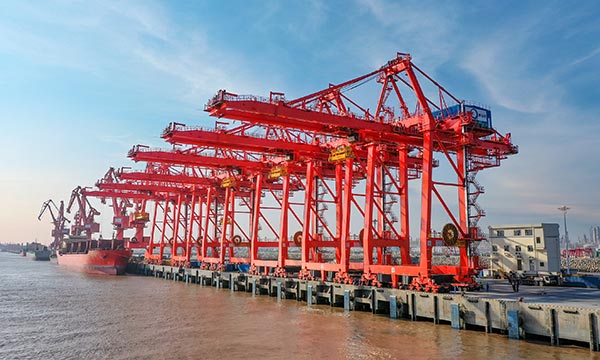
Warehousing and logistics: In large-scale storage centers, double girder bridge cranes are used to handle and stack bulk materials such as cargo containers, pallets, etc. They can efficiently handle materials entering and leaving the warehouse. They are used to handle and transfer large quantities of goods and packaging materials to improve the efficiency and safety of logistics operations.
Construction: used to lift building materials, precast concrete parts and equipment. Double girder bridge cranes can lift heavy objects on elevated working platforms and are suitable for large-scale construction projects. In high-rise building construction, double girder bridge cranes are used to lift and install large components and equipment.
Power industry: used to carry generator sets, transformers and large equipment. The high load capacity and large lifting height of double girder bridge cranes are suitable for handling large power equipment. Used to hoist and install substation equipment and cable trays to ensure the normal operation and maintenance of power facilities.
Mining: Used to transport ore, equipment and materials. Double-beam bridge cranes can efficiently handle bulk mineral resources in mining areas. Used to lift ore and processing equipment to improve the efficiency and safety of production lines.
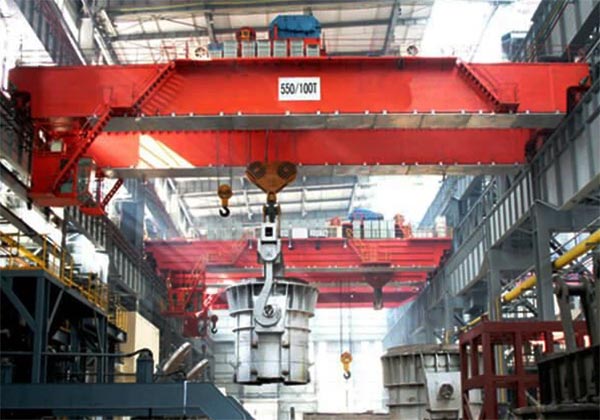
Metallurgy and Chemical Industry: Used to handle furnace charges, castings and chemicals. The stability and high load-bearing capacity of double-beam bridge cranes are very suitable for heavy object handling in metallurgical production. Used to transport chemical containers and large reactors. It has strong adaptability and can handle various types of chemical products and equipment.

Advantages of double beam crane
- Stable structure: The double-beam design provides a higher load-bearing capacity than the single-beam design. The structure of two main beams enables it to withstand greater loads and is suitable for lifting and handling heavy materials. Double-beam bridge cranes can cover a larger working area and are suitable for wide factories and warehouses.
- Balanced force: The double-beam structure provides better force balance, reducing equipment damage or instability caused by uneven loads. Due to the symmetrical structure of the double beam, the overall stability of the crane is high, reducing the risk of overturning.
- Flexible adjustment: The design of the main beam and lifting mechanism of the double-beam bridge crane allows a larger lifting height, which is suitable for occasions requiring high lifting space. It can handle materials of various sizes and weights and is suitable for high-bay and large-span working environments.
- High efficiency: The double-beam design allows for rapid movement of large and small vehicles, which improves work efficiency. Modern double-beam bridge cranes are equipped with advanced control systems to achieve high-precision material positioning and lifting operations.
- Multi-function: It can be equipped with a variety of accessories, such as grabs, hooks, electromagnets, etc., to meet different operating needs. Applicable to various industrial environments, including heavy industry, manufacturing, warehousing and logistics.
- Complete safety devices: usually equipped with limit switches, overload protection, sound and light alarm systems and other safety devices to ensure safety during operation. The double-beam structure reduces the swing and vibration of the equipment and improves the stability and safety of operation.
Main technical data

Crane production procedure
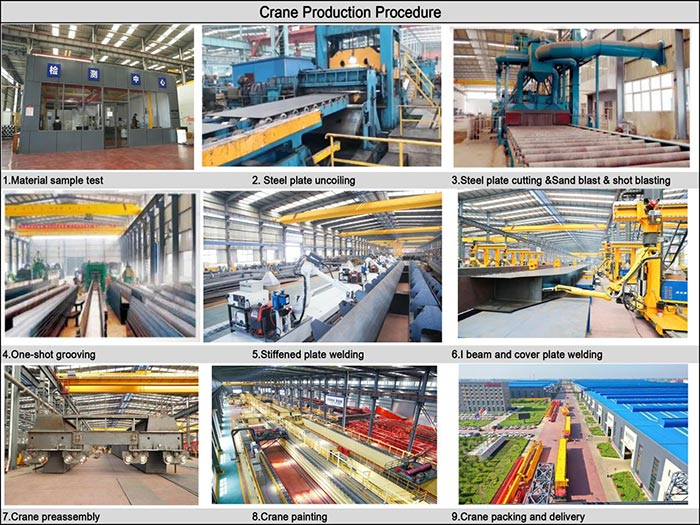
Design stage: Understand the specific needs of customers, including the load capacity, span, lifting height, working environment, etc. of the crane. Draw detailed engineering drawings, including structural drawings, layout drawings, assembly drawings, etc. Perform calculations and analysis on structural strength, stability, load capacity, etc.
Material preparation: Purchase steel, welding materials, coatings, etc. Purchase components such as motors, reducers, brakes, sensors, etc. Then conduct quality inspections on the purchased materials and accessories to ensure that they meet design requirements and safety standards.
Processing and manufacturing: Cut, weld and assemble structural parts such as main beams and end beams. Perform machining processes such as drilling, milling, and turning to make various accessories.
Assembly: Preliminary assembly of the main beam and end beam. Assemble the trolley and trolley running mechanisms. Finally, perform overall assembly
Debugging and testing: Check the basic functions of each system and component to ensure normal operation. Adjust the lifting height, speed and positioning accuracy, and perform system calibration. Perform load tests in an experimental environment to verify the load capacity and stability of the crane.
Quality inspection: Check whether the surface treatment such as spraying and galvanizing meets the standards. Check the assembly process and quality to ensure that there are no looseness, misalignment and other problems. Check whether all safety functions are normal, including limit switches, overload protection, etc.
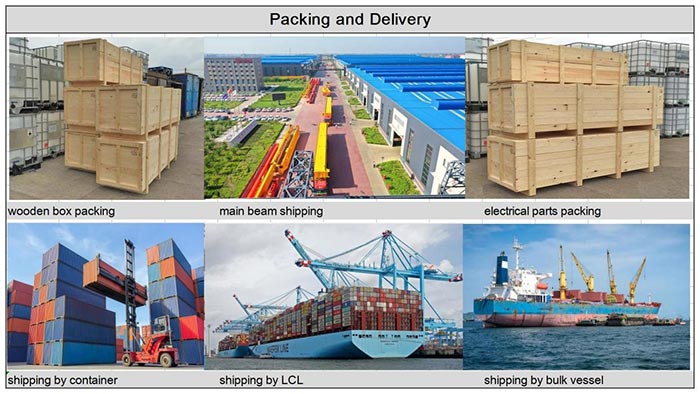
Delivery and installation: Disassemble the crane into transport units and package them to prevent damage during transportation. Arrange transportation to the customer site. Install the crane at the customer site, including the final assembly of the main beam, end beam, trolley, lifting system, etc. Carry out on-site debugging to ensure the normal operation of the equipment under actual use conditions.
Global Market

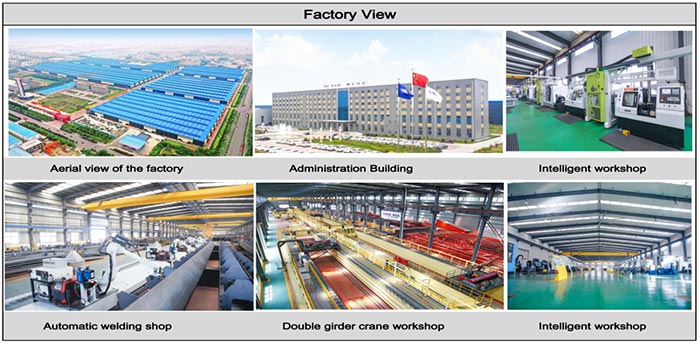
Workshop view
The company has installed an intelligent equipment management platform, and has installed 310 sets (sets) of handling and welding robots. After the completion of the plan, there will be more than 500 sets (sets), and the equipment networking rate will reach 95%. 32 welding lines have been put into use, 50 are planned to be installed, and the automation rate of the entire product line has reached.