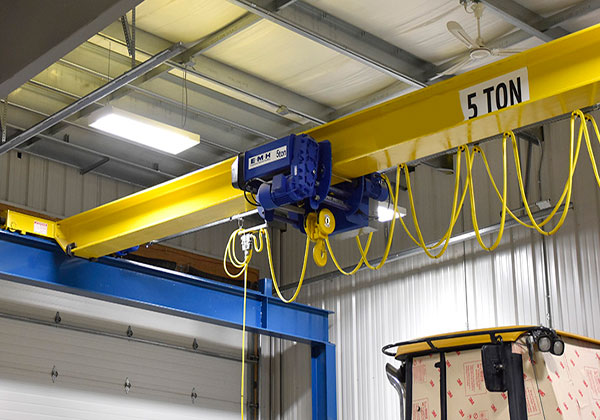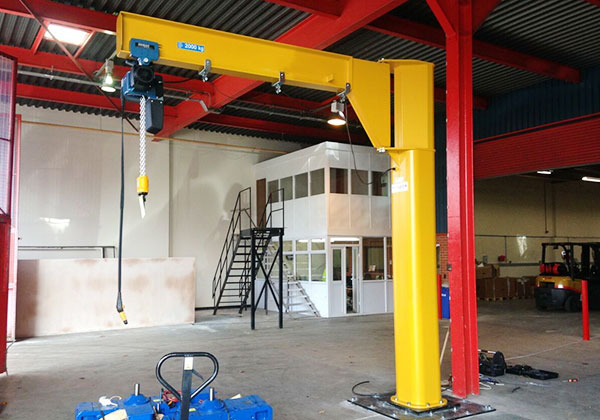

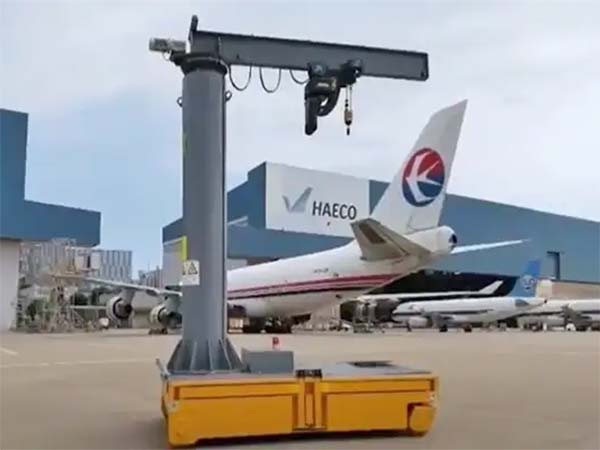
Small portable lifting equipment: precision tools for small workspaces
Portable Crane Lifting Equipment
Small portable crane lifting equipment is designed to provide an efficient lifting solution for areas with limited space. These cranes are typically compact, lightweight and easy to operate, making them ideal for a variety of applications in small workspaces such as workshops, construction sites and maintenance areas. The main purpose of these cranes is to facilitate safe and efficient lifting of heavy loads, allowing operators to handle materials and equipment with precision.
Precision lifting is especially important in tight spaces, which often have limited room for passage. In these environments, the risk of accidents increases and positioning accuracy is critical. Small portable cranes give operators greater control over the lifting and placement of materials, reducing the likelihood of accidents and improving overall workplace safety. The ability to lift accurately is not just for convenience; it can significantly impact productivity and operational efficiency.
The Importance of Special Lifting Equipment
Specialized lifting equipment, such as small portable cranes, play a vital role in making lifting operations safer and more efficient. These tools are engineered to meet specific requirements, ensuring they can safely handle a variety of lifting tasks. By using the right equipment for the job, operators can minimize the risk of injury and equipment damage.
For example, many small cranes are equipped with features such as adjustable height mechanisms and precision control systems that enhance their functionality in tight spaces. These features allow for better load management, ensuring materials are lifted and moved accurately without causing accidents.
Specialized lifting equipment is used in a variety of industries, including construction, manufacturing, automotive repair and even home improvement. In the construction industry, portable cranes can help lift heavy materials to heights that traditional cranes cannot handle. In manufacturing, they are useful for moving parts along assembly lines or lifting heavy machinery for repairs. By understanding the importance of these specialized tools, businesses can increase operational capabilities and improve workplace safety.
Types of small portable crane lifting equipment
When it comes to small portable crane lifting equipment, there are several types designed to meet the needs of different industries and applications. Each type has unique features that enhance its functionality in small spaces. Here are some of the most common small portable cranes and their specific attributes.
Small portable jib crane
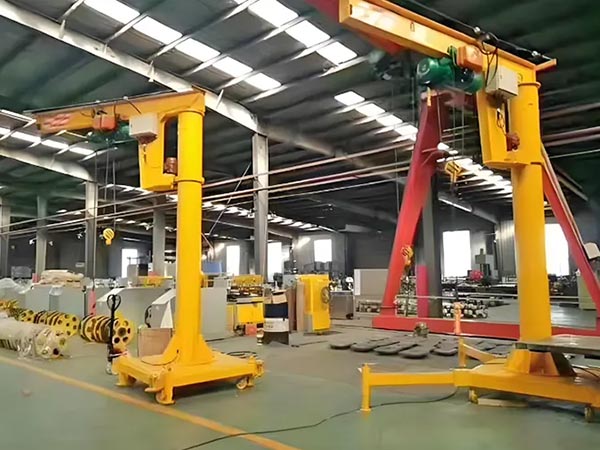
Design and functional description: Small portable jib cranes are characterized by their horizontal arm (jib) extending from a vertical column. This design allows a rotating lifting point, making it easy to maneuver loads in tight spaces. They can be fixed to the ground or mounted on a wheeled base for increased mobility.
Advantages for precise lifting in tight spaces: The main advantage of jib cranes is their ability to provide precise lifting and positioning capabilities. They can lift directly overhead, minimizing the risk of collisions in tight work areas. This makes them ideal for tasks such as lifting heavy components in the workshop or facilitating assembly processes.
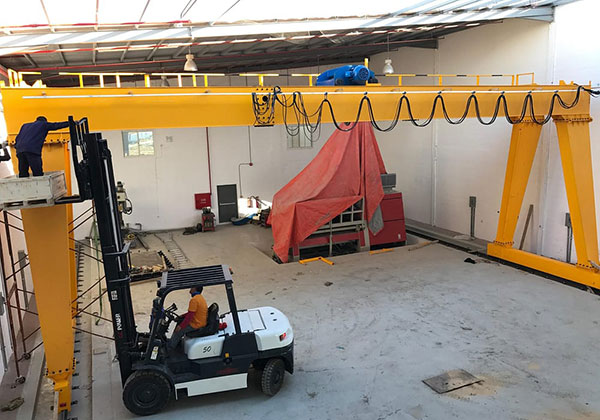
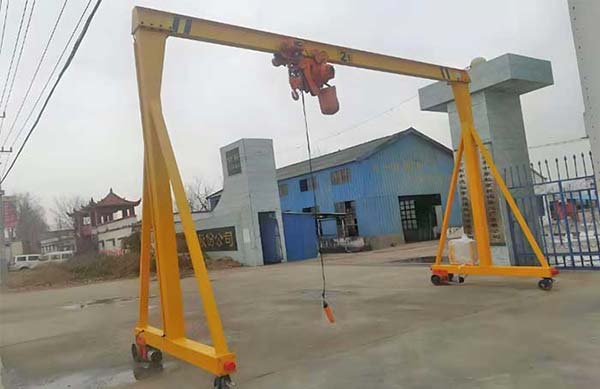
Small Portable Gantry Cranes
Design Variations: Adjustable and Fixed Height: Small portable gantry cranes come in a variety of designs, including adjustable and fixed height options. Adjustable gantry cranes allow users to adjust the height for specific lifting requirements, while fixed gantry cranes provide stability for ongoing lifting tasks. Both types are typically made of lightweight materials for easy transportation.
Workshop and Manufacturing Use Cases: Gantry cranes are versatile and can be used in a variety of applications, such as moving heavy components in a manufacturing facility, lifting engines in an automotive repair shop, or moving materials in a warehouse. They are able to span a distance and lift from a specific point, so they can handle loads efficiently without extensive setup.
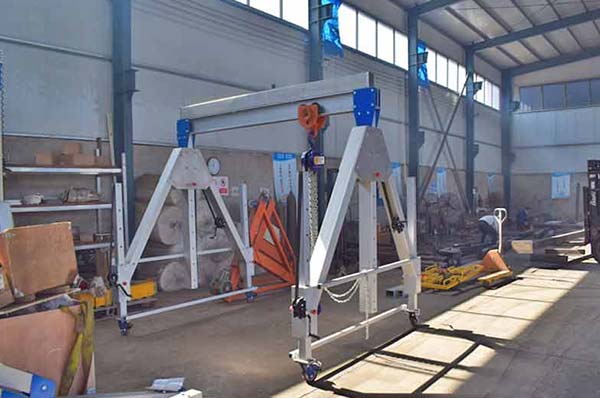
Small Portable Aluminum Crane
Description and Benefits: Small portable aluminum cranes are designed for light lifting applications. Made of durable aluminum, they are both strong and easy to transport. These cranes are particularly useful in situations where weight is a key factor, such as automotive or marine environments.
Applications and Load Capacity: Aluminum cranes are typically capable of lifting loads up to 1 ton and are popular in situations where portability and easy assembly are required. They are often used on construction sites to lift materials onto rooftops, or in workshops to move heavy equipment.
Small Battery Powered Cranes
Description and Features: Small battery powered cranes are equipped with electric hoists powered by rechargeable batteries. This feature makes them convenient to use in places where there are no electrical outlets. These cranes are compact and user-friendly in design and often come with remote controls for enhanced operation.
Benefits and Applications: Battery powered cranes offer the benefits of mobility and versatility, allowing them to perform lifting tasks in a variety of environments without having to be connected to a power source. They are ideal for small construction projects, maintenance work, and even indoor applications where traditional power sources may not be practical.
In summary, the diversity of small portable crane lifting equipment, from micro cranes to battery-powered options, ensures that businesses can find a solution that fits their specific lifting needs, improving efficiency and safety in small workspaces.
Key Features of Portable Crane Lifting Tools
When choosing a portable crane lifting tool, understanding its key features is essential to ensure safety, efficiency, and suitability for performing a variety of lifting tasks in a small workspace. The following sections provide a detailed description of these important features:
Adjustable Height Mechanism
The adjustable height mechanism is an important feature of portable cranes, allowing users to customize the height of the crane to suit specific lifting tasks.
- Flexible for a variety of tasks: Adjustable crane height means it can be used for different applications, whether it’s lifting materials from the ground or placing items overhead. This flexibility is especially beneficial in environments with varying ceiling heights or obstructions.
- Improved precision: By adjusting the height, operators can achieve better load placement, minimize the risk of collisions and ensure materials are accurately positioned.
- User-friendly design: Many cranes feature easy-to-use height adjustment mechanisms, such as hand cranks or pneumatic systems, which allow for quick changes without extensive setup.
Precision control systems
Precision control systems improve the operator’s ability to accurately position the load, which is essential for efficient crane operation.
- Control mechanisms: Most portable cranes feature advanced control options, including:
- Remote control: Allows the operator to lift and lower the load from a safe distance.
- Joystick control: Provides precise maneuverability in multiple directions.
- Programmable settings: Enables the operator to set specific lifting parameters for repetitive tasks.
- Safety and efficiency: These control systems allow operators to smoothly maneuver around obstacles and place loads exactly where they are needed, reducing the risk of accidents and improving overall workflow.
- Enhanced responsiveness: Modern cranes often come with sensitivity settings that allow operators to adjust the lifting speed, ensuring even fragile items are handled with care.
Lightweight and compact design
A lightweight and compact design is essential for portability and ease of use, making these cranes ideal for small workspaces.
- Material composition: Many portable cranes are made with high-strength materials such as aluminum or reinforced steel to balance durability and weight. This design ensures that the crane can support larger loads while remaining controllable.
- Mobility: These cranes are lightweight and easy to transport, allowing operators to move them between jobsites or reposition them within a workspace without the use of heavy machinery.
- Easy to store: The small size allows for easy storage in a small workshop, garage, or construction site, minimizing clutter and freeing up space for other equipment.
Safety features
Safety features are essential for portable cranes to protect both the operator and the load being handled.
- Overload protection: Most cranes are equipped with an overload protection system to prevent exceeding specified weight limits. This feature is essential to avoid mechanical failures and accidents.
- Emergency stop: An integrated emergency stop button allows the operator to immediately stop the operation if a situation occurs, ensuring a quick response in an emergency.
- Safety locks and limit switches: These devices prevent accidental movement, ensuring that the crane operates within specified safety parameters. For example, limit switches can stop the crane at a predetermined height, preventing collisions with overhead structures.
- Regular safety checks: Operators should regularly check these safety features to ensure they are functioning properly and comply with safety regulations.
Versatility and compatibility
The versatility of portable crane lifting tools is one of their most valuable features, enabling them to be used in a wide range of applications.
- Compatibility with accessories: Many portable cranes can be used with a variety of lifting accessories, including:
- Hooks and slings: for securely securing cargo.
- Hoists: for enhanced lifting capabilities.
- Suction cups: for holding glass or other smooth surfaces.
- Adaptability to different tasks: This compatibility allows operators to adjust the crane to complete specific tasks, whether it is lifting heavy machinery in the workshop or moving construction materials on a construction site.
- Versatile use: The ability to change accessories makes these cranes ideal for businesses with diverse operational needs, allowing them to effectively handle a variety of lifting scenarios.
In summary, the key features of portable crane lifting tools, including adjustable height mechanisms, sophisticated control systems, lightweight designs, strong safety features, and versatility, greatly enhance their effectiveness in small workspaces. Understanding these features helps operators select the right crane for their lifting needs, ensuring safety and operational efficiency.
Benefits of Using Small Portable Cranes for Lifting Equipment
There are many benefits to using small portable cranes for lifting equipment that enhance lifting operations, especially in tight spaces. These benefits include precision, safety, efficiency and cost-effectiveness, making them a valuable tool for a wide range of industries.
Improve Precision in Lifting Operations
Small portable cranes are specifically designed to increase the precision of lifting tasks, significantly improving operational results.
Case studies demonstrating successful precision lifting:
- In the automotive industry, portable jib cranes are used to lift and position engine components on a tight assembly line. The adjustable height feature enables operators to precisely position the engine, reducing assembly time by 15%.
- A construction project involving the installation of HVAC systems for a high-rise building benefited from a small gantry crane. Its precise control system enabled workers to navigate around obstacles, ensuring the equipment was installed accurately and without damage.
Improve Safety in Confined Spaces
Safety is paramount in any lifting operation, especially in confined spaces where the risk of accidents is higher.
Accident and Safety Improvement Statistics:
- According to the U.S. Occupational Safety and Health Administration (OSHA), crane accidents accounted for approximately 22% of construction industry fatalities in previous years. However, the use of portable cranes with integrated safety features such as overload protection and emergency stops has been shown to significantly reduce such accidents.
- A study conducted by a manufacturing plant showed a 30% reduction in workplace injuries after adopting portable cranes with robust safety mechanisms. Operators found that they could perform lifting tasks with greater confidence, knowing that the equipment was designed to minimize risk.
Increasing Efficiency and Productivity
Small portable crane lifting equipment plays a vital role in streamlining operations and increasing productivity in a variety of environments.
How Specialized Tools Simplify Operations:
- Portable cranes help lift and position loads faster, allowing workers to complete tasks more quickly. For example, in a warehouse, using a portable gantry crane can speed up the process of moving heavy pallets, increasing throughput by 25%.
- The user-friendly design of portable cranes typically requires less operator training, allowing teams to become proficient faster. This reduces downtime and ensures projects move smoothly.
Cost Effectiveness
Investing in small portable crane lifting equipment can bring significant long-term savings to businesses.
Long-term savings through reduced labor costs and injuries:
By improving precision and safety, portable cranes reduce the likelihood of accidents and injuries, thereby avoiding costly workers’ compensation claims. For example, companies that have adopted portable cranes report a 40% reduction in injury-related costs.
In addition, the efficiencies that come with using specialized lifting equipment can reduce labor costs. Workers can complete tasks faster, thereby reducing the total man-hours required for a project. This efficiency not only saves money, but also allows businesses to take on more projects in the same amount of time.
In summary, the benefits of using small portable crane lifting equipment go beyond convenience. Greater precision, improved safety, increased efficiency, and increased cost-effectiveness make these cranes a valuable tool for businesses operating in tight spaces. By leveraging these advantages, organizations can optimize their lifting operations and ultimately achieve better results.