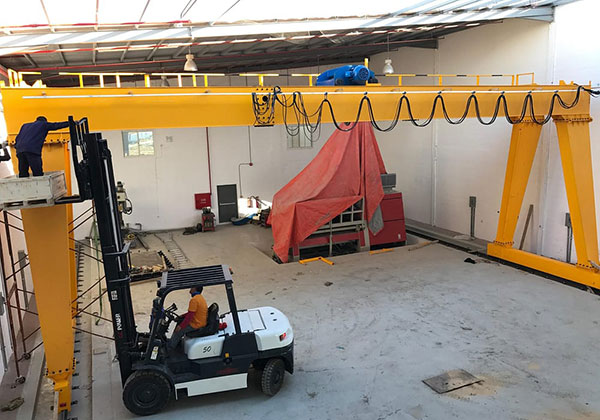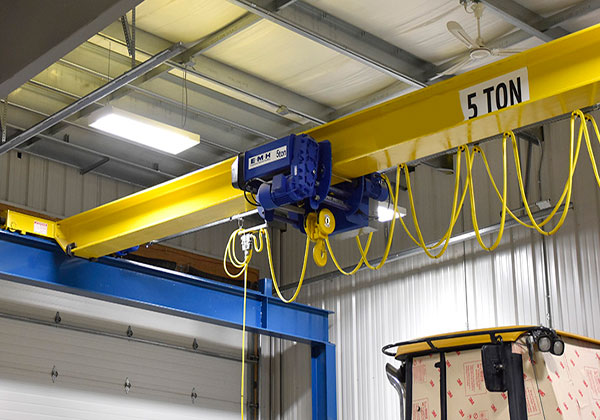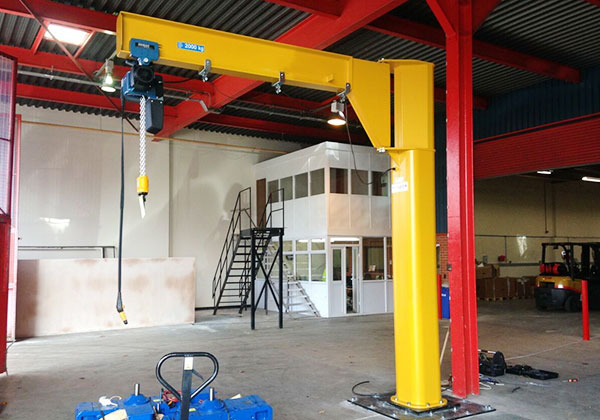

Description
Warning: mysqli_query(): (HY000/1194): Table 'wp_options' is marked as crashed and should be repaired in /www/wwwroot/excelcrane.com/wp-includes/class-wpdb.php on line 2349
Warning: mysqli_query(): (HY000/1194): Table 'wp_options' is marked as crashed and should be repaired in /www/wwwroot/excelcrane.com/wp-includes/class-wpdb.php on line 2349
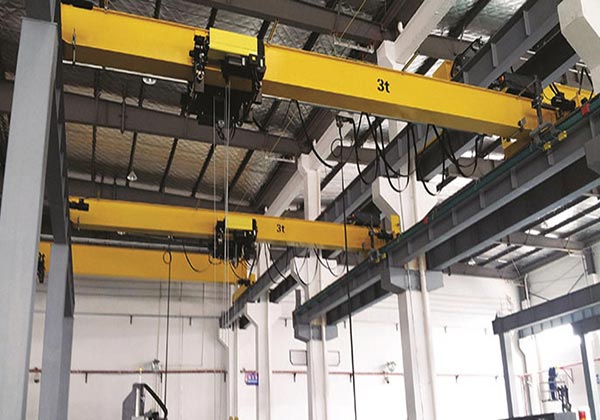
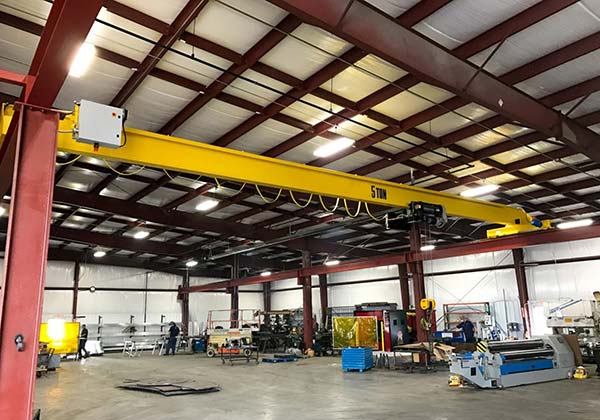
Steel overhead cranes are commonly used in various industries, such as manufacturing, construction, and transportation. These cranes are designed to lift heavy loads and move them from one place to another.
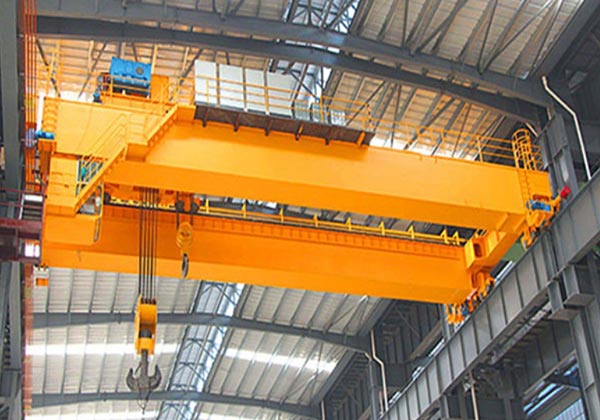
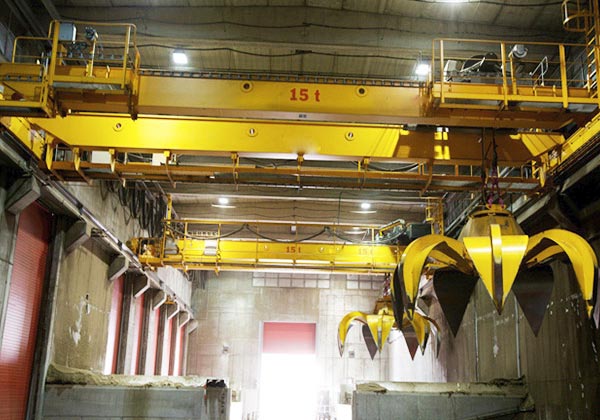
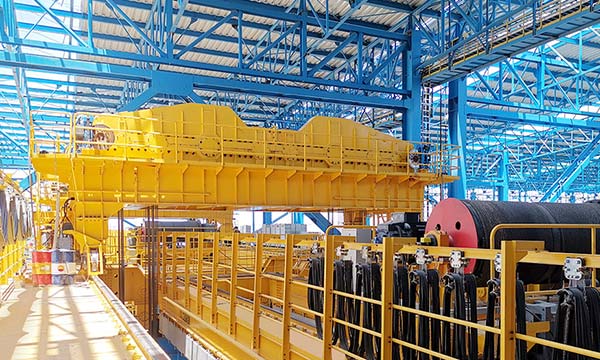
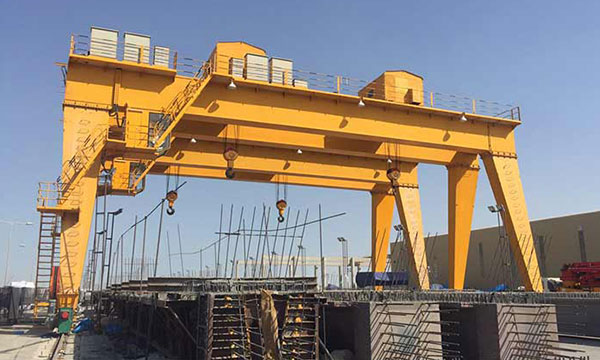
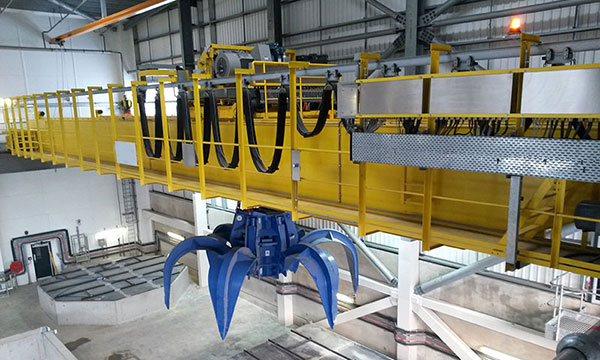
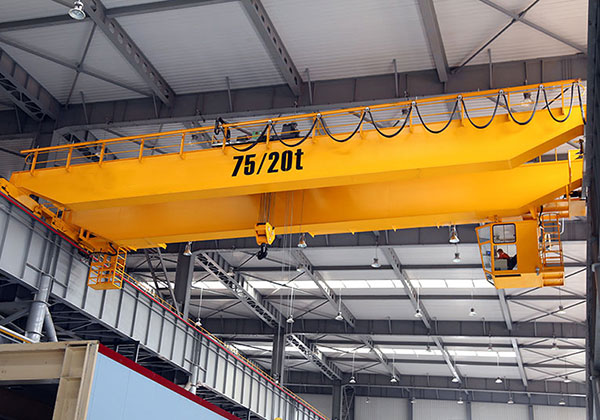
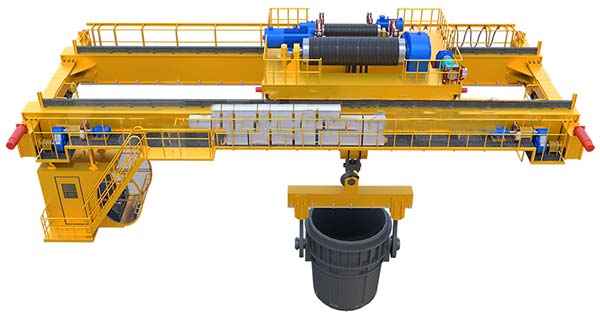
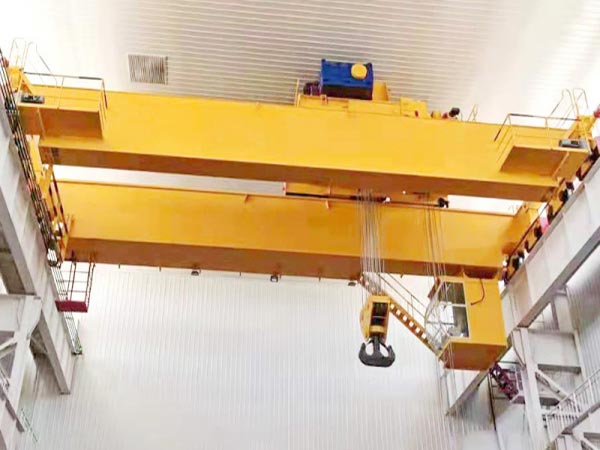
The double-girder bridge crane is a heavy-duty lifting equipment widely used in the industrial field. It is mainly used for the transportation and loading of heavy objects in workshops, warehouses, cargo yards and other places.
The double-girder bridge crane is composed of two parallel main beams and has high load-bearing capacity and stability. The main beam usually adopts a box-shaped structure to ensure the sturdiness and durability of the equipment.
This type of crane can move freely on the bridge, covering the entire operating area, and is suitable for large-span and high-frequency operations.
Double-girder bridge cranes have become indispensable and important equipment in various industries due to their superior performance and versatility.
Equipped with an advanced electrical control system, it can achieve precise control of lifting, running, rotation and other movements to ensure the safety and efficiency of operation.
Maintenance convenience was taken into consideration in the design. The maintenance and replacement of key components are simple, which reduces downtime and improves the efficiency of the equipment.

Components of crane double girder
1. Whole set crane
Efficient operation: Each part of the complete set of equipment has been precisely matched and debugged to ensure efficient operation of the entire lifting system and reduce downtime.
Customized design: According to the specific needs of customers, parameters such as span, lifting height, and lifting capacity can be customized to meet the requirements of different operating scenarios.
Safe and reliable: Integrated a variety of safety protection devices, such as limit switches, overload protection, anti-collision systems, etc., to ensure safe operation.
Intelligent control: Modern complete sets of double-girder bridge cranes are usually equipped with intelligent control systems that support remote monitoring, automated operation and fault diagnosis, improving the automation level and ease of use of the equipment.
Convenient maintenance: The complete set of equipment is designed with the convenience of maintenance in mind. Key components are easy to inspect and replace, reducing the maintenance workload.
2. Main girder
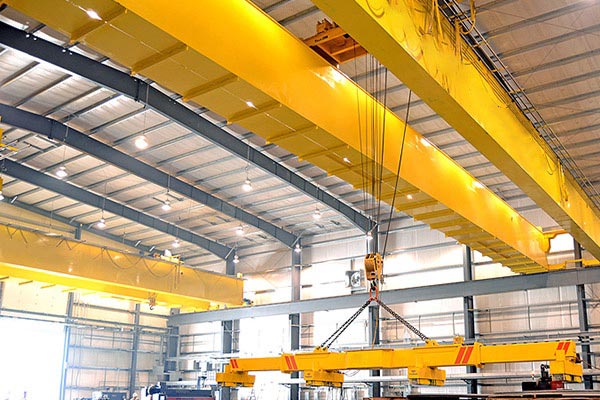
Box-shaped structure: The main beam usually adopts a box-shaped structure, which has good torsion resistance and bending resistance. This structure forms a closed box through a multi-pass welding process, and reinforcement ribs can be installed inside to further improve strength and rigidity.
The main beam is usually made of high-strength low-alloy steel, which has excellent mechanical properties and can withstand large loads without significant deformation.
The span of the main beam refers to the distance between the two main beams. It is usually customized according to the user’s needs. The common span range is between 10 meters and 50 meters.
Weight control: On the premise of ensuring strength, the main beam should be designed to reduce its own weight as much as possible to reduce the burden on other components of the crane, especially when it is used in large spans or with high frequency.

3. Lifting System
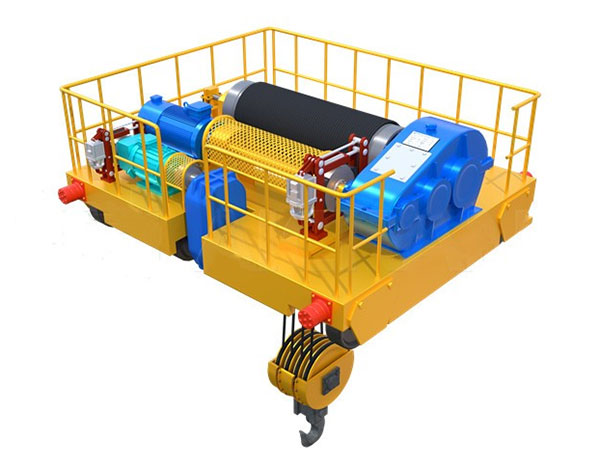
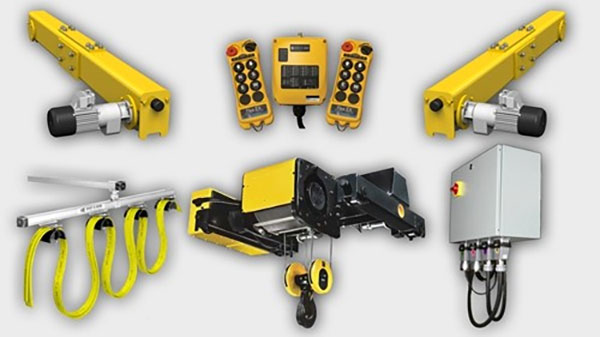
Lifting motor: Usually an electric motor is used, which is divided into single-speed and two-speed motors. Variable frequency motors are also commonly used in modern equipment to achieve more precise speed control.
Reducer: The reducer converts the high-speed rotation of the motor into low-speed and high-torque output, allowing the lifting system to stably lift and lower heavy objects. Commonly used reducers include worm gear reducers, planetary gear reducers, etc. The type selected depends on the required reduction ratio and torque. The drum, the wrapped component of the wire rope, is usually made of steel and is reinforced to withstand high tension.
Drum: The diameter and length of the drum are designed according to the specifications and lifting height of the wire rope to ensure that the wire rope can be wound safely under full load conditions. The drum should be wound in such a way that the wire ropes are arranged evenly and avoid overlapping or knotting of the wire ropes to reduce the risk of wear and damage.
Steel wire rope: Steel wire rope is usually braided from high-strength steel wire, which has extremely high tensile strength and wear resistance.
4. End beam
Structure and composition: The end beam is made of steel, usually using box or I-beam structure, which has high strength and rigidity. The end beams are usually connected to the main beams on both sides to form a stable frame structure. Wheel sets are installed at both ends of the end beam. The wheel sets are driven by electric motors and reducers to enable the crane to move longitudinally along the track. Wheels are generally made of high-strength cast steel or forged steel, which has good wear resistance and impact resistance.
Connection and installation: The end beams are connected to the main beams through high-strength bolts or welding to form a rigid frame structure. The quality and precision of the connections are critical to the overall stability and operating performance of the crane.
Wheels and traveling drive system: Usually the end beam is equipped with driving wheels and driven wheels. The driving wheel is driven by the motor through the reducer to move the crane along the track. The driven wheels rotate freely, supporting the crane’s weight and keeping it traveling straight. The power of the driving wheels comes from the electric motor installed on the end beam. The high-speed rotation of the motor is converted into low-speed and high-torque output through the reducer, ensuring that the crane can start, stop and move smoothly.
Design considerations: The end beam must be designed with sufficient bending strength to withstand the dead weight of the crane and the dynamic load during the movement of the load. The end beam should be rigid enough to prevent twisting or deformation when the crane is running, affecting the safety and operating accuracy of the equipment.
5. Crane traveling mechanism
The operating mechanism of a double-girder bridge crane is the core system that ensures the crane moves smoothly on the track and performs hoisting operations. The operating mechanism includes a variety of components and systems, and its design and performance directly affect the overall working efficiency, stability and safety of the crane. The following is a detailed introduction to the operating mechanism of the double-girder bridge crane:
- Drive system: The electric motor provides the power required to operate the mechanism, allowing the crane to move along the track. The reducer converts the high-speed rotation of the electric motor into low-speed and high-torque output, ensuring that the crane can start and stop smoothly during operation.
- Traveling mechanism: The wheel set includes driving wheels and driven wheels, which are responsible for supporting the weight of the crane and driving smoothly on the track. Connected to the electric motor and reducer to provide power to push the crane.
- Trolley system: The trolley is a laterally moving component installed on the main beam and is responsible for running on the main beam to move the spreader or hook to different working positions. The trolley is usually equipped with an independent motor and reducer system, allowing it to move on the main beam.
- Control system: The operation panel allows the operator to control various functions of the crane, including lifting, walking, trolley movement, etc. Can be a traditional push button panel or a modern touch screen control system.

6. Trolley traversing mechanism
Trolley Frame: The trolley frame provides the basic structure for supporting and mounting other components and is typically made of high-strength steel to withstand the workload. The frame design needs to take into account the load, operating environment and working conditions of the trolley to ensure the stability and reliability of the structure.
Running wheel set: The running wheel set is installed on the trolley frame and runs along the track of the main beam to support the weight of the trolley and ensure its smooth movement. Wheel sets are usually made of high-strength cast or forged steel, which has good wear resistance and impact resistance.
Electric motor: The electric motor provides power to the trolley to move horizontally on the main beam. Depending on the requirements, the motor can be a single speed, two speed or variable frequency motor. Variable frequency motors allow for more precise speed control and regulation.
Reducer: Converts the high-speed rotation of the motor into low-speed and high-torque output to ensure smooth operation of the car. Common reducers include worm gear reducers and planetary gear reducers.
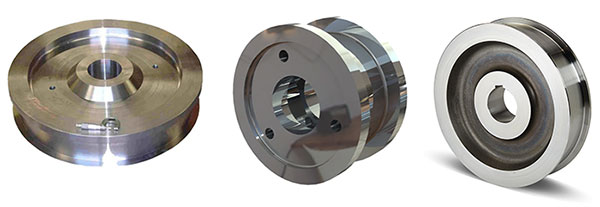
7. Crane wheel
Drive Wheels are powered wheels that receive rotational motion from the crane’s drive system. They are responsible for propelling the crane along the track. Also known as non-driven or free-rolling wheels, these support the crane’s weight and help guide it along the track but do not receive power from the drive system.The wheels support the entire weight of the crane and the load it carries. They are crucial for the crane’s ability to move smoothly along the rails or tracks installed on the supporting structure. Properly designed wheels ensure that the crane remains stable and balanced during operation, preventing derailing and ensuring smooth travel.
8. Crane hook
The hook of the double-girder bridge crane is one of the key components used for lifting and carrying heavy objects. It is usually mounted on a lifting trolley and can move up and down to grab or lower heavy objects. Hooks are typically designed with strength and safety in mind to ensure they can carry weight safely and reliably during operation.
Key features include:
- Material: Hooks are usually made of high-strength alloy steel to ensure they do not break or deform under heavy loads.
- Structure: The hook is designed with a closed hook shape to prevent heavy objects from accidentally slipping off. Some hooks are also equipped with anti-detachment devices to further improve safety.
- Rotation function: For ease of operation, the hook is usually able to rotate freely so that the operator can grab and place heavy objects more flexibly.
- Carrying capacity: The hook’s carrying capacity varies according to the design of the crane, ranging from a few tons to dozens of tons, and is usually clearly marked.
- Safety: During use, the hook needs to be inspected regularly to ensure that there is no wear, cracks or other conditions that may affect safety.
In summary, the hook of a double-girder overhead crane is an important part of a lifting operation, and its design and maintenance are crucial to ensuring safety and efficiency.

9. Motor
The engine (or drive device) of a double-girder bridge crane is the core component that provides power to drive the crane to operate. Usually, the engine of a double-girder bridge crane is an electric motor, which is responsible for providing power to the entire lifting system, including the lateral movement of the trolley, the longitudinal movement of the trolley, and the lifting and lowering of the hook.
- Three-phase asynchronous motors are usually used because they can provide stable and reliable power output and can withstand long-term operation.
- In order to ensure safety, the motor is usually equipped with an electromagnetic brake, which can quickly stop the movement of the crane in case of power outage or emergency to prevent accidents.
- Since the electric motor generates a lot of heat when running at high load for a long time, it is usually equipped with an air cooling or liquid cooling system to keep the engine at a suitable operating temperature.
- In order to ensure the long life and reliability of the engine, regular maintenance is essential, including lubrication, replacement of worn parts and inspection of electrical connections.

10. Sound and light alarm system & limit switch
Warning function: When the crane starts, runs or is about to perform dangerous operations, the audible and visual alarm system will automatically send out audible and visual signals to remind the operator and surrounding people to pay attention to avoid accidents.
Emergency reminder: When encountering an abnormal situation or emergency shutdown, the sound and light alarm system will send out a continuous alarm signal to remind the operator to take appropriate emergency measures.
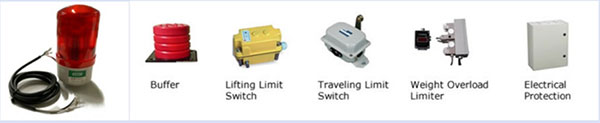
End point protection: The limit switch is mainly used to prevent the crane from exceeding the safe operating range. For example, when the crane’s trolley reaches both ends of the bridge, the limit switch will automatically cut off the motor power, stop the trolley from moving forward, and prevent collisions.
Durability: Limit switches need to have high durability and resistance to environmental interference because they are frequently triggered during operation and may be exposed to harsh working environments.
11. Safety Devices
There are several safety devices that can be installed on casting steel overhead cranes to prevent accidents and injuries. These devices include:
- Lift brake:The lifting brake ensures that the hanging object will not slide down when it is lifted or stopped. Brakes usually use electromagnetic braking and can automatically lock in case of power outage or emergency.
- Rope guide and stopper:The rope guide ensures that the wire rope is wound correctly on the drum and prevents the wire rope from kinking or overlapping. The limiter is used to detect the tightness of the wire rope or the rotation of the drum to prevent the wire rope from exceeding the safe range.
- Electrical protection devices:The electrical protection devices of the crane include overload protection, short circuit protection, grounding protection, etc. to prevent electrical faults from causing harm to the crane and operators.
- Anti-collision device:Anti-collision devices are used to avoid collisions when multiple cranes are running on the same track. The device usually uses infrared or laser sensing to automatically slow down or stop the crane when it detects the approach of another crane.
- Buffer:The buffer is installed at the end of the crane track to prevent the crane or trolley from hitting the end of the track due to inertia. They are usually composed of rubber or hydraulic devices that absorb impact forces and reduce damage to equipment due to collisions.
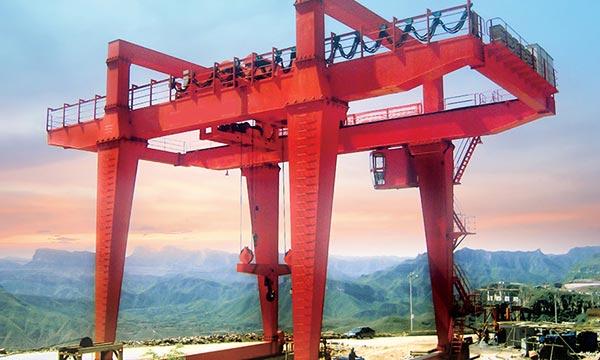
- Windproof device:Double-girder bridge cranes used outdoors are usually equipped with wind protection devices, such as track clamps, anchoring devices, etc., to prevent the crane from being blown off the track in strong wind conditions. These devices secure the crane to the rails when it is parked.
By installing these safety devices, operators and workers can reduce the risk of accidents and injuries on casting steel overhead cranes.
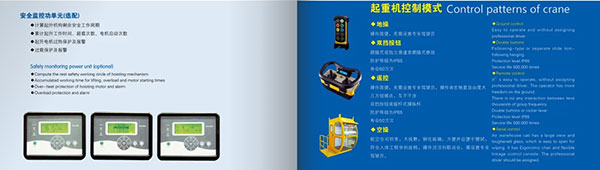
12. Control Mode
There are various control methods for double-girder overhead cranes, mainly depending on the purpose of the crane, the operating environment and the complexity of the operation. The following are some common control methods:
- Ground control: This control method connects the controller to the crane through cables, and the operator directly controls the operation of the crane through buttons or levers.
- Wireless remote control: The operator can operate from a safe distance or the best observation position, regardless of the ground position. Reduces the risk of operators operating in hazardous areas, especially suitable for hazardous or dangerous environments.
- Cab control: The operator can observe the lifting operation directly from the cab, especially when working at high altitudes or in large areas, with better control accuracy. The cab is usually equipped with comfortable seats, air conditioning, lighting and other facilities, making it suitable for long-term operations.
- Remote control system: The remote control system is usually integrated with surveillance cameras, sensors and other equipment. The operator can monitor the working status and environmental conditions of the crane in real time and perform precise operations. The remote control system can be combined with the automated control system to achieve semi-automatic or fully automatic operation and improve work efficiency.
13. Sketch

Application of crane double girder
Double-girder bridge cranes are widely used in many industrial fields due to their strong carrying capacity, wide range of applications and flexible operation methods. The following are the main application areas of double girder overhead cranes:
- Manufacturing industry: In the heavy machinery manufacturing industry, double-girder bridge cranes are used to transport and assemble large mechanical components, such as engines, machine tools, ship components, etc. They can precisely move heavy components into designated locations, supporting efficient production processes.
- Steel industry: Double-girder bridge cranes are widely used in steel plants to transport heavy steel products such as steel plates, steel coils, and steel pipes. Due to the large weight and volume of steel, the high load-bearing capacity and stability of the double-girder overhead crane make it an indispensable piece of equipment in the steel production process.
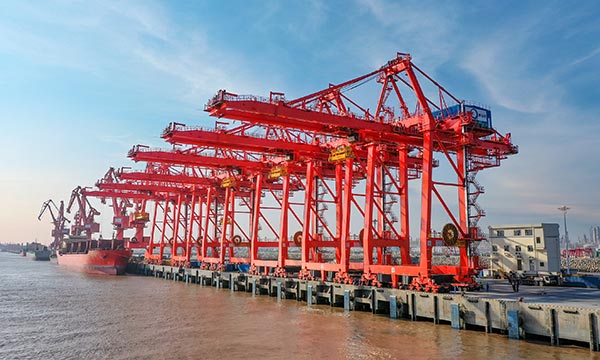
- Ports and Terminals: In ports and terminals, double-girder overhead cranes are used to handle, load and unload containers. They can move large containers quickly and accurately, significantly improving cargo handling efficiency.
- Shipbuilding industry: In shipyards, double-girder overhead cranes are used to handle and assemble large hull modules and components. Due to the enormous size and weight of the hull, double-girder overhead cranes play a key role in this high-load operation.
Double-girder bridge cranes are widely used in many industries due to their strong carrying capacity, wide range of application scenarios and high operational flexibility. Whether it is heavy industry, energy field, or aerospace and nuclear industry with high precision requirements, double-girder bridge crane can provide reliable handling and operation support and is an indispensable and important equipment in these industries.
Advantages of crane double girder
Below are some advantages of casting steel overhead crane:
1. Strong load-bearing capacity: The strong load-bearing capacity of the double-girder bridge crane makes it excellent in heavy industry and large-scale material handling. The double-beam structural design, application of high-strength materials, advanced drive and control systems, and professional spreader configuration are all key factors to ensure safe and efficient operation under high loads.
2. Large span: Due to the double-girder structure, the span of the bridge crane can be very large and is suitable for large-scale material handling. Whether it is a large workshop, warehouse or open space, double girder overhead cranes can cover a wider work area.
3. High stability: The structural design of the double-girder bridge crane makes it highly stable. Even under heavy loads or large spans, the crane can still maintain smooth operation, reduce sway and shaking, and ensure the safety and accuracy of operation.
4. Flexible operation: Double-girder bridge crane supports multiple control methods, such as ground control, cab control, wireless remote control, etc. The operator can choose the most appropriate control method according to the specific situation. At the same time, the crane can move in multiple directions, including transverse, longitudinal and vertical directions, with high operational flexibility.

Main technical data

Crane production procedure
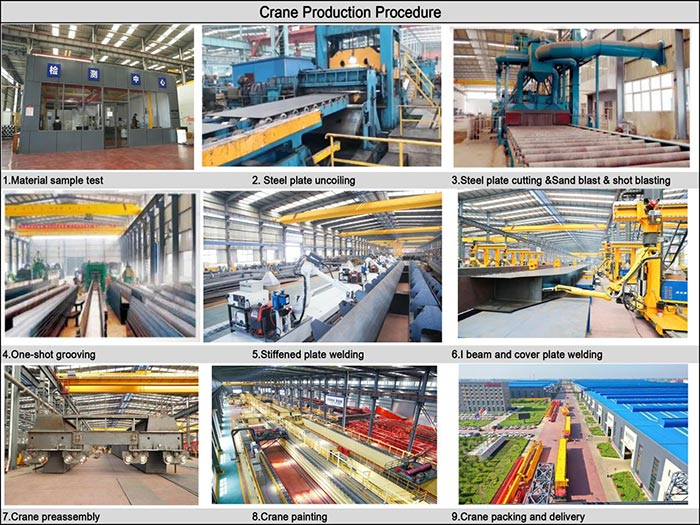
The production procedure for casting steel overhead crane typically involves the following steps:
1. Scheme design: Based on demand analysis, engineers formulate preliminary design schemes, including structural design, drive system design, control system design, etc. Factors such as safety, economics and feasibility are also considered at this time.
2. Material selection: Select appropriate materials according to design requirements. It mainly includes high-strength steel, crane wire ropes, motors, cables, control system components, etc. After the purchased materials arrive at the factory, strict quality inspection is required to ensure that all materials meet the design standards and quality requirements.
3. Main beam manufacturing: Cut the steel into the specified size and shape according to the design drawings. CNC cutting equipment is usually used for blanking to ensure cutting accuracy. The cut steel plates and profiles are assembled into the main girder of the double-girder bridge crane through welding. After welding is completed, the main beam needs to be heat treated, and then the main beam needs to be finished, including drilling, cutting and other processes to ensure that the dimensions of the main beam meet the design requirements.
4. Trolley assembly: The trolley is an important part of the crane and is responsible for lifting and moving heavy objects. The manufacturing of the trolley includes steps such as frame welding, wheel axle installation, and reducer assembly.
5. Surface treatment: Anti-corrosion coating is applied to the steel structure parts of the crane to improve its corrosion resistance and service life. Often multiple layers of anti-corrosion paint are applied, with the final layer being painted in a customer-specified color.
6. Whole machine assembly: The whole machine is assembled in the crane’s manufacturing workshop or at the customer’s site. Including installing the main beam on the track, fixing the trolley and hook, installing the electrical system, etc.
7. System debugging: After the assembly is completed, debug each system of the crane to ensure that all parameters of the crane meet the design requirements during operation. Debugging includes comprehensive debugging of mechanical systems, electrical systems and control systems.
8. Factory inspection: After completing all tests, the crane needs to pass factory inspection to ensure that its various indicators comply with national or industry standards.
The production process of double-girder bridge cranes involves multiple links, from design and material procurement to manufacturing, assembly, and debugging. Each step requires strict quality control. Through scientific production processes and precise process control, the safety, reliability and long-term performance of the crane are ensured.
Global Market

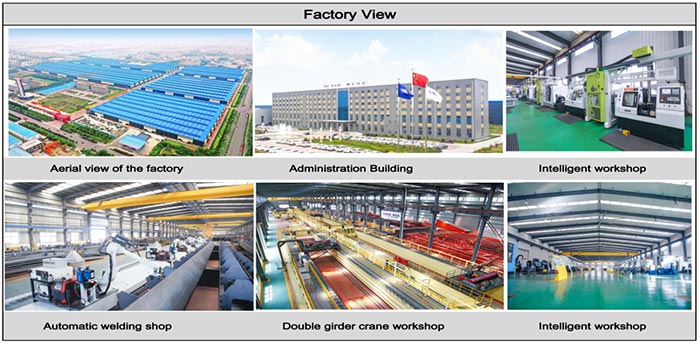
Workshop view
The company has installed an intelligent equipment management platform, and has installed 310 sets (sets) of handling and welding robots. After the completion of the plan, there will be more than 500 sets (sets), and the equipment networking rate will reach 95%. 32 welding lines have been put into use, 50 are planned to be installed, and the automation rate of the entire product line has reached.