
Description
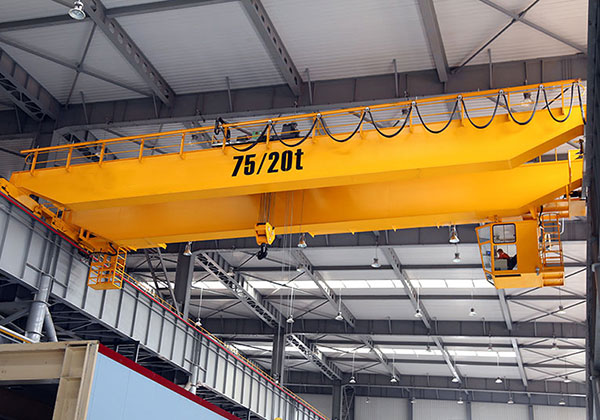
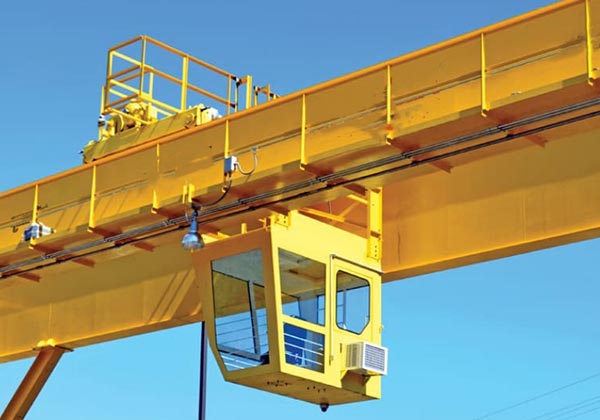
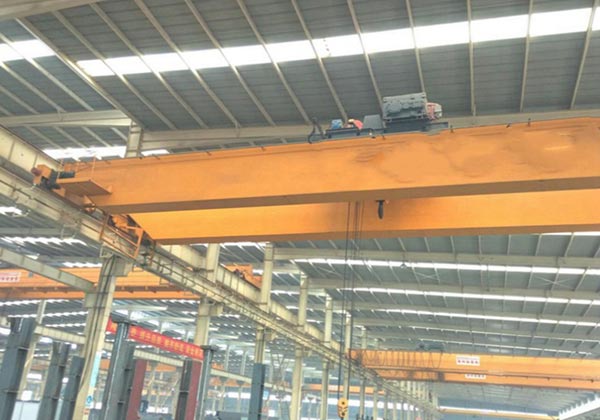
A double girder overhead conveyor is a type of materials handling equipment commonly used in various industries, such as manufacturing, construction and shipping. It is designed to lift and move heavy loads, such as steel beams, pipes and containers, using a pair of parallel beams that extend above the working area.
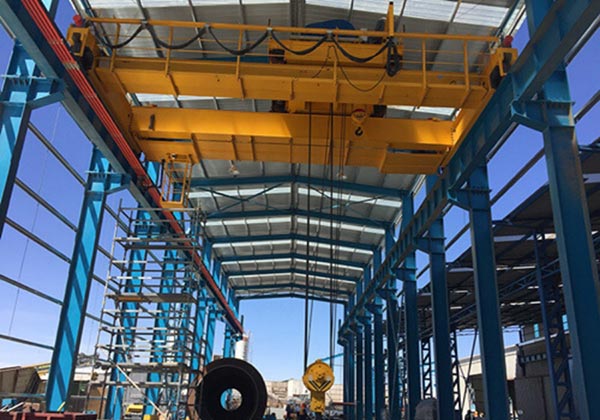
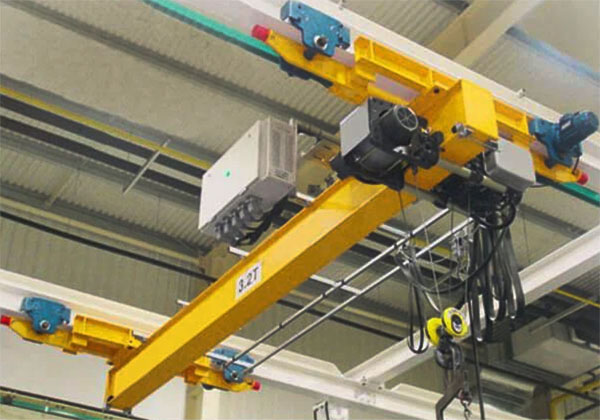
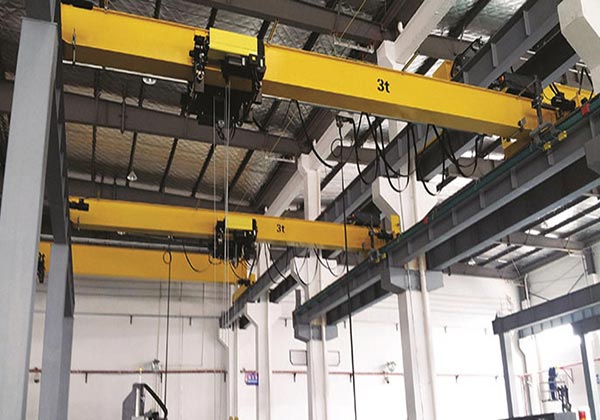
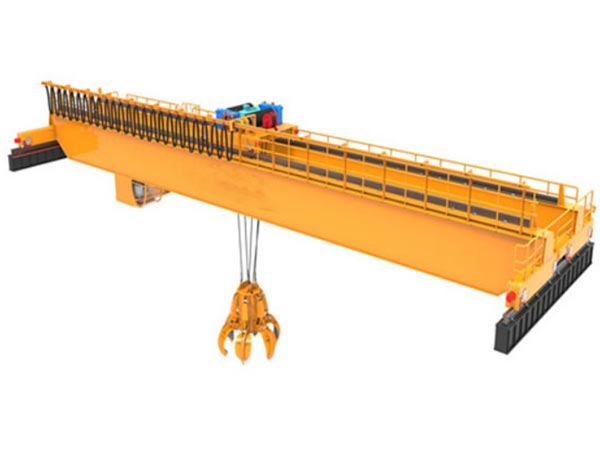
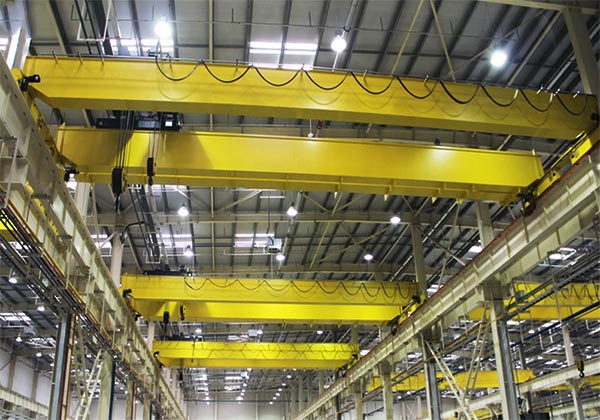
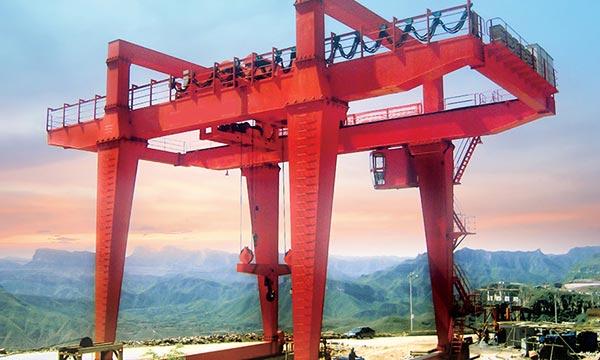
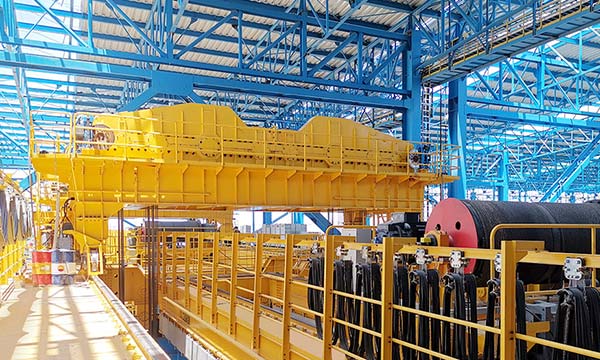
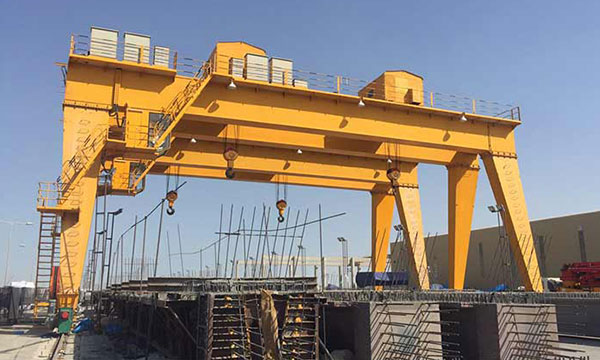
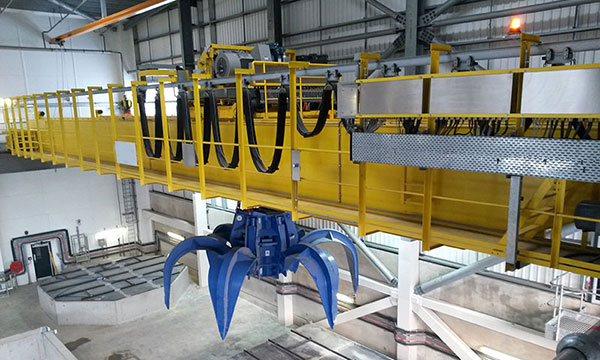
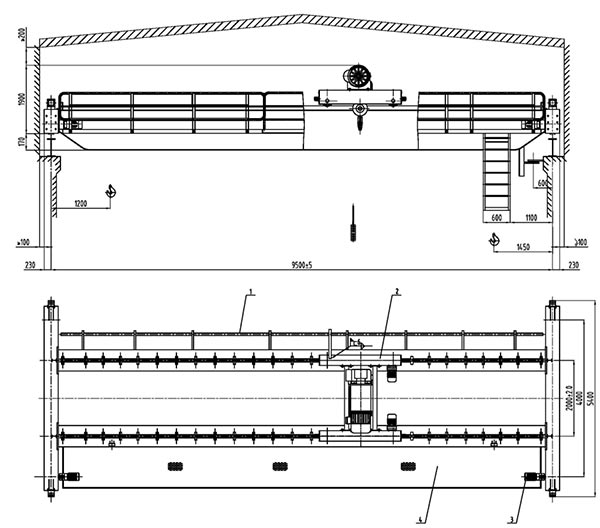
Pictures & Components of 60t overhead crane
1. Beam: It is a type of crane that uses two parallel girders to support the load. The beams are typically made from steel or aluminum, and they can be either straight or curved. The beams are usually mounted on wheels so they can move along the floor or ceiling as needed.

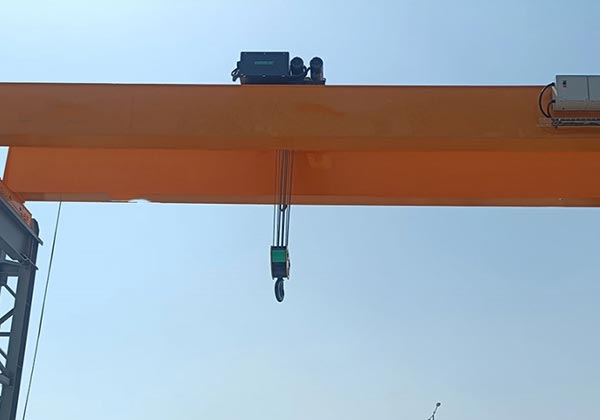
2. Lifting Mechanism: The lifting mechanism of a double girder overhead crane consists of two parts: the hoist and the trolley. The hoist is responsible for lifting the load, while the trolley moves it horizontally along the beams.
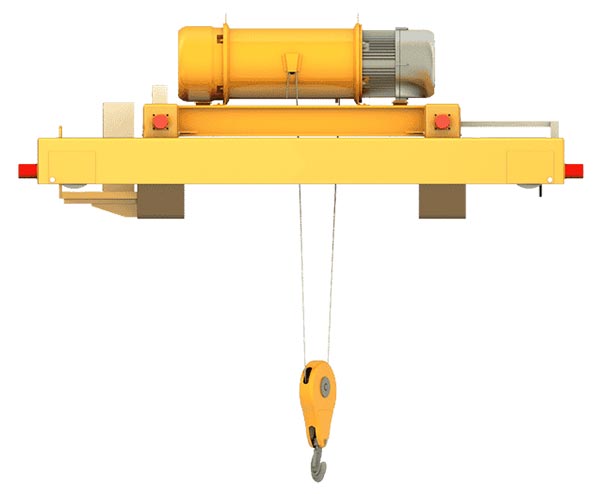
3. Control system: The control system of a double girder overhead travelling crane is responsible for controlling the movement and operation of the crane. It usually comprises several components.Such as Operator Controls.
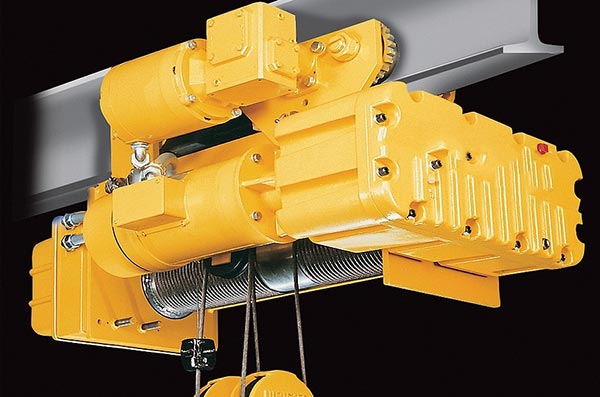
4. Hoist: A double girder overhead travelling crane hoist is a kind of lifting mechanism that can lift heavy objects such as materials and goods to a certain height. It mainly consists of a main girder, hoist rope, hook and hoist mechanism.
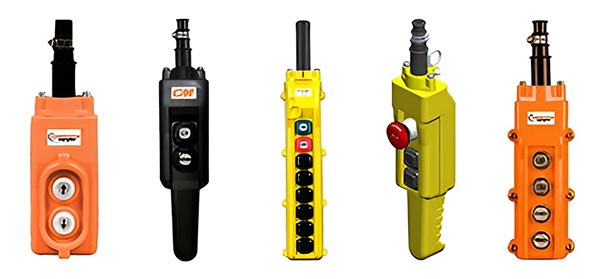
5. Brake system: The braking system on a double-girder crane is a crucial component that ensures safety and stability in the lifting operation. It mainly consists of brake shoes, brake cylinders, brake ropes and brake mechanisms. The brake shoes are mounted on the lower end of the lifting rope and engage with the brake cylinders when the brake is activated.
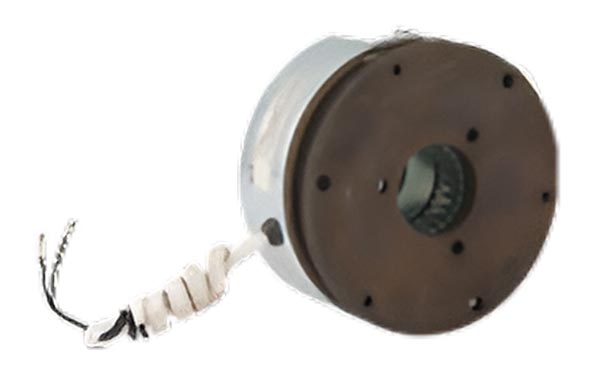
6. Sketch:
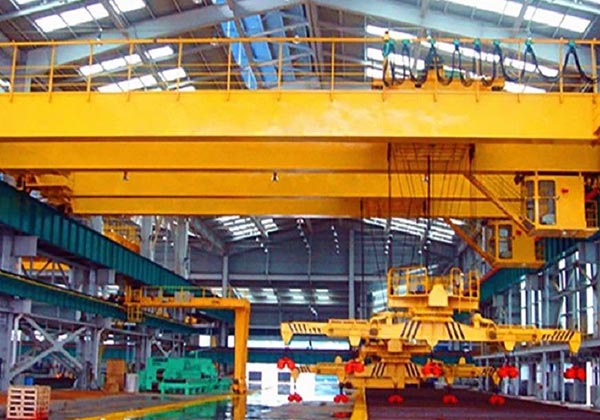
Application of 60t overhead crane
- Manufacturing industry: Double girder overhead cranes are commonly used in factories and workshops to lift and transport heavy materials and machinery, such as steel plates, machine tools, and molds.
- Logistics and warehousing: In logistics and warehousing centers, double girder overhead cranes are used to move goods between storage areas and loading/unloading zones.
- Construction industry: Double girder overhead cranes are used in construction sites to lift and transport heavy materials such as concrete, steel bars, and prefabricated components.
- Power generation industry: In power plants, double girder overhead cranes are used to lift and transport heavy equipment such as generators, turbines, and boilers.
- Metallurgical industry: In metallurgical plants, double girder overhead cranes are used to lift and transport molten metals and metal products.
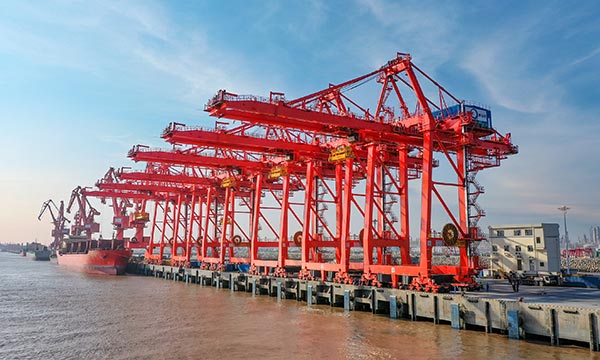
- Shipbuilding industry: In shipyards, double girder overhead cranes are used to lift and transport large ship components and propulsion systems.
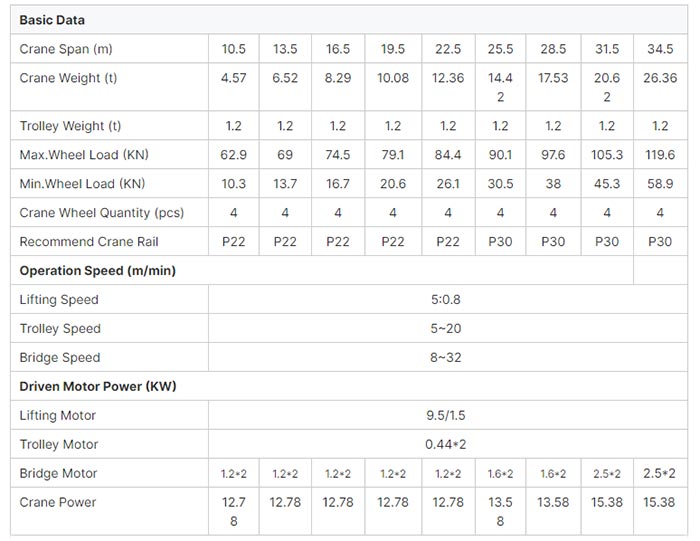
Main technical data
Advantages of overhead crane
- Larger working area: Double girder overhead cranes have a larger working area, allowing for the lifting and transportation of larger and heavier materials and goods.
- Higher lifting capacity: Double girder overhead cranes have a higher lifting capacity than single girder overhead cranes, making them more suitable for lifting heavy loads.
- Versatility: Double girder overhead cranes can be used for a variety of lifting operations, such as horizontal, vertical, and oblique lifting, making them more versatile than single girder overhead cranes.
- Efficiency: Double girder overhead cranes have a higher lifting speed and lower energy consumption than single girder overhead cranes, making them more efficient in lifting operations.
- Safety: Double girder overhead cranes have a more stable structure and better load-bearing capacity than single girder overhead cranes, making them safer in lifting operations.
Crane production procedure
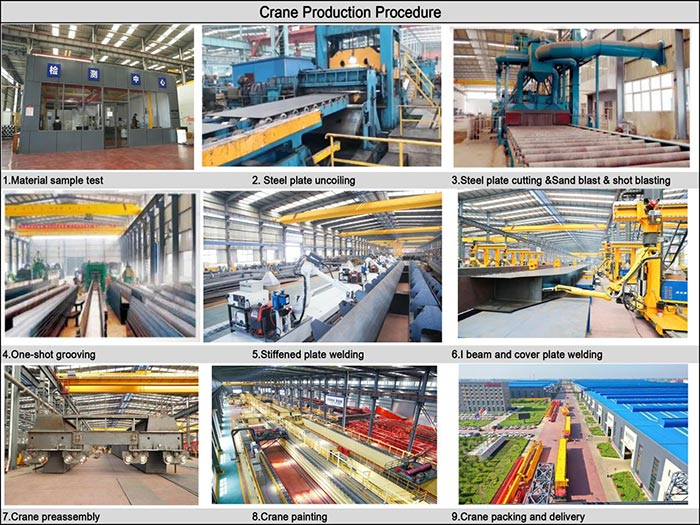
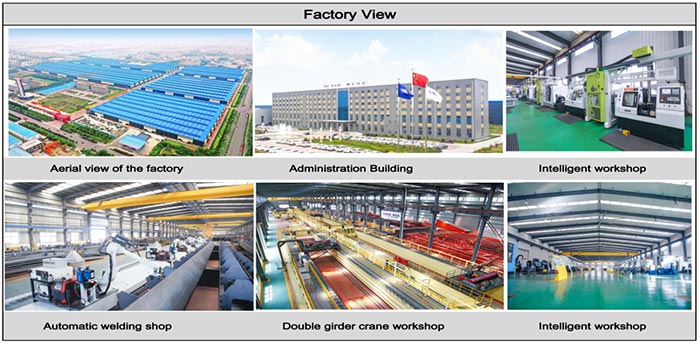
Workshop view
The company has installed an intelligent equipment management platform, and has installed 310 sets (sets) of handling and welding robots. After the completion of the plan, there will be more than 500 sets (sets), and the equipment networking rate will reach 95%. 32 welding lines have been put into use, 50 are planned to be installed, and the automation rate of the entire product line has reached.