


Description
Warning: mysqli_query(): (HY000/1194): Table 'wp_options' is marked as crashed and should be repaired in /www/wwwroot/excelcrane.com/wp-includes/class-wpdb.php on line 2349
Warning: mysqli_query(): (HY000/1194): Table 'wp_options' is marked as crashed and should be repaired in /www/wwwroot/excelcrane.com/wp-includes/class-wpdb.php on line 2349
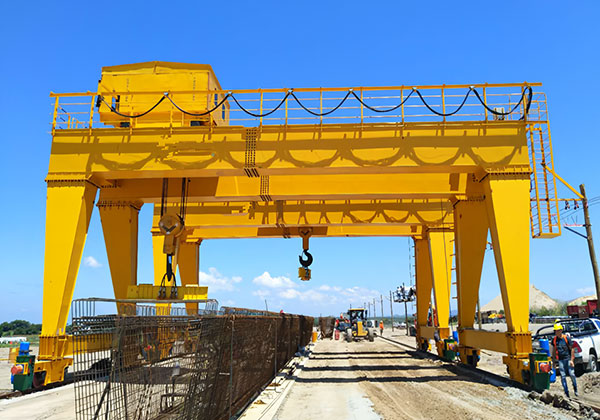
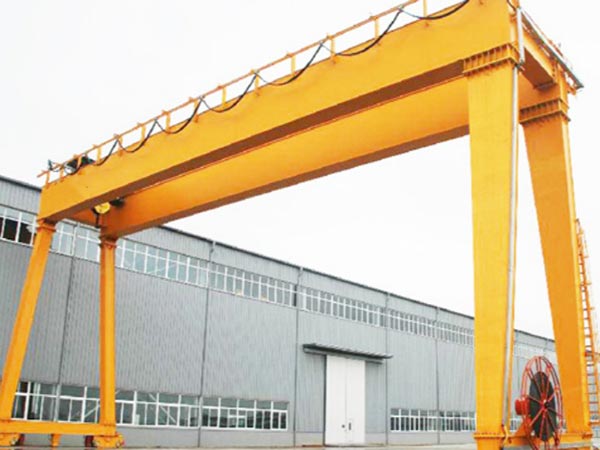
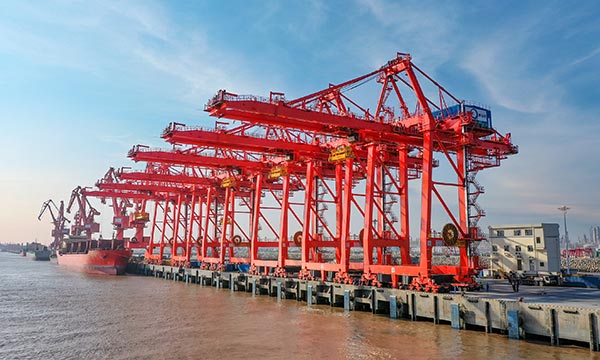
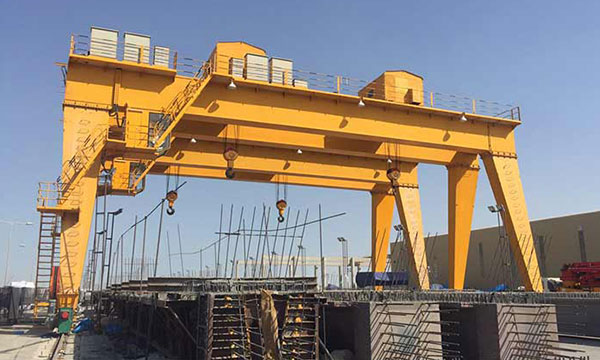
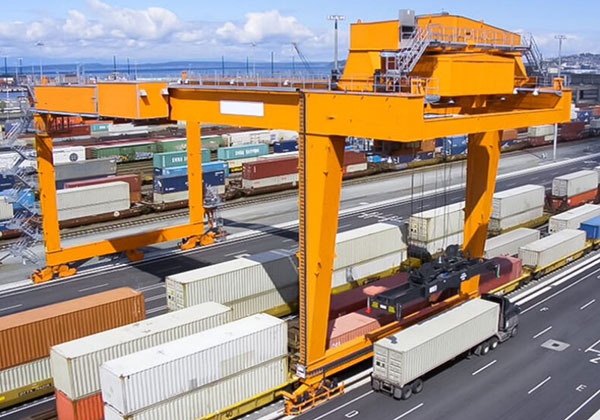
A rail-mounted container gantry crane is a type of gantry crane specially designed for handling containers in a harbour or railway station. These cranes are mounted on rails so that they can move along a row of stacked containers.
Components of rail mounted container gantry crane
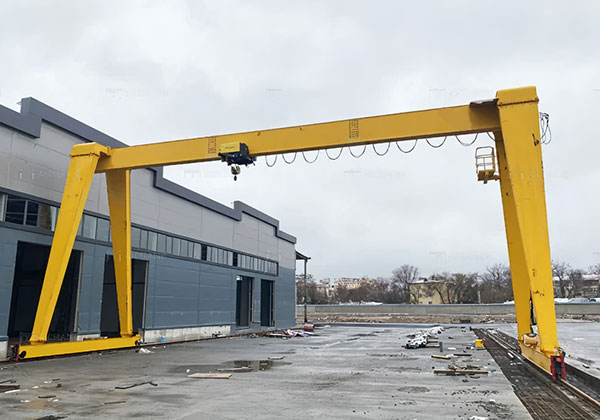
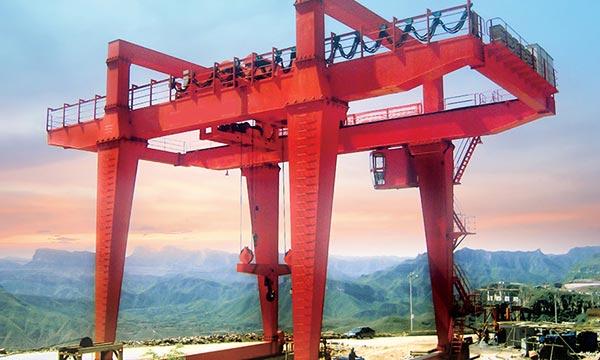
1. Beam: The rail-mounted container crane is a type of lifting equipment used for loading and unloading containers from trucks, trains or ships. It consists of a horizontal beam that extends across the width of the container stack, supported by two vertical columns on either side. The beam is equipped with a lifting device and can be moved along the rail to access different parts of the stack.
The crane is operated by a remote control system, enabling the operator to move the crane along the rail and raise or lower the container. The crane can also rotate the container to align it with the truck or ship’s hatch. Rail-mounted container cranes are commonly used in ports, marshalling yards and logistics centers, where large volumes of containers need to be handled efficiently.

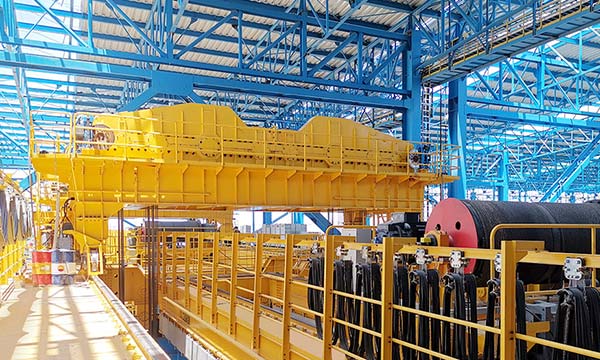
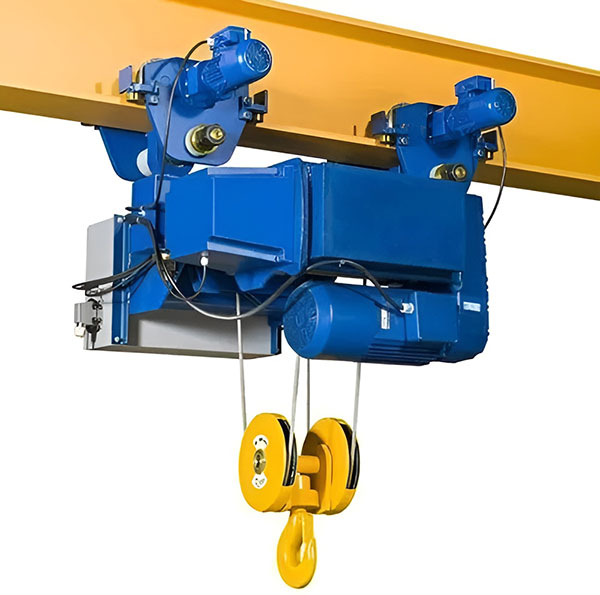
2. Lifting Mechanism: The lifting mechanism of a rail-mounted container gantry crane is a crucial component that enables the crane to lift and lower containers from the ground to the stacking area or vice versa. Here is a description of the main components Lifting motor(s).
3. Control system: The rail container gantry crane control system is responsible for controlling all crane functions, including its movement on the rails, lifting and lowering of containers and all additional functions such as twistlock operation and spreader adjustment. The control system ensures efficient and safe container handling in the port or terminal. A typical control system is structured as follows: Operator control centre:

4. Hoist: The hoisting mechanism, often simply referred to as the “hoist,” is an integral part of a rail mounted container gantry crane. It is responsible for lifting and lowering containers from the ground to the stacking area or from stack to the ground.

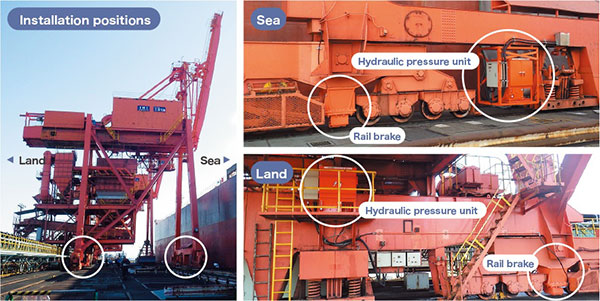
5. Brake system: The brake system of a rail mounted container gantry crane is crucial for the safe operation of the crane, providing controlled deceleration and stoppage of the crane’s movements, including hoisting and traversing actions. The brake system must be reliable to prevent accidents and damage to cargo or equipment.
6. Sketch:

Application of rail mounted container gantry crane
Ports and Maritime Terminals:
Ship to Shore Operations: Loading and unloading containers from ships docked at the port.
Transshipment Activities: Moving containers between different vessels (known as transshipment) without having to handle the cargo multiple times.
Rail Yards:
Intermodal Terminals: Transferring containers between rail cars and trucks or storage areas.
Rail to Truck Transfers: Moving containers from rail transport to road transport and vice versa.Storage and
Distribution Centers:
Stacking and Retrieval: Storing containers in stacks and retrieving them as needed for transport.
Container Depots: Managing the storage and transportation of empty containers.
Industrial Facilities:
Factory Loading/Unloading: Moving raw materials or finished products in and out of factories using containers.
Heavy Industry Sites: Handling large or heavy items that require the use of specialized containers.
Advantages of rail mounted container gantry crane
High Efficiency:
High Speed Operation: Rail mounted gantry cranes are designed for high speed and efficiency, allowing operators to move containers quickly between stacks and transportation modes (e.g., ship to truck/train).
Simultaneous Operations: Some models can hoist and traverse simultaneously, reducing the time to complete each move.
Space Saving:
Compact Footprint: These cranes have a relatively small footprint compared to some other types of cranes, making them suitable for compact or crowded port environments.
Stacking Capability: They can stack containers multiple tiers high, making efficient use of space in storage yards.
Versatility:
Adaptable to Different Container Sizes: Rail mounted gantry cranes can be adapted to handle different sizes and types of containers, offering flexibility for varying cargo.
Integrated Systems: Modern cranes often include advanced control systems and automation capabilities, which can further improve efficiency and reduce the need for manual labor.
Cost-Effective:
Reduced Energy Consumption: Compared to some rubber-tired gantry cranes (RTGs) with similar capacities, rail mounted cranes may consume less energy during operations.
Maintenance Costs: While all cranes require regular maintenance, the simpler mechanical systems of rail mounted gantry cranes can lead to lower maintenance costs compared to more complex automated systems.
Safety:
Predictable Movement: Since these cranes operate on fixed rails, their movement is predictable, enhancing safety by minimizing unexpected movements or swaying.
Brake System: An effective brake system ensures that the crane can be stopped reliably at any point, preventing accidents and ensuring safe operation.

Main technical data

Crane production procedure
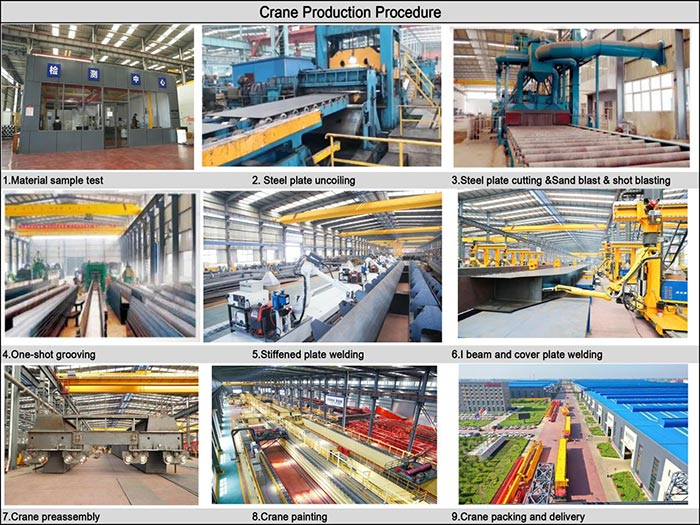
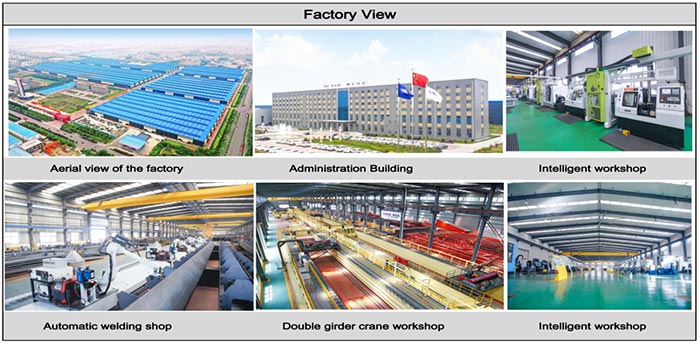
Workshop view
The company has installed an intelligent equipment management platform, and has installed 310 sets (sets) of handling and welding robots. After the completion of the plan, there will be more than 500 sets (sets), and the equipment networking rate will reach 95%. 32 welding lines have been put into use, 50 are planned to be installed, and the automation rate of the entire product line has reached.