

Description
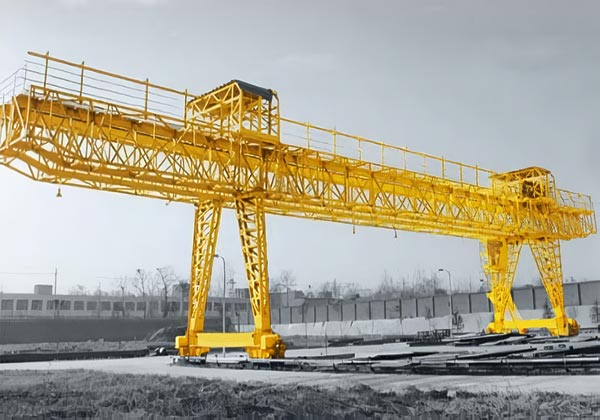
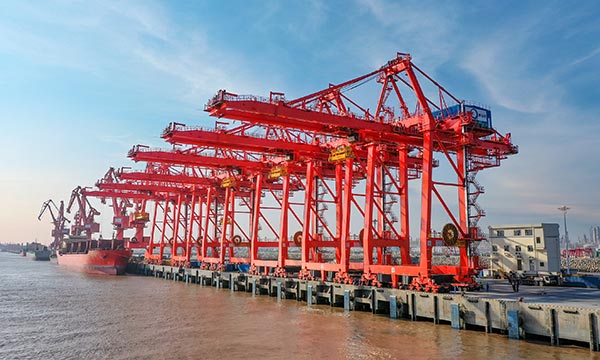
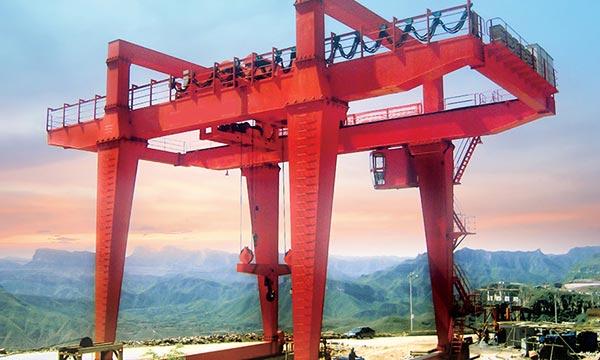
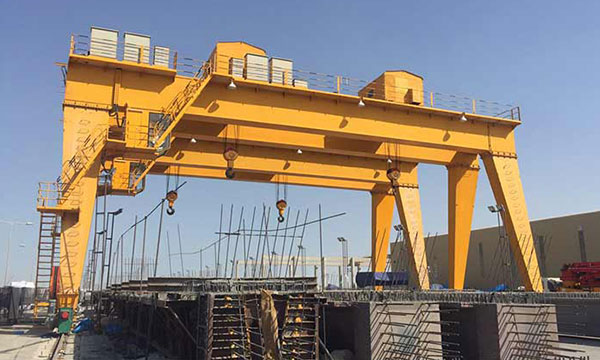
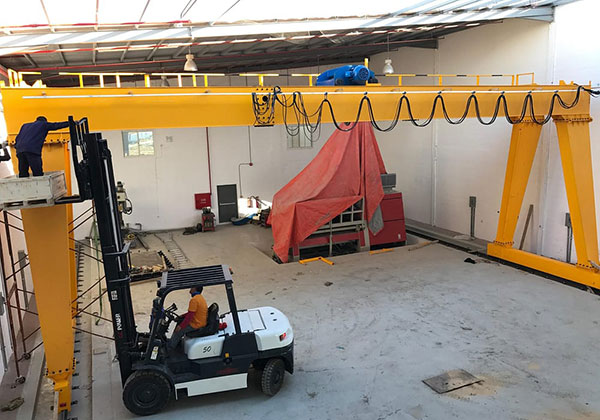
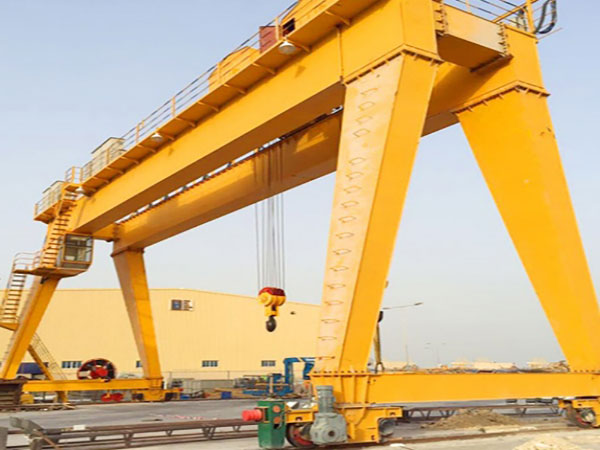
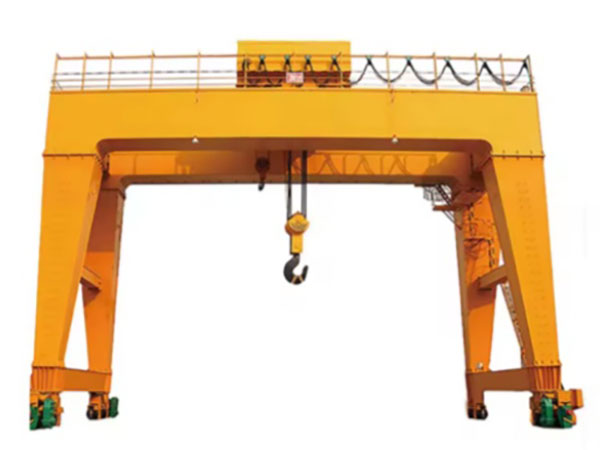
1. The outdoor double-girder gantry crane is a heavy-duty material handling equipment specially designed for outdoor environments. It is usually used in docks, freight yards, construction sites, large factories and warehousing. It has a stable structure and strong load-carrying capacity, and is suitable for long-distance and heavy-load material handling needs.
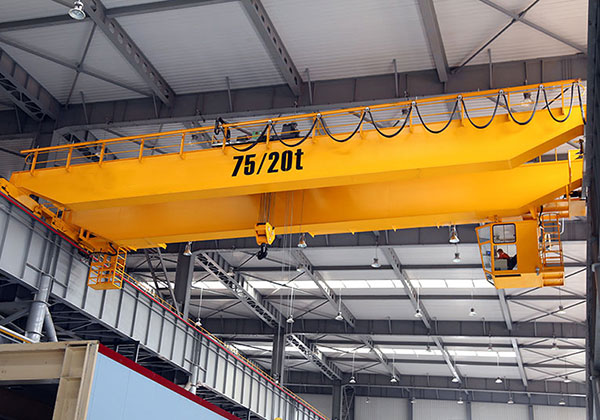
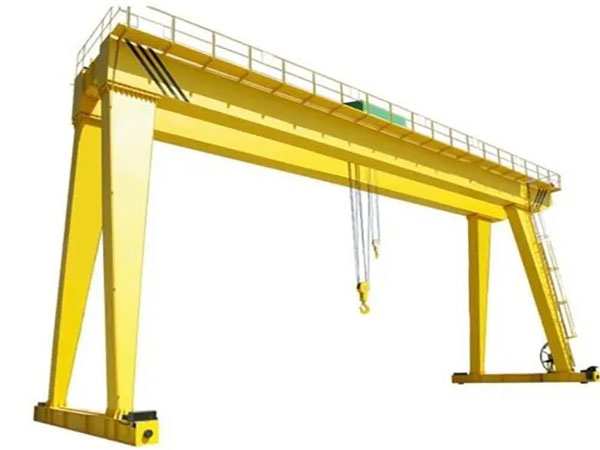
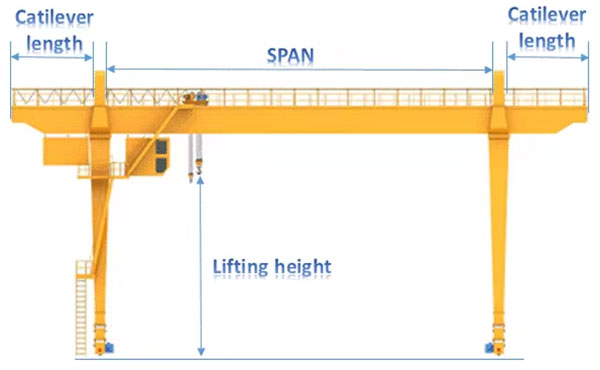
2. Adopting a double-beam design, the two parallel main beams provide higher load-bearing capacity and structural stability, and are suitable for handling overweight and large-volume materials. Its mast consists of two columns and beams, supporting the weight of the entire crane to ensure stability and wind resistance in outdoor environments.
3. Gantry cranes are usually equipped with wind protection devices such as anchors and wind protection cables to resist the impact of strong winds on the equipment. The surface of the crane is coated with a corrosion-resistant coating to prevent metal corrosion caused by rain, snow, sun and other harsh weather conditions and extend the service life of the equipment.
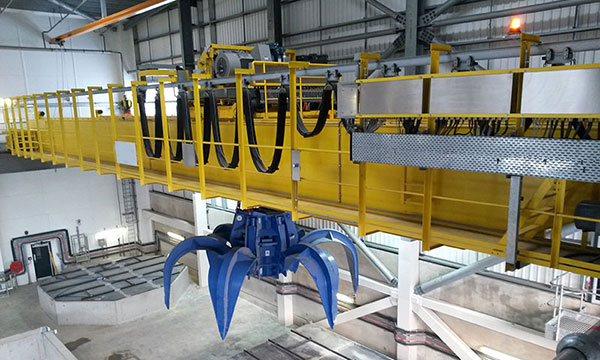
4. Outdoor double-girder gantry cranes can carry materials ranging from a few tons to hundreds of tons, and are suitable for handling and loading and unloading tasks of various heavy materials. Different types of lifting mechanisms can be equipped according to needs, such as hooks, grab buckets, electromagnetic chucks, etc., to meet different handling needs.
5. With its high efficiency, safety and reliability, outdoor double-girder gantry crane is widely used in various occasions requiring heavy material handling. It is an indispensable and important equipment in modern industry and construction.
Components of outdoor gantry crane
1. Main girder
- The main beam consists of two parallel steel beams, usually using a box structure or H-shaped steel structure. This double-beam design increases the rigidity and strength of the structure, allowing it to withstand greater loads. The main beam using a box-shaped structure has high torsional strength and bending resistance, and is suitable for heavy-load and long-span application scenarios. The main beam of the H-shaped steel structure is lighter and suitable for cranes with medium loads and small and medium spans.
- The main beam is usually made of high-strength, weather-resistant steel that can withstand the harsh conditions of the outdoor environment such as wind and rain, temperature changes and corrosion. The components of the main beam are connected using high-precision welding technology to ensure the strength of the joints and the reliability of the overall structure.
- The upper and lower cover plates of the main beam provide the main bending resistance of the main beam and form a closed box-shaped structure together with the web. The web is located between the upper and lower cover plates, carrying shear forces and providing lateral stability. The thickness and height of the web are designed based on the load requirements. Both ends of the main beam are connected to the end beam of the crane, and the design of the connection ensures force transmission and structural stability between the main beam and the end beam.
- The main beam of the outdoor double-girder gantry crane is its key load-bearing component. It adopts a sturdy double-girder design to ensure efficient and safe operation in various harsh outdoor environments. The design and manufacturing process of the main beam emphasizes material selection, precise processing technology and strict quality inspection to ensure the long-term stability and durability of the crane.
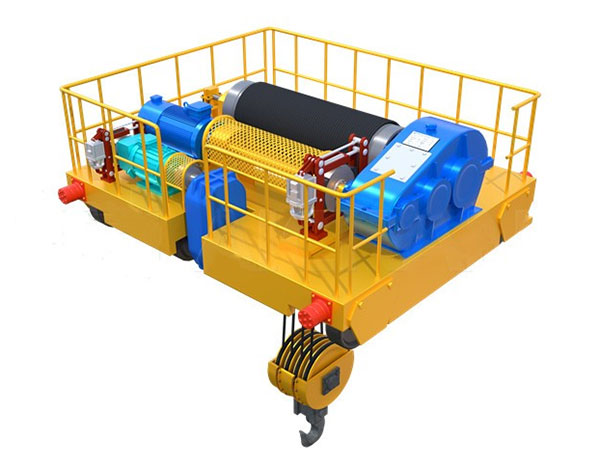
2. Lifting System
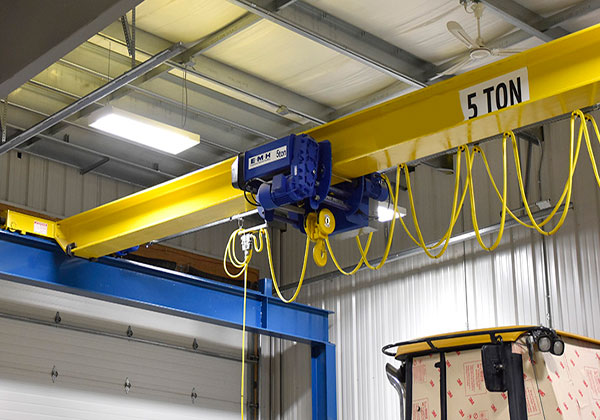
- The lifting system drives a lifting trolley or hoist through an electric motor to quickly lift heavy objects and is suitable for high-frequency transportation of large quantities of materials. Through the electrical control system, the lifting speed can be adjusted to achieve precise positioning of heavy objects, especially when installing precision equipment.
- The lifting system is equipped with an overload limiter. When the lifting weight exceeds the set value, the system will automatically alarm and stop lifting to prevent equipment damage or accidents. When the lifting height reaches the upper or lower limit, the limit switch automatically cuts off the power supply to prevent excessive lifting or lowering of the hook and ensure safe operation.
- In terminals, cargo yards, steel plants and other places, lifting systems are used to transport heavy cargo, such as containers, steel, large equipment, etc. In industries such as electric power, energy, and shipbuilding, hoisting systems are used for hoisting and positioning precision equipment, requiring the system to have high control accuracy. In large-scale construction projects, lifting systems are used to lift building materials, prefabricated components, etc., to adapt to complex construction environments.
- The lifting system of an outdoor double-girder gantry crane is its key operating component, involving the precise coordination of multiple mechanical and electrical components. Through reasonable design, advanced control technology and strict safety protection measures, the lifting system can operate efficiently and safely in various complex outdoor environments.
3. End Carriages
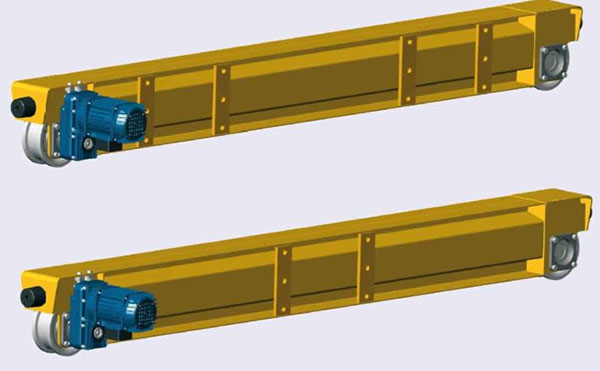
- End beams are usually designed with box or I-shaped steel structures to provide good bending and torsion resistance. The box-shaped structure is more suitable for heavy load and wind resistance requirements, while the I-shaped structure is widely used in lightweight design. End beams are usually formed by welding multiple steel plates, and the welding process needs to ensure the integrity and strength of the structure.
- End beams are typically manufactured from high-strength, low-alloy steel to ensure they are rigid and durable enough to withstand large loads and stresses. Since the end beams are exposed to the outdoor environment, anti-corrosion treatments are usually performed during the manufacturing process, such as spraying anti-corrosion paint or galvanizing, to resist corrosion and extend service life.
- The length of the end beam is designed according to the span of the crane to ensure connection with the main beam and coordination with the overall structure. The height and thickness of the end beams are determined based on load requirements and structural design to ensure stability under various loads.
- The end beam of an outdoor double-girder gantry crane is a key part of the entire crane structure, responsible for connecting the main beam, supporting the traveling mechanism and providing overall stability. Its design and manufacturing process have high requirements, which must not only meet the requirements of strength and rigidity, but also consider the protection needs of the outdoor environment. With reasonable maintenance and upkeep, the end beam can ensure long-term stable operation of the crane under various harsh working conditions.
4. Crane traveling mechanism
The crane operating mechanism of the outdoor double-girder gantry crane is its key mobile system, which is responsible for driving the entire crane to move along the track within the work site. The design of this mechanism directly affects the operating efficiency, stability and safety of the crane. The following is a detailed introduction to the operating mechanism of the cart:
- Electric motor: The trolley operating mechanism is usually equipped with two or four driving motors, which are installed on the four corners of the crane or on the end beams at both ends. The electric motor is usually a three-phase asynchronous motor, which provides sufficient power to push the cart to run smoothly on the track.
- Reducer: The reducer connected to the motor converts the high-speed rotation of the motor into low-speed and high-torque output, driving the traveling wheel set to ensure that the crane moves on the track at the appropriate speed.
- Driving wheel and driven wheel: The trolley operating mechanism is equipped with a driving wheel and a driven wheel. The driving wheel is directly driven by the reducer, while the driven wheel rotates freely to provide support and guidance for the crane on the track.
- Rails: The rails of the cart’s running mechanism usually consist of heavy-duty steel rails that are fixed to the ground. The specifications and materials of the track are selected based on the load and operating conditions of the crane to ensure that the track can withstand the weight and operating pressure of the crane for a long time.
- Frequency converter: Many large vehicle operating mechanisms use frequency converters to adjust the running speed of the motor to achieve smooth starting, deceleration and stopping, reduce mechanical impact, and extend the service life of the equipment.
- Emergency braking device: In an emergency, the operator can immediately stop the cart through the emergency braking device to ensure safety.
The trolley operating mechanism of the outdoor double-girder gantry crane is the guarantee for the efficient and safe operation of the crane. Its design must take into account strength, stability and flexibility. Through reasonable design and regular maintenance, the trolley operating mechanism can operate stably for a long time in various complex outdoor environments, ensuring the smooth progress of material handling and hoisting operations.
5. Trolley traveling mechanism
- The trolley frame usually adopts a box-type or frame-type steel structure with high rigidity and lightweight design, which can bear the weight of the lifting mechanism and load, and withstand lateral and longitudinal forces. Small frames are generally made of high-strength steel to ensure stability and durability under high loads.
- The trolley running mechanism is usually equipped with one or two electric motors, which are responsible for driving the trolley to move along the main beam track. The motor is generally a three-phase asynchronous motor, which has the characteristics of smooth start and reliable operation. The electric motor converts high-speed, low-torque power into low-speed, high-torque output through the reducer to drive the small wheel set. The reducer can accurately control the speed of the car and provide the necessary traction.
- The car is usually equipped with two driving wheels and two driven wheels. The driving wheel is driven by the reducer, and the driven wheel rotates freely with the driving wheel to ensure the smooth movement of the car.
- The trolley running track is usually fixed on the main beam of the crane. The track is made of steel and can bear the weight of the trolley and its load and provide a stable running path.The track needs to be accurately installed on the main beam to ensure the straightness and level of the track to ensure the smooth operation of the trolley.
6. Crane wheel
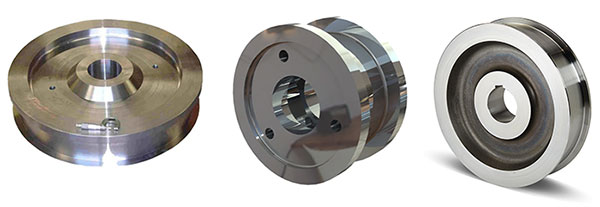
The driving wheel is a wheel connected to the motor and reducer. It is responsible for transmitting the power of the motor to the track and pushing the crane to move along the track. The driving wheels usually have large traction force to ensure smooth operation under various working conditions. The driven wheel is not directly connected to the power system, but passively rotates with the rotation of the driving wheel, mainly playing the role of support and guidance. They are usually installed on the non-drive end of the crane’s trolley or trolley. Some cranes are also equipped with guide wheels to keep the track aligned when the crane is running and prevent the wheels from deviating on the track.
7. Crane hook
The outdoor double-girder gantry crane hook is one of the core components of the crane hoisting system and is mainly used for suspended loading and lifting heavy objects. The design, material and use safety of the hook directly affect the overall operating performance and safety of the crane. Here is a detailed introduction about the hook:
- The hook is mainly composed of a hook body, a hook tongue, a rotating part, and a pulley block.
- Single hooks are common in light or medium lifting equipment and are suitable for ordinary hoisting operations. They have simple structure and easy operation.
- Double hooks are used for lifting heavier or longer materials, providing greater load-bearing capacity and stability. Two hooks are usually operated at the same time to ensure that heavy objects remain balanced during the lifting process. The swivel hook is equipped with a swivel bearing, which allows the hook to freely rotate heavy objects without moving the crane. It is suitable for lifting operations that require multi-directional rotation.
- Hooks are typically manufactured from high-strength forged steel with excellent mechanical properties, such as high tensile strength and toughness, and can withstand extreme loads and impacts. In order to improve the corrosion resistance and fatigue resistance of the hook, some hooks are made of alloy steel, which increases the service life and is especially suitable for outdoor use.
- Forging is the main process for hook manufacturing. Through forging, the internal structure of the steel can be made tighter, pores and inclusions in casting can be eliminated, and the overall strength and toughness of the hook can be improved. Hooks usually undergo heat treatment processes such as quenching and tempering during the manufacturing process to optimize the mechanical properties of the material and ensure that the hook is not prone to breakage or deformation under high loads.
- The design load-bearing capacity of the hook is determined according to the specifications of the crane and is usually marked on the hook. It must be strictly observed during operation to prevent overloading. Hooks usually have a high safety factor to ensure that they can maintain a sufficient safety margin when bearing the maximum rated load.
The hook of the outdoor double-girder gantry crane is an indispensable key component in the entire hoisting system. Its design and performance are directly related to the safety and efficiency of the lifting operation. The hook must have high strength, high toughness and good operating performance, and at the same time, it must be able to maintain stable working condition in complex outdoor environments. Through reasonable use, regular inspection and maintenance, the service life of the hook can be effectively extended and the safe operation of the crane can be ensured.

8. Motor
- Three-phase asynchronous motors are the most commonly used type of motors. They are widely used to drive the trolleys, trolleys and hoisting mechanisms of cranes because of their simple structure, reliable operation and easy maintenance. The three-phase asynchronous motor has good starting performance and load adaptability, and can provide sufficient starting torque and constant operating speed.
- With the development of technology, more and more cranes are beginning to use variable frequency speed motors. By adjusting the speed of the motor through the frequency converter, the crane’s trolley and trolley can be controlled at a smooth speed, improving the flexibility and precision of the operation. It is especially suitable for hoisting operations that require high precision.
- Electric motors have high starting torque, especially in lifting motors. This feature ensures that the motor can start smoothly under heavy load conditions. By adjusting the operating frequency of the motor through the frequency converter, stepless speed regulation can be achieved to adapt to different operating needs. Frequency conversion speed regulation can also reduce the mechanical impact of the motor and extend the service life of the equipment.

9. Sound and light alarm system & limit switch
- The audible and visual alarm system can emit sounds (such as buzzers, sirens) and light signals (such as trigger lights) to alert operators and surrounding personnel when the helicopter performs key actions or an abnormal situation occurs, ensuring that they can take timely measures to prevent An accident occurs.
- Limit switches are used to limit the operating range of the crane, prevent the trolley, trolley or hook from exceeding the designed safety range, and avoid danger to equipment and personnel. When a certain part of the crane reaches the preset limit position, the limit switch will automatically cut off the power supply or sound an alarm to stop the continued movement of the part.
- When the crane starts, stops or performs certain operations, the sound and light alarm system will provide status prompts to help operators monitor the operation of the equipment. When a crane malfunction occurs, such as overload, limit switch failure, electrical failure, etc., the audible and visual alarm system will immediately sound an alarm to prompt the operator for inspection and processing.
- As a protective device, the limit switch can automatically perform a shutdown operation when the operator fails to stop the equipment in time to prevent accidents such as collisions or falls.

10. Safety Devices
The safety settings of outdoor double-girder gantry cranes are important measures to ensure the safe operation of equipment and personnel safety. Good safety settings can not only improve work efficiency, but also effectively prevent accidents. The following are the main safety settings and related functions of outdoor double-girder gantry cranes:
- Overload protection device: When the crane’s lifting weight exceeds the rated load, the overload protection device will automatically sound an alarm and cut off the lifting power supply to prevent equipment from overload operation and protect the crane structure and its motor from damage.
- Emergency stop device: The emergency stop device allows the operator to immediately cut off all power of the crane in an emergency to prevent the accident from expanding. Usually set on the operation panel or remote control for quick operation.
- Wind protection: In outdoor environments, strong winds can cause the crane to become unstable or cause unexpected movement. Wind-proof devices (such as wind-proof anchors, rail clamps or wind-proof wedges) can fix the crane and prevent it from being blown by the wind when the wind speed exceeds safe values.
- Sound and light alarm system: By emitting sound and flash signals, it reminds the operator and other people around that the equipment is running or that danger is imminent. This is important for improving job site safety, especially in noisy or restricted vision environments.
- Safety signs and training: Set clear safety signs at key locations on the crane, such as limit switch positions, operating instructions, warning signs, etc., to remind operators to pay attention to safety. Operators should undergo strict training and be familiar with various safety settings and operating procedures of the crane to ensure that they can use the equipment correctly and handle emergency situations.
11. Control Mode
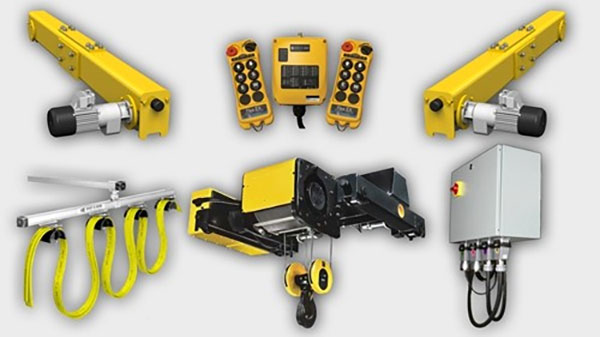
- Ground controls: The operator controls using a large button box attached to the helicopter, usually suspended from the bottom of the helicopter. There are operation buttons such as forward, backward, lifting, and lowering on the button box. Suitable for simple operation of small and medium-sized helicopters.
- Operator’s cab control: The cab is usually installed above or at both ends of the main beam of the helicopter. The operator controls various actions of the helicopter through the controllers on the operator’s desk. The cab control method is suitable for large helicopters or operating environments requiring intensive operations.
- Wireless remote control: The operator uses a handheld wireless remote control to remotely operate the crane. This method allows the operator to safely and conveniently control the movement of the crane on the ground, which is especially suitable for large-scale operations or scenes with obstructed vision.
- PLC control (programmable logic controller): The movement of the crane is automatically controlled through the PLC system, which can preset operating procedures and reduce operator intervention. PLC control can also be integrated with other systems (such as sensors and frequency converters) to provide more intelligent control.
- Centralized control room: Multiple cranes are managed and operated by a centralized control room, which is suitable for scenarios such as large production workshops or ports that require coordinated operations of multiple cranes. Operators can observe the operating status of each crane through the monitoring system and perform unified dispatching.
The control methods of outdoor double-girder gantry cranes are diverse, ranging from simple ground control to complex automated control. Choosing the appropriate control method needs to be determined based on the working environment, operational needs and safety requirements. With the development of technology, intelligent control and automated control methods are increasingly used in the crane field, greatly improving the efficiency and safety of operations.

12. Sketch
Application of outdoor gantry crane
Outdoor double-girder gantry cranes are widely used in many industries and occasions because of their strong carrying capacity, wide operating range and efficient operating performance. The following are the main application areas of outdoor double-girder gantry cranes:
1. Ports and terminals: In ports and terminals, double-girder gantry cranes are commonly used to load and unload containers. They handle large containers quickly and accurately and move them from ships to yards or onto trucks.
2. Stockyards and freight yards: In stockyards and freight yards, double-girder gantry cranes are used to move heavy materials such as steel, lumber, and large equipment. Its long span and strong load-bearing capacity enable it to cover a wide range of operating areas.
3. Railway cargo station: In railway cargo stations, double-girder gantry cranes are used to load and unload cargo on trains, such as containers, vehicles, large mechanical equipment, etc. The crane can move flexibly on both sides of the track to facilitate quick loading and unloading. It can also be used for the transportation and installation of heavy components such as bridge prefabricated parts and track slabs in railway construction.
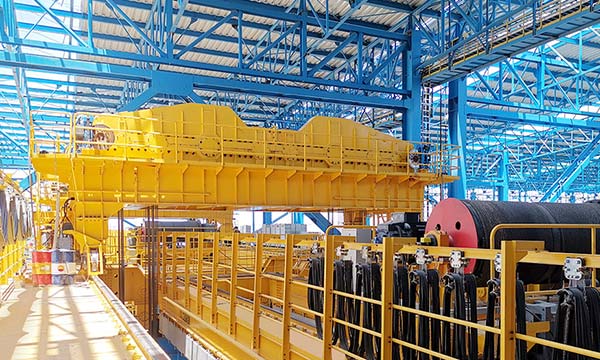
4. Steel plant: In steel plants, double-girder gantry cranes are used to transport heavy steel products such as billets, steel coils, and steel plates. Combined with electromagnetic chucks or clamps, it can efficiently handle different forms of steel.
5. Shipyard: In shipyards, double-girder gantry cranes are used to handle and assemble ship components, such as hull steel plates, decks, ship equipment, etc. Its powerful lifting capacity and large span can meet the construction needs of large ships.
6. Construction sites: Double-girder gantry cranes are used to hoist large-scale prefabricated components, such as concrete beams, columns, slabs, etc., and are especially suitable for the construction of infrastructure such as large bridges and tunnels.

Advantages of outdoor gantry crane
Outdoor double-girder gantry cranes are widely used in industrial and engineering fields. Due to their many advantages, they have become important equipment for heavy material handling and loading and unloading. Here are the main advantages of outdoor double-girder gantry cranes:
1. Strong load-bearing capacity: The double-girder structure gives the crane a stronger load-bearing capacity and can handle heavier materials and equipment. It is usually suitable for handling heavy and super-heavy materials.
2. Large span: Outdoor double-girder gantry cranes usually have large spans and can cover a wide range of operating areas. This makes it particularly suitable for large-scale operating environments such as docks, cargo yards, and storage yards.
3. Good stability: The double-girder gantry crane has high structural rigidity and can effectively resist wind and vibration in the external environment, especially in outdoor environments.
4. High operating efficiency: Double-girder gantry cranes are usually equipped with multiple motors and frequency conversion control systems, which can quickly complete lifting, moving and positioning operations, improving operating efficiency.
5. Multiple configuration options: The crane can be configured with different spreaders (such as hooks, grab buckets, electromagnetic chucks, etc.) according to specific needs, and is suitable for different types of material handling.
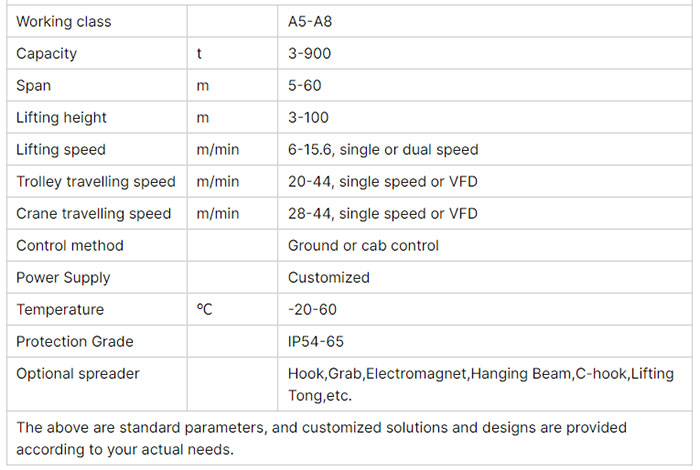
Main technical data
Crane production procedure
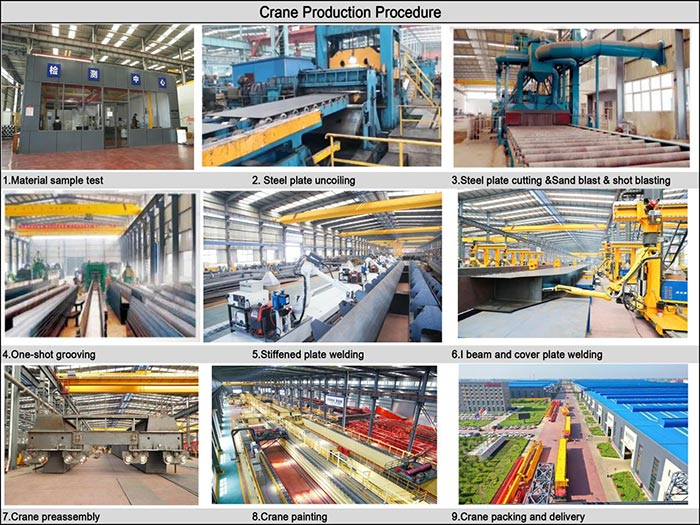
The production procedure for casting steel overhead crane typically involves the following steps:
1. Design and planning: Based on the customer’s specific needs and application scenarios, conduct detailed demand analysis to determine the main parameters of the crane, such as lifting weight, span, lifting height, operating environment, etc. The design team used computer-aided design (CAD) software to draw the overall structure and component diagrams of the crane, including main beams, end beams, hoisting mechanisms, trolley and trolley operating mechanisms, etc.
2. Procurement of raw materials: Purchase high-quality steel according to design requirements, including steel plates, steel plates, steel pipes, etc., to ensure that the materials meet strength and durability requirements. Purchase electrical components such as motors, frequency converters, PLC controllers, sensors, limit switches, etc. to ensure the quality and reliability of the components.
3. Structural parts manufacturing: Structural component manufacturing uses CNC cutting machines or laser cutting machines to cut steel according to design drawings to ensure dimensional accuracy. The cut steel materials are welded to form large structural parts such as main beams and end beams. During the welding process, welding quality must be strictly controlled to prevent welding defects.
4. Mechanical processing: Machine processing of welded structural parts, including drilling, milling, turning, boring, etc., to ensure the accuracy of each connection part. Carry out surface treatment on the processed parts, such as sand blasting, shot blasting, painting, etc., to increase the corrosion resistance and aesthetics of the parts.
5. Final assembly and debugging: The main beam, end beam, hoisting mechanism, trolley and trolley operating mechanism and other components are assembled according to the design drawings to ensure that the connections between the components are stable and accurate. Conduct no-load and load debugging of the crane to detect the reliability and stability of lifting, operation, braking, limit and other functions.
6. Painting and Marking: The exterior of the crane is painted, usually with anti-corrosion coatings, to enhance the equipment’s resistance to corrosion and weathering. Paste warning signs and operating instructions at conspicuous locations on the crane to ensure that operators can use the equipment correctly and safely.
7. Quality Inspection: Conduct comprehensive quality inspection on various performances of the crane, including structural strength, electrical control, safety devices, etc., to ensure that the equipment meets national standards and customer requirements.
Global Market

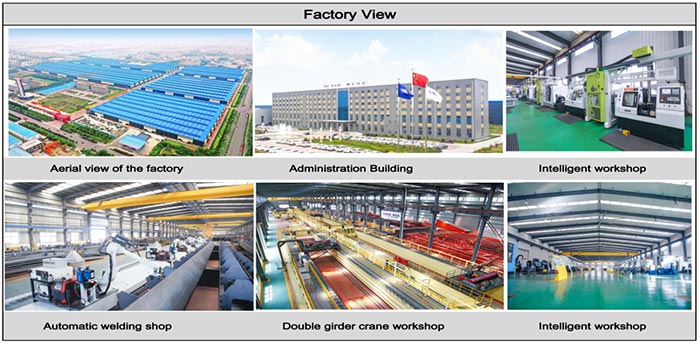
Workshop view
The company has installed an intelligent equipment management platform, and has installed 310 sets (sets) of handling and welding robots. After the completion of the plan, there will be more than 500 sets (sets), and the equipment networking rate will reach 95%. 32 welding lines have been put into use, 50 are planned to be installed, and the automation rate of the entire product line has reached.