
Advantages of gantry cranes compared to bridge cranes
Gantry cranes and bridge cranes are two common lifting equipment that are widely used in different scenarios. Compared with bridge cranes, gantry cranes have significant advantages in some specific scenarios. Here are the main advantages of gantry cranes over overhead cranes:
1. No need for factory structural support
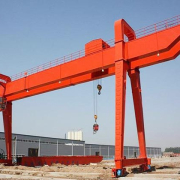
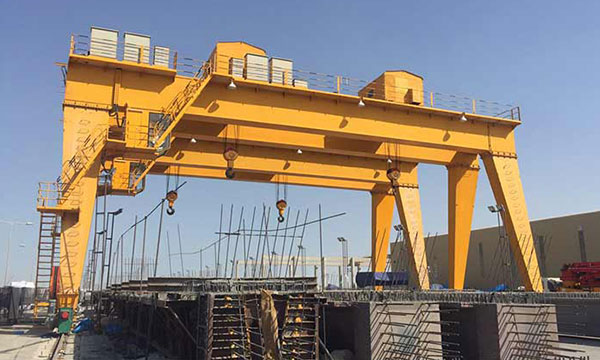
Advantages of gantry cranes: Gantry cranes do not require factory building structures for support. Its tracks are laid on the ground and supported by outriggers on both sides. Suitable for outdoor use or situations without factory support conditions.
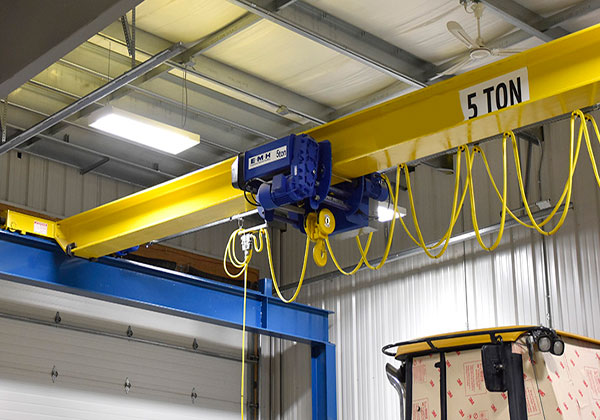
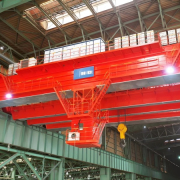
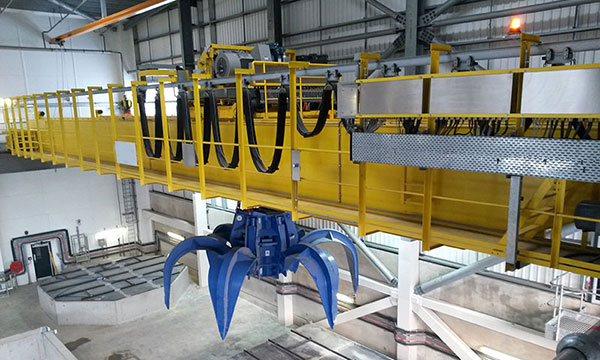
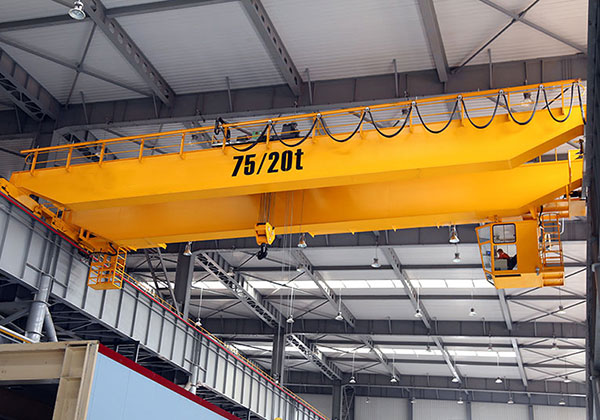
Disadvantages of bridge cranes: Bridge cranes must rely on track beams in the factory, and require a certain height and space for the factory. Therefore, without a suitable plant structure, the installation and use of overhead cranes will be limited.
Summary: Gantry cranes are suitable for sites without fixed factory structures, such as open-air yards, ports, etc.
2. Save factory investment
Advantages of gantry cranes: Since gantry cranes are installed on ground tracks, there is no need to build complex track beams and support structures, which reduces the construction cost of the factory building.
Disadvantages of overhead cranes: Overhead cranes require the construction of additional plant structures (such as track beams), which will increase the construction and maintenance costs of the plant.
Summary: Gantry cranes can reduce infrastructure construction costs and are especially suitable for projects with limited funds or that do not require long-term factory construction.
3. Adapt to outdoor work
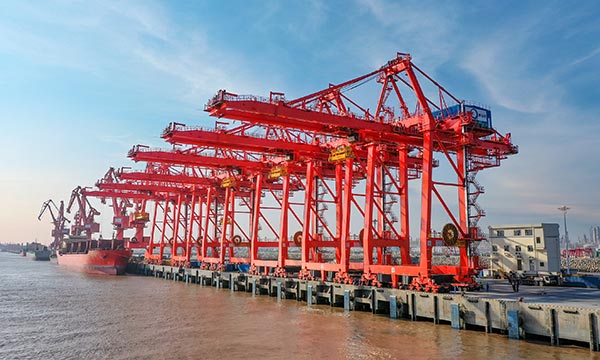
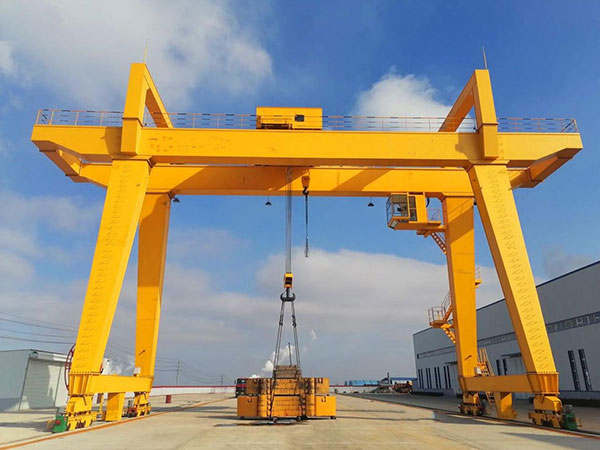
Advantages of gantry cranes: Gantry cranes are designed to be more suitable for outdoor operations and are often used in outdoor environments such as open-air yards, ports, and shipyards. It has strong windproof and rainproof capabilities, and can operate stably in bad weather.
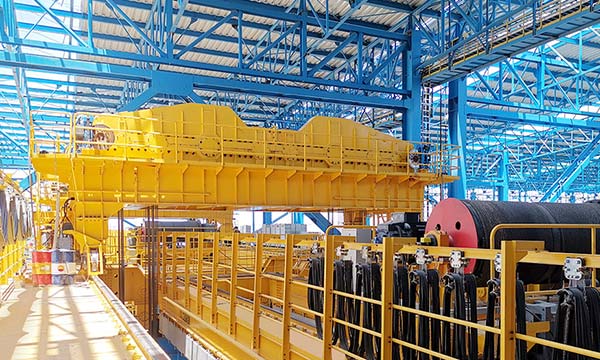
Disadvantages of bridge cranes: Bridge cranes are mainly used for indoor operations. Although protective measures can be installed, they are not as suitable for outdoor environments as gantry cranes.
Summary: In scenarios that require open-air operations, gantry cranes are obviously more adaptable to the environment and operate more efficiently.
4. Flexible work space
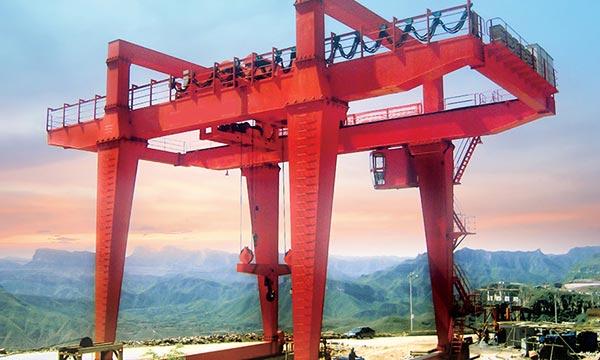
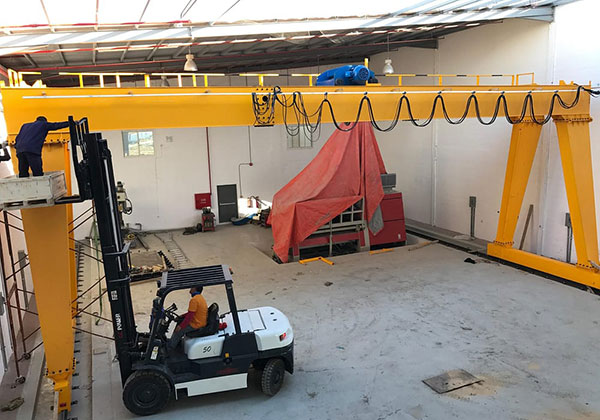
Advantages of gantry crane: The leg structure of the gantry crane can span large materials or equipment, and its working range can be flexibly adjusted without being restricted by the width and height of the factory building. The gantry crane can also be designed as a full gantry or semi-gantry type as needed to adapt to the requirements of various sites.
Disadvantages of bridge cranes: The working area of the bridge crane is limited by the structure of the factory building, and the span and lifting height are limited by the width and height of the factory building.
Summary: The structure of the gantry crane is more flexible and is especially suitable for scenes that require crossing obstacles or working on irregular sites.
5. Suitable for large-span occasions
Advantages of gantry cranes: The span of gantry cranes can be very large, and they are suitable for hoisting operations that need to span larger spans. They are commonly used in large-scale construction projects, bridge construction and other scenarios.
Disadvantages of bridge cranes: The span of bridge cranes is usually limited by the factory structure and cannot easily cope with operations requiring large spans.
Summary: Gantry cranes provide a better choice when handling large-span materials.

6. Easy maintenance and installation
Advantages of the gantry crane: Since the gantry crane is installed on the ground track, the maintenance and repair of the equipment are relatively simple, and there is no need to operate at high altitude like the bridge crane. At the same time, the installation of gantry cranes is relatively simple and does not require complex factory structural modifications.
Disadvantages of bridge cranes: Maintenance and overhaul of bridge cranes usually require high-altitude operations, which poses certain safety risks, and the maintenance difficulty and cost are relatively high.
Summary: Gantry cranes are more convenient to maintain and install, and are suitable for occasions that require frequent maintenance or have limited site conditions.
7. Flexible site adaptability
Advantages of gantry cranes: The installation position and track laying of gantry cranes can be flexibly adjusted to adapt to different site layouts, and can even be moved to new sites for use.
Disadvantages of bridge cranes: bridge cranes need to be fixed in a specific factory structure, and their site adaptability is relatively poor. Once the installation location is determined, it is difficult to adjust.
Summary: Gantry cranes have better site adaptability and are especially suitable for projects that require flexible layout or frequent site changes.
8. Various forms and configurations available
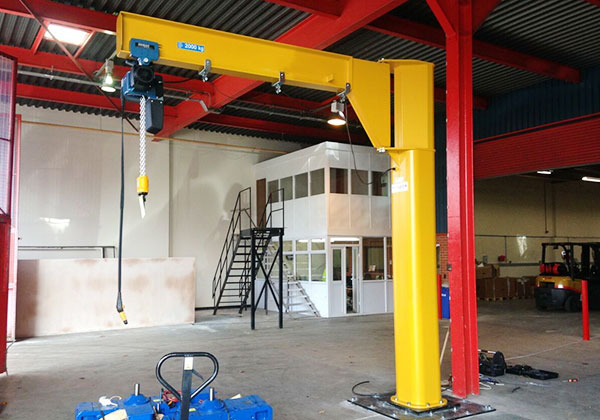
Advantages of gantry cranes: Gantry cranes are available in a variety of forms and configurations, such as full gantry, semi-gantry, single beam, double beam, etc., which can meet different usage needs and are widely used in ports, yards, industries, etc. occasion.
Disadvantages of bridge cranes: The design of bridge cranes is relatively fixed. Although there are different configurations, they are not as diverse in form as gantry cranes.
Summary: Gantry cranes come in various forms and can be flexibly customized according to different site conditions and operational needs.

Summarize
Compared with bridge cranes, gantry cranes have the advantages of not relying on factory building structure, adapting to outdoor operations, flexible working space, and easy maintenance. It is particularly suitable for large-span, open-air sites or situations where it is inconvenient to install bridge cranes in factories, so it is widely used in ports, yards, shipyards, construction sites and other fields.