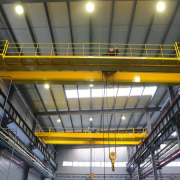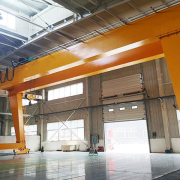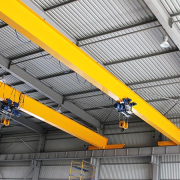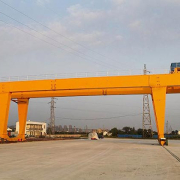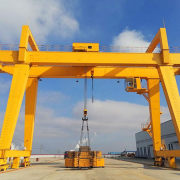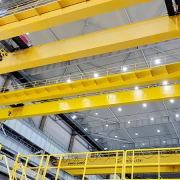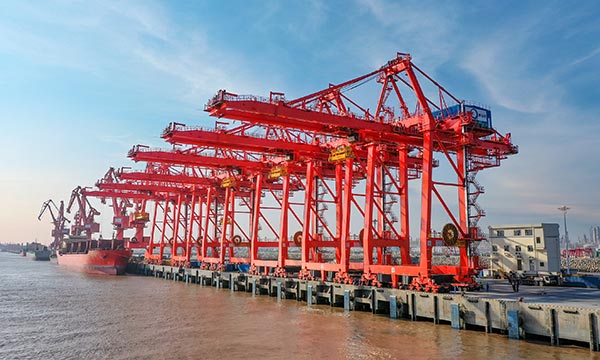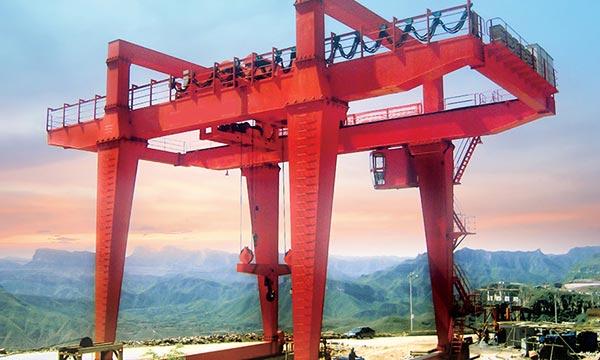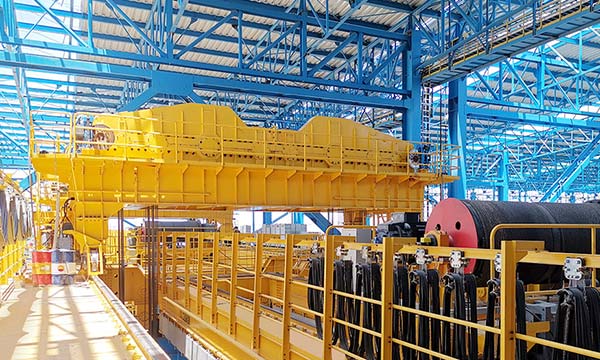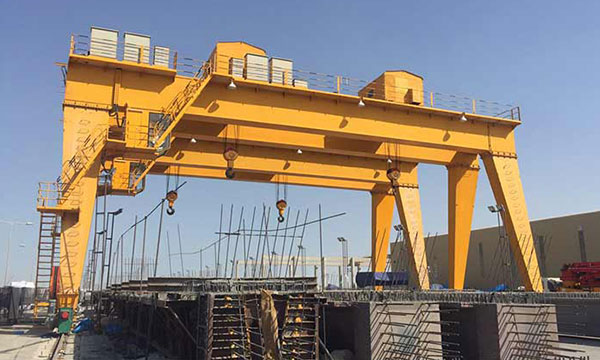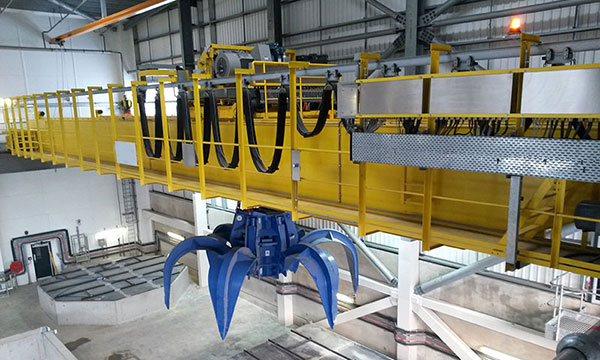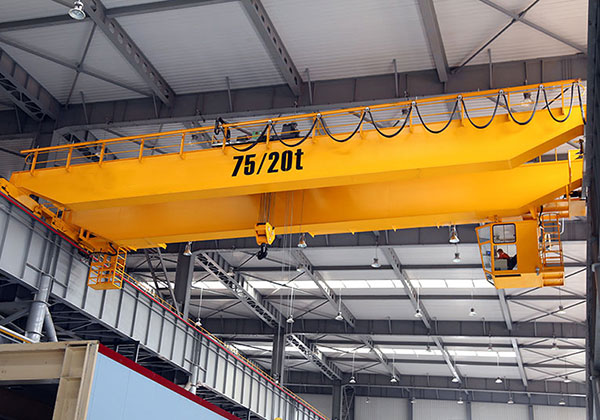

QD double girder crane hot selling capacity
QD Double Girder Crane
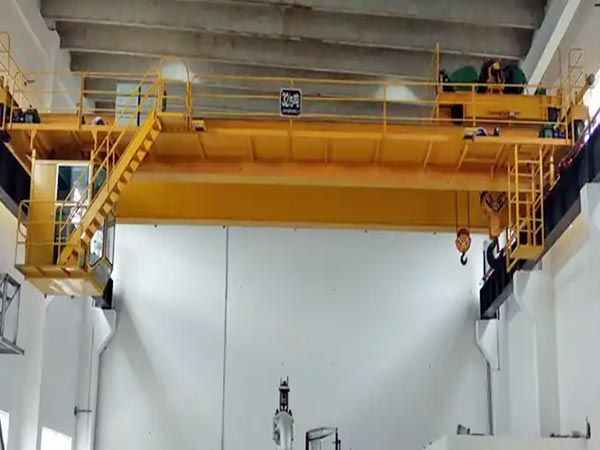
QD Double Girder Overhead Crane is designed for heavy lifting in a variety of industrial environments. With its sturdy double-girder structure, it provides the stability and strength required to handle large heavy loads. These cranes are often used in environments that require high lifting capacity and precision, including manufacturing plants, construction sites, and port operations.
- Double-girder design enhances stability and strength.
- Equipped with an open winch system for smooth, efficient operation.
- Ideal for lifting large and heavy materials or equipment.
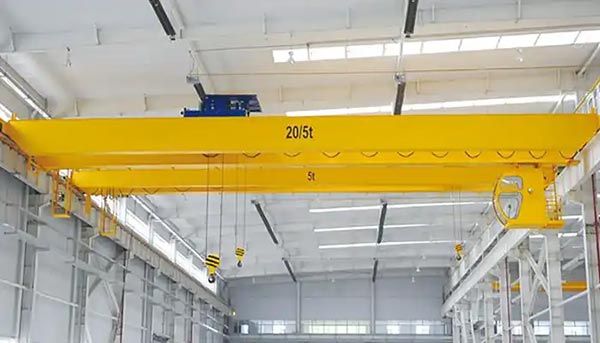
20/5 ton open winch double girder crane, economical QD double girder crane
The importance of understanding the hot-selling capacity for a specific application
When choosing the right crane for a specific application, it is crucial to understand the lifting capacity of the QD double girder crane. The lifting capacity of a crane determines how much weight it can handle safely and efficiently. Selecting the right capacity ensures that the crane can meet the needs of the operation, improves safety, and increases overall productivity by matching the crane’s capacity to the material being handled.
- Lifting capacity affects the performance, safety, and operating efficiency of the crane.
- Selecting the correct capacity prevents overloading and underutilization.
- Ensures safe handling of materials or equipment within the operating range.
Introduction to common lifting capacities and market needs
QD double girder cranes have a variety of lifting capacities, the most popular of which are 5 tons, 10 tons, 16/3.2 tons, 20/5 tons, 32/5 tons, 50/10 tons, 75/20 tons, and 100/20 tons. These capacities are in high demand across industries, from light manufacturing to heavy industries such as steel production, construction and shipbuilding. Understanding the need for specific capacities can help businesses select the ideal crane for their unique needs, ensuring maximum efficiency and performance.
- Common lifting capacities include 5, 10, 50 and 100 tons.
- Heavy industries such as steel production and construction prefer cranes with larger capacities.
- Market trends indicate a demand for mid-range capacities in automotive and light industrial manufacturing.
QD Double Girder Crane Hot Capacity
5 Ton Capacity
- Common Applications: 5-ton cranes are ideal for small to medium-sized jobs that don’t require huge lifting capacity but still require reliable performance.
- Manufacturing: Ideal for handling small machinery, equipment and parts in production lines.
- Automotive Assembly: A great choice for lifting components such as engine parts, chassis and other smaller components.
- Light Construction: Ideal for lifting building materials such as concrete, steel and wood in small construction projects.
10 Ton Capacity
- Frequent Use: 10-ton capacity cranes are often used for tasks that require greater lifting power and reach, bridging the gap between light and heavy lifting.
- Warehouse: Ideal for moving heavier freight, pallets, and materials within a warehouse space.
- Logistics: Often used for loading and unloading goods at ports or distribution centers.
- Material Handling: Ideal for lifting large containers, building materials, and factory parts.
16/3.2 Ton Capacity
- Double Hook Configuration: With a double hook setup, this crane can handle multiple load types at the same time, saving time and increasing efficiency for many operations.
- Simultaneous Lifting: Ideal for lifting large or irregularly shaped items such as long beams, pipes, and large containers.
- Industry: Commonly used in heavy manufacturing, automotive, and steel industries where different loads need to be lifted simultaneously
20/5 Ton Capacity
- Dual Load Capacity: The dual load feature of this crane is ideal for jobs that require moving both light and heavy materials simultaneously. It is versatile.
- Heavy Equipment Manufacturing: Handles large components such as heavy machinery frames, engines, and parts.
- Automotive Industry: Ideal for transporting engine blocks, chassis and body panels on automotive assembly lines.
32/5 ton capacity
- Heavy Duty: Designed for more demanding environments, this crane is used to regularly handle large, heavy loads, providing power and reliability in harsh environments.
- Manufacturing Plants: For moving oversized machinery, parts and equipment that require strong lifting capabilities.
- Construction: Ideal for lifting heavy construction materials such as steel beams and concrete blocks.
- Shipbuilding: Ideal for moving large ship components, including hull sections, engines and propulsion units.
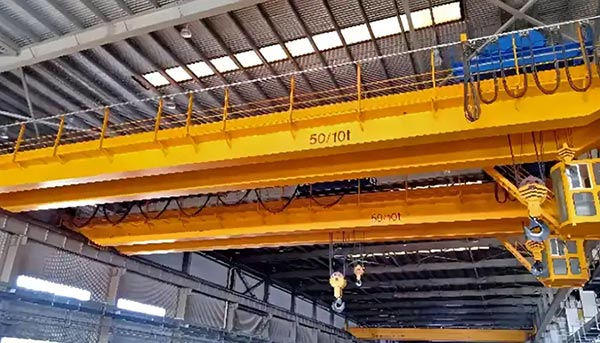
50/10 ton capacity
- Widely used in heavy industry: When you need a crane capable of heavy duty, the 50/10 ton model is built for it. It is often used in industries where strength and power are critical.
- Steel Mills and Foundries: Lifting heavy steel coils, billets and containers of molten metal.
- Power Plants: Moving large equipment such as turbines, generators and electrical components.
- Construction Projects: Handling large construction beams, heavy machinery and components in large infrastructure projects.
75/20 Ton Capacity
- Heavy Construction and Industrial Projects: The 75/20 ton crane excels in industrial and construction projects that transport large amounts of material. Its double hook system ensures stability when lifting.
- Construction: Ideal for lifting structural components such as steel beams, girders, and large concrete slabs.
- Industrial Projects: Handle large machinery and construction materials required for large industrial projects.
100/20 Ton Capacity
- High Load Handling: When you need a crane that can handle extremely heavy and large loads, the 100/20 ton model is the top choice for industries that require top lifting capabilities.
- Steel Fabrication: Lifts and moves large steel coils, billets, and other heavy materials in steel mills.
- Shipbuilding: Assists in lifting heavy ship components such as engines, hull components, and structural sections.
- Large Machinery Assembly: Ideal for handling large components used in assembling large industrial machinery such as turbines, generators, and other heavy equipment.
Factors that influence the popularity of these capacities
Industry Demand
Demands vary from industry to industry, and the crane’s lifting capacity is often selected based on the specific task and operational requirements. The need for higher lifting capacities tends to be more prominent in certain industries, depending on the materials and the task at hand.
- Construction: Large projects require cranes with strong lifting capacities. Whether lifting steel beams or concrete slabs, cranes with a lifting capacity of 50/10 tons or even 100/20 tons are essential for these heavy tasks. These cranes have the strength required to carry large, heavy objects and the ability to move materials across a wide site.
- Automotive: Cranes with a lifting capacity of 10 tons or 16/3.2 tons are common in automotive manufacturing. These cranes can precisely handle components such as engines, body frames and chassis, helping to streamline production lines. The ability to efficiently lift large components is essential in this fast-paced environment.
- Heavy Machinery Manufacturing: Industries focused on assembling large machinery require high-capacity cranes to move large components. 50/10 ton, 75/20 ton and 100/20 ton cranes are ideal for lifting heavy components such as turbines, mining equipment and large vehicle assemblies.
Working Environment
The working environment plays a big role in determining which crane will perform best. From tight spaces to expansive construction sites, crane selection depends on available space, load type, and handling precision.
- Space and Precision: When space is limited, smaller cranes with 5- or 10-ton capacity are often preferred. These cranes are easier to maneuver in tight areas and provide the precision needed to handle smaller, more delicate loads in environments such as warehouses or light manufacturing plants.
- Large Sites: For construction projects with wide, open spaces, heavy-duty cranes of 32/5-ton, 50/10-ton, or even 75/20-ton are more common. These cranes can cover more ground and lift larger loads over a wider area, making them essential for large projects such as bridge construction or shipbuilding.
- Harsh Environments: Cranes in harsh environments such as steel mills, foundries, or shipyards need to be rugged and able to withstand heavy use. Large cranes of 50 tons and above are designed to be rugged and able to withstand continuous heavy lifting without performance being compromised.
Customization Options
Customizable cranes are always in high demand. Industries often require features beyond standard lifting capabilities to meet their specific operational needs.
- Specialized Lifting Equipment: Many industries require cranes with specialized attachments, such as magnetic chucks, C-hooks, or grabs. For example, in a steel mill, a 50/10 ton crane can be equipped with a magnetic chuck to lift steel plates and coils. This makes the crane more flexible and efficient in performing specific tasks.
- Double Hook Configuration: The 16/3.2 ton and 20/5 ton models of cranes feature a double hook configuration, allowing the operator to lift multiple loads simultaneously. This feature is useful in environments such as automotive assembly lines or large warehouses, where efficiency is key to keeping goods moving.
- Safety Features: In high-risk industries, safety is always a top priority. Customized cranes are equipped with advanced safety features such as overload protection, anti-collision systems, and remote emergency stop functions. These features are essential in environments such as heavy machinery manufacturing where safety standards are critical.
Applications of each hot-selling capacity
5-10 tons: suitable for lighter loads
Cranes in the 5-10 ton range are generally used for lighter lifting tasks. They are ideal for environments that handle small to medium-sized parts and materials. Their versatility makes them popular across industries.
- Machinery Parts Handling: These cranes are often used in factories where mechanical parts need to be carefully lifted and moved. Their precision allows for the handling of parts such as gears, pulleys, and small engine blocks.
- Equipment Assembly: In automobile plants or small manufacturing units, cranes with 5 to 10 ton capacity are used to assist in the assembly of machinery and heavy equipment. They can easily lift chassis, small engines, and other vehicle parts.
- Material Handling: In warehouses and distribution centers, these cranes are useful for handling pallets, raw materials, and smaller loads that require frequent and fast lifting. Their medium capacity is ideal for environments with limited space or smaller-scale tasks.
16/3.2-32/5 Ton: For Medium-Duty Tasks
Designed for handling heavier loads, the 16/3.2 and 32/5 ton cranes are often used in industries where materials are bulky and difficult to lift. These capacities are ideal for medium-range lifting jobs.
- Steel Plate and Heavy Equipment Assembly: These cranes are essential in steel mills and heavy equipment manufacturing, where steel plates, beams, and machinery need to be transported. Their double hook configuration allows multiple components to be lifted simultaneously, increasing efficiency in such environments.
- Large Component Handling: These cranes are also widely used in the automotive industry for handling large components such as engines, transmissions, and frames. Their precise control and capacity make them ideal for tasks where precision is as important as lifting capacity.
- Construction and Industrial Manufacturing: In fields such as construction or industrial manufacturing, cranes in the 16/3.2 and 32/5 ton ranges are ideal for lifting heavy building materials such as concrete slabs, steel beams, and oversized components. Their load handling capabilities make them indispensable for projects that require both strength and accuracy.
50/10-100/20 Ton: Best for Heavy Industrial Work
When it comes to heavy lifting, the 50/10 to 100/20 ton range of cranes are in a league of their own. These high-capacity cranes are designed to handle large, heavy loads in demanding industrial environments, from steel mills to large construction sites.
- Steel Production: In steel mills and foundries, these cranes are essential for lifting heavy steel coils, slag pots, and large furnace components. Their ability to withstand high temperatures, heavy loads, and continuous operation makes them ideal for this demanding industry.
- Shipbuilding and Ship Repair: In shipyards, cranes from 50/10 to 100/20 ton play a key role in moving large ship components, such as engines, propellers, and hull sections. These cranes are built for precise lifting of heavy loads, which is essential in such a delicate environment.
- Large Infrastructure Projects: For large construction projects such as bridge construction, tunnel construction, and power plants, these cranes are used to transport large amounts of building materials, including steel beams, concrete slabs, and precast elements. Their power and range make them an integral part of these large-scale projects.
Benefits of Choosing the Right Crane Capacity
Improved Efficiency
Choosing the right crane capacity for your specific needs has a direct impact on operational efficiency. When you match the crane’s lifting capacity to the task at hand, you minimize downtime and speed up your workflow.
- Faster Operations: A crane that is the right size can move materials faster, which reduces delays on your production or assembly line. This is especially true for industries where time is of the essence, such as automotive manufacturing or heavy equipment assembly.
- Improved Workflows: With the right lifting capacity, operators can handle materials faster and more safely, ensuring smooth, continuous operations without bottlenecks or delays.
Cost Benefits
Choosing the right crane capacity can also save a lot of money in the long run.
- Reduced Excess Capacity: A crane that is too big for the task at hand can be more expensive to purchase and maintain. On the other hand, using a crane that is too small can lead to inefficiencies and possible wear and tear. Matching the crane to the load ensures that you get the most bang for your buck without unnecessary expenses.
- Reduced Operating Costs: A crane that is the right size is more energy efficient and requires less maintenance in the long run, which reduces operating costs. They are designed to handle loads with ease, which reduces breakdowns and repairs.
Safety & Precision
Choosing the right crane size is essential to maintaining safety in high-risk environments.
Avoid Overloading: Selecting a crane with the right capacity reduces the risk of overloading and avoids dangerous accidents. This is especially important in industries such as steel manufacturing or shipbuilding, where the weight and size of the material are critical to safe handling.
Precision Lifting: With the right size crane, operators can lift materials with greater precision. This is especially important in tasks such as lifting large components in automotive manufacturing or moving steel sheets in construction. The right size ensures that materials are moved safely and accurately, preventing accidents or damage.
Conclusion
In this overview, we explore the capacities of the most popular QD double girder cranes, each of which caters to different industrial needs. From lighter loads handled by 5- and 10-ton cranes to the heavy-duty capacity of 100-ton cranes, these cranes offer the necessary lifting capacity for a variety of industries.
Popular Capacities Review: The 5-10 ton range is ideal for light material handling, such as parts assembly and equipment movement. The 16/3.2-32/5 ton range is ideal for medium-duty tasks, such as heavy equipment assembly and steel plate movement. For the most demanding industrial tasks, the 50/10 to 100/20 ton range is ideal for large projects in steel production, shipbuilding, and infrastructure.
Final Advice: When choosing the right crane capacity, it is important to combine the crane’s lifting capacity with the specific requirements of your application. Consider the materials you handle, the space available for operation, and the weight requirements of the task. Matching the right crane capacity ensures optimal efficiency, cost-effectiveness, and safety over the long term.
By understanding the capacities of these popular cranes and their industrial uses, businesses can make informed decisions that meet their unique needs and improve overall operational performance.