


Description
Warning: mysqli_query(): (HY000/1194): Table 'wp_options' is marked as crashed and should be repaired in /www/wwwroot/excelcrane.com/wp-includes/class-wpdb.php on line 2349
Warning: mysqli_query(): (HY000/1194): Table 'wp_options' is marked as crashed and should be repaired in /www/wwwroot/excelcrane.com/wp-includes/class-wpdb.php on line 2349
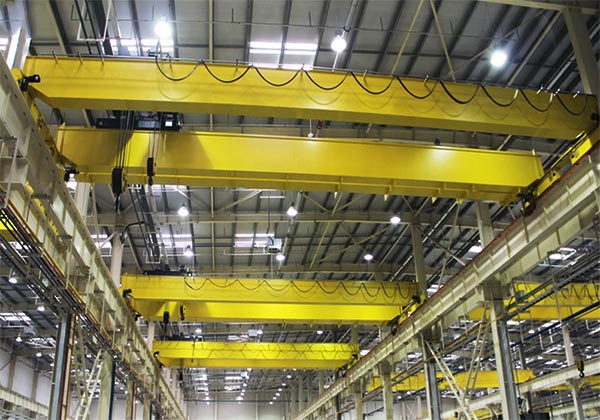
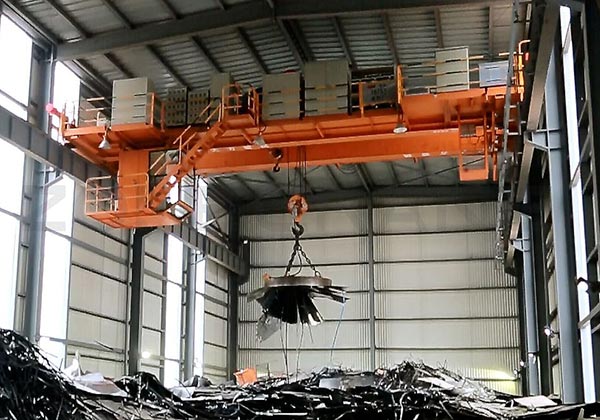
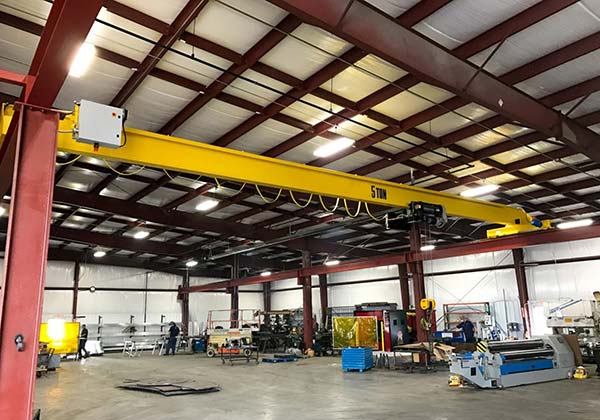
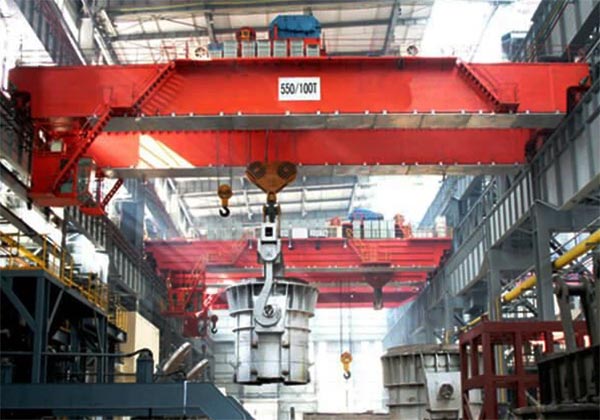
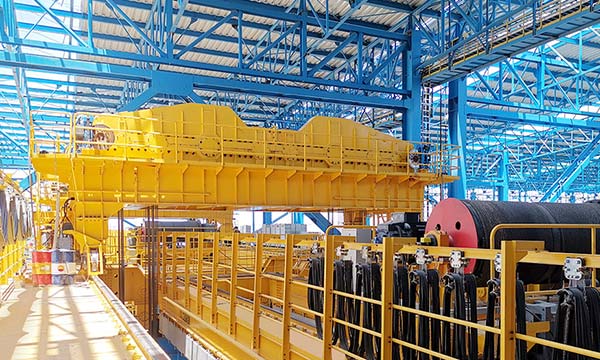
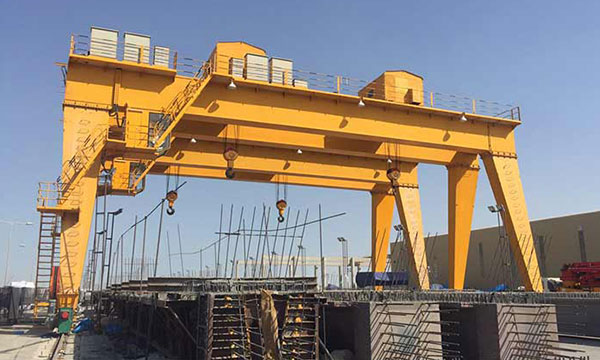
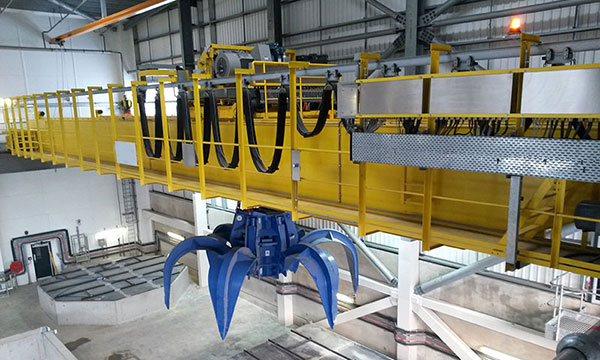
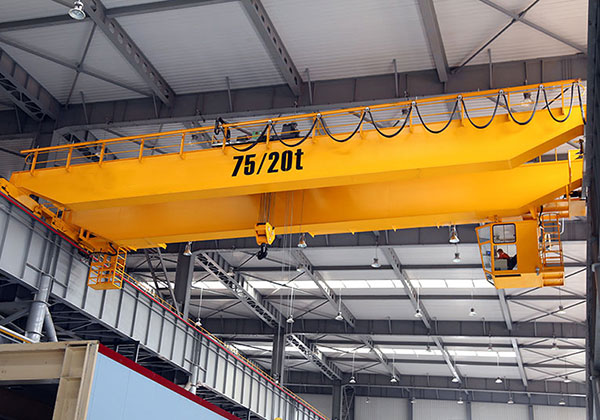
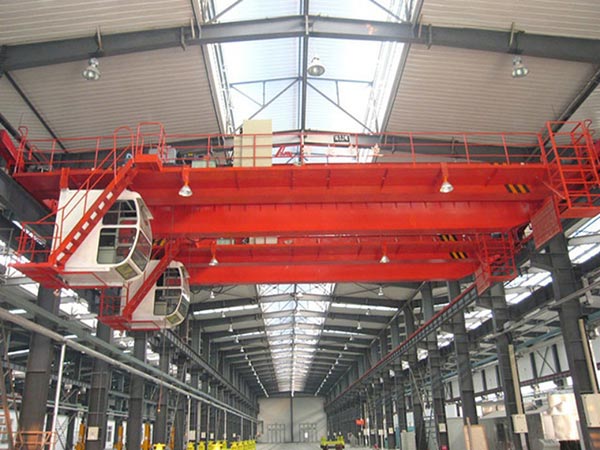
The double-girder bridge crane is a type of bridge crane that has two girders,one above the other. The upper girder is used to support the bridge crane’s load, while the lower girder is used to support the bridge itself. This design allows for greater stability and capacity than single-girder bridge cranes. Double-girder bridge cranes are commonly used in heavy industries such as steel mills, ports and construction sites.
Components of double girder bridge crane
1. Beam:
The main girder is used to carry the load of the bridge crane, while the upper girder is used to carry the bridge itself. The lower girder is used to support the load of the crane. This design offers greater stability and load capacity than single girder overhead travelling cranes. Double girder overhead travelling cranes are generally used in heavy industry, e.g. in steelworks, harbours and on construction sites.

2. Lifting Mechanism:
The hoist mechanism of a double girder overhead travelling crane is responsible for lifting and lowering the load for which the crane is designed. The mechanism typically consists of a few main components: a winch or hoist. The hoist, often referred to as a winch, is powered by an electric motor (or sometimes a hydraulic drive) to wind a rope or cable. By winding or unwinding the rope, it raises or lowers a hook and the load attached to it. A double girder overhead travelling crane may have one or more winches, depending on the crane’s design and lifting capacity.

3. Driver room:
The driver room, also known as the operator’s cab or control room, is the enclosed area where the crane operator sits to control and manage the double girder bridge crane. In modern cranes, this room is often equipped with various controls, instruments, and systems to aid the operator in performing their duties safely and efficiently.

4. Hoist:
An overhead crane’s hoist lifts and lowers a load by means of a drum or lift-wheel, in which chain or wire rope wraps around. Hoists can be defined by two main characteristics: The lifting medium (wire rope or chain) used to support the load.

5. Brake system:
The braking system on a double-girder overhead travelling crane is an important safety device that prevents the crane from moving or the load from descending uncontrollably. There are several types of brake that can be used on different parts of the crane, including Motor brakes: most hoist motors have an integral braking system that holds the load and prevents the drum from coming loose when the motor is at a standstill. These brakes can be electromagnetic or spring-applied.

6. Sketch:

Application of double girder bridge crane
Power Plants: In power generation facilities, these cranes are employed for maintenance work and the movement of heavy equipment and components.
Construction Sites: At construction sites, double girder bridge cranes are used for lifting and moving precast concrete elements, steel structures, and other heavy materials.
Rail Yards: For loading and unloading freight cars with bulk materials like grain, coal, ore, and for maintenance of rail vehicles.
Heavy Machinery Workshops: In workshops that manufacture or maintain heavy machinery, double girder bridge cranes are essential for assembly and disassembly operations.
Warehouses and Distribution Centers: For storage and retrieval of heavy pallets or goods, especially in environments requiring precise placement of items.
Mining Operations: In mining, they may be used for handling ore, scraper conveyors, and other mining equipment.

Advantages of double girder bridge crane
Longer Span: These cranes can be designed with longer spans compared to single girder cranes, allowing them to cover larger areas and access more of the workplace.
Higher Workload Threshold: Due to their robust construction, double girder bridge cranes can withstand a higher workload threshold before requiring maintenance or repairs.
Easier Load Control: With two girders supporting the bridge, operators can more easily control the load, particularly when precision placement is needed.
Versatility: They often come with more customization options, such as different types of hoists, monorail systems, and cantilever extensions, among others, to suit various operational
Maintenance Access: Having a second girder can provide better access for maintenance and inspection of the crane’s underside without having to support the bridge with additional equipment.
Energy Efficiency: Newer models of double girder bridge cranes are designed with energy-efficient motors and controls, reducing energy consumption and operating costs.
Safety Features: Many double girder cranes are equipped with advanced safety features like overload protection, limit switches, and emergency stop systems to protect both the equipment and the operators.

Main technical data

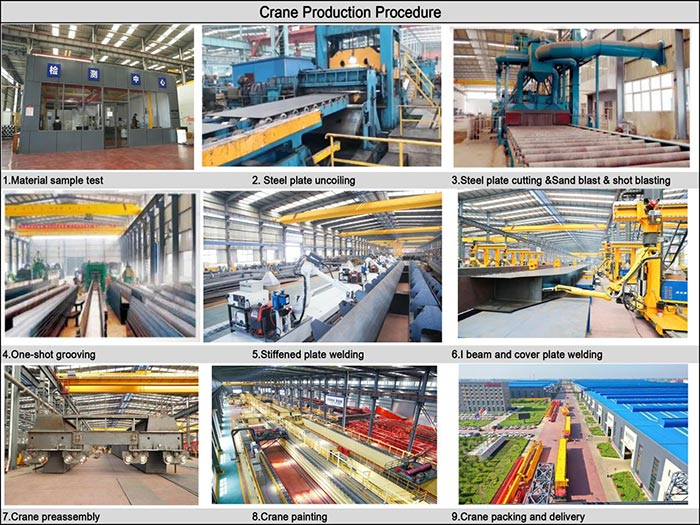
Crane production procedure
1. Demand Analysis and Design: Communicate with customers to understand their operating environment, load requirements, working frequency and other requirements. According to the requirements, design the overall plan of the crane, including the main beam, end beam, trolley, lifting system and other major components. Carry out detailed structural design to ensure structural strength and stability.
2. Material procurement: Purchase steel, aluminum alloy, transmission components, electrical components, etc. required for manufacturing cranes. According to design requirements, purchase standardized components such as motors, reducers, brakes, etc. Carry out quality inspection on purchased materials and components to ensure compliance with standards and design requirements.
3. Manufacturing and processing: Cut, weld and process steel to manufacture main beams and end beams. Manufacture components such as the frame, guide wheels, lifting devices of the trolley. Produce or assemble various components of the electrical control system, including contactors, relays, sensors, etc. Weld steel structure components to ensure connection strength and stability. Perform mechanical processing on components, such as drilling, milling and turning, to ensure the size and accuracy of components. Paint or coat components to protect steel from corrosion and wear.
4. Assembly: Assemble the main beam, end beam, trolley, lifting system and other components according to the design drawings. Connect the electrical control system to the mechanical components, including cable routing, wiring and debugging. Perform preliminary system debugging, check the coordination and function of each component, and ensure the normal operation of the system.
5. Testing: Perform static load test to check the load-bearing capacity and stability of the crane under static conditions. Perform dynamic operation test to check the performance of the crane in actual operation, including lifting, lowering, running speed, etc. Test the functions of various safety devices, such as limit switches, overload protection, sound and light alarm systems, etc.
6. Inspection and acceptance: Conduct a comprehensive inspection of the manufacturing and assembly quality of the crane to ensure compliance with design standards and technical requirements. Perform functional acceptance with the customer to confirm that the performance and functions of the crane meet the customer’s needs.
Global Market

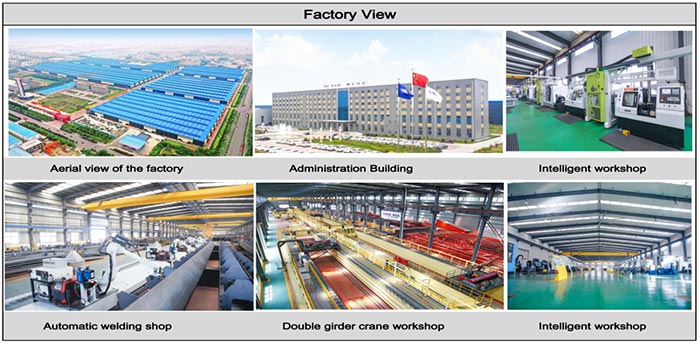
Workshop view
The company has installed an intelligent equipment management platform, and has installed 310 sets (sets) of handling and welding robots. After the completion of the plan, there will be more than 500 sets (sets), and the equipment networking rate will reach 95%. 32 welding lines have been put into use, 50 are planned to be installed, and the automation rate of the entire product line has reached.