
Description
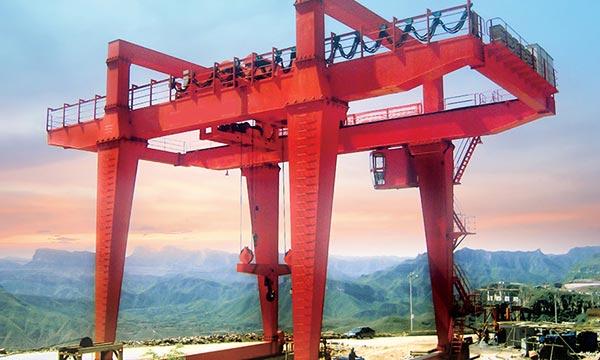
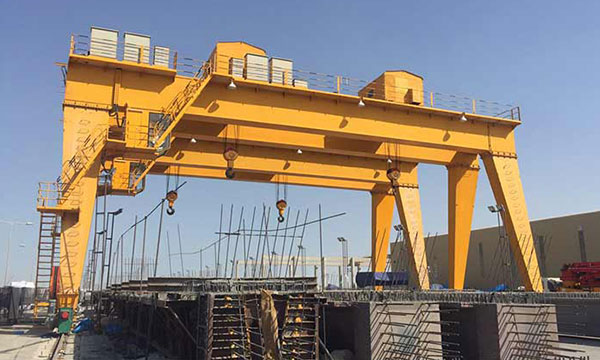
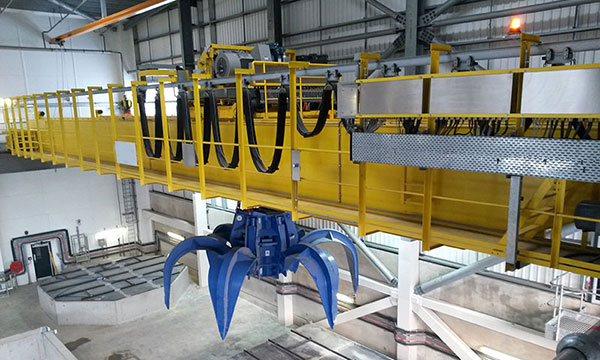
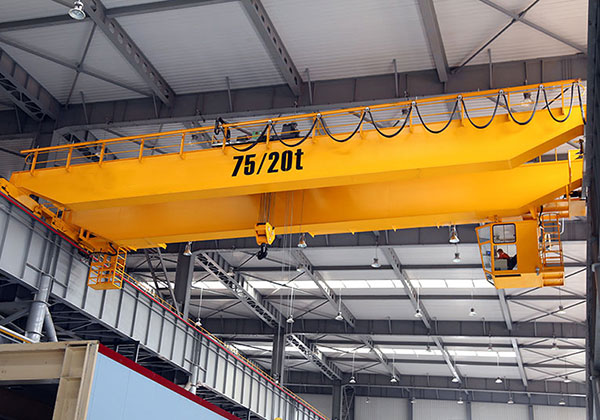
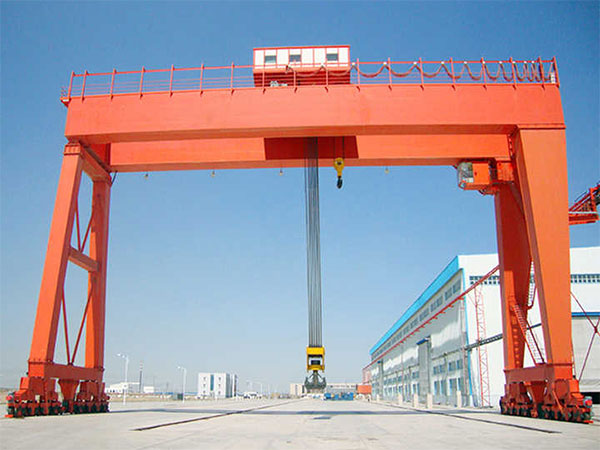
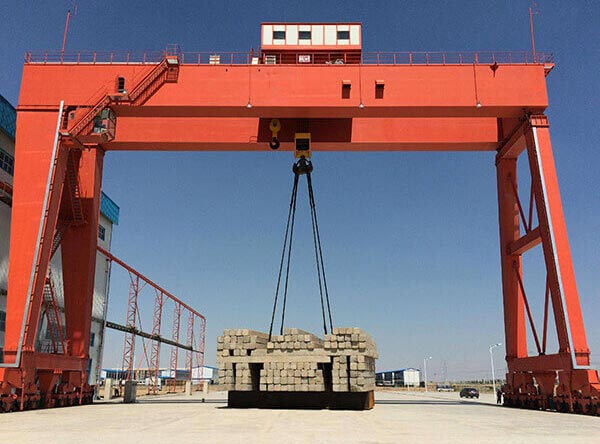
1. The rated lifting capacity of double-beam gantry cranes is usually between 5 tons and 500 tons, and they are suitable for lifting and handling large and heavy materials. Its double-beam structure provides higher load-bearing capacity and stronger stability, which is suitable for heavy industrial occasions.
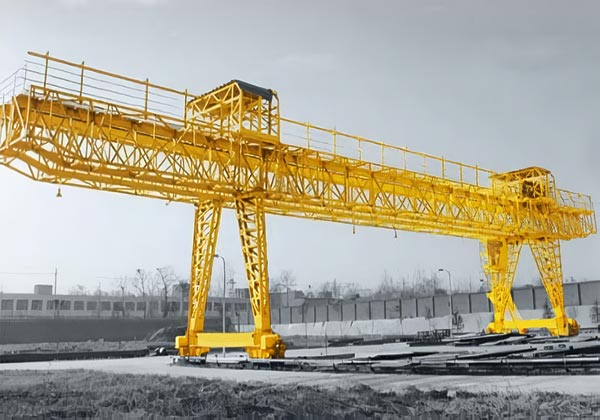
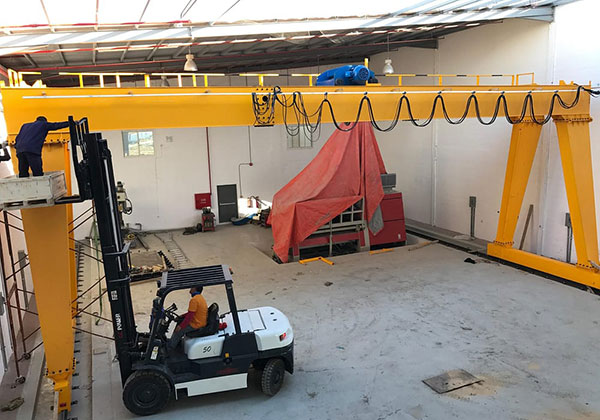
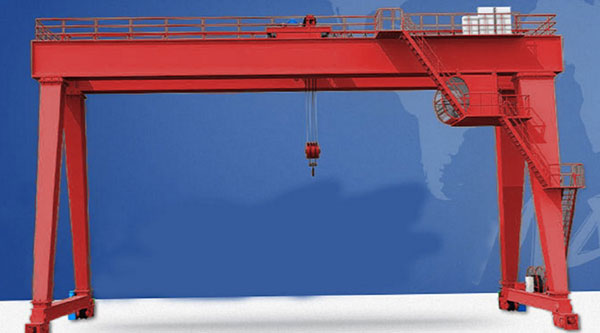
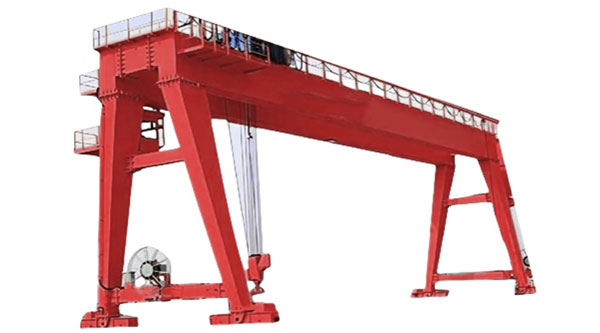
2. The main beam of the crane consists of two parallel beams, which improves the load-bearing capacity and stability of the crane. The two ends of the crane are connected to the ground through support legs to form a door-shaped frame, which provides a larger working space. The main beam and support legs are usually made of high-quality steel to ensure the long-term stability and safety of the equipment under high loads.
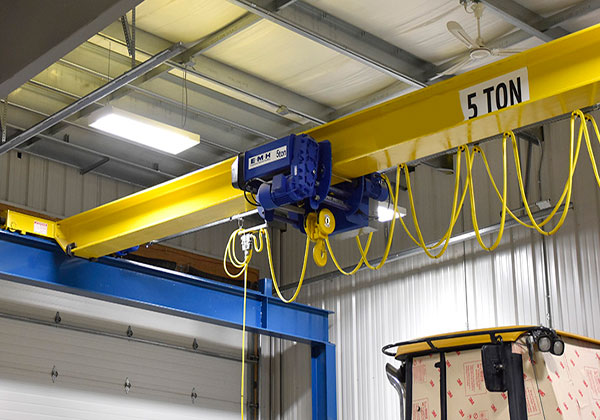
3. The crane is generally equipped with an electric hoist or electric trolley, which moves along the double-beam track to achieve horizontal and vertical transportation of heavy objects. The crane walks along the ground or elevated track to cover a wide range of working areas.
4. The parameters of the crane such as span, lifting height, and running speed can be customized according to user needs to adapt to different working environments. Special functions such as windproof and corrosion-resistant can be optionally equipped, which are suitable for harsh working environments.
5. The crane is equipped with an advanced electrical control system, which is easy to operate and supports remote control and automated operations. Equipped with multiple safety devices such as overload protection, limit switch, emergency stop button, etc. to ensure safety during operation.
Components of portable gantry crane 5 ton
1. Main girder
- The main beam of a double-beam gantry crane consists of two parallel steel beams, which are usually box-shaped or I-shaped to provide higher strength and rigidity. The main beam is usually made of high-strength steel plates through an automatic welding process to ensure welding quality and the stability of the overall structure. Reinforcement plates are set inside or outside the main beam to further enhance the strength of the beam and prevent the beam from deforming under high load.
- The main beam usually uses high-strength structural steel such as Q235B and Q345B to ensure safety and reliability under heavy loads. During the manufacturing process, the surface of the main beam is usually treated by sandblasting, rust removal, painting, etc. to improve its corrosion resistance and adapt to various harsh working environments.
- The design of the main beam determines the maximum load-bearing capacity of the crane. The double-beam structure can usually support loads ranging from 5 tons to 500 tons. The double-beam structure provides good anti-twisting performance to ensure stability when lifting heavy objects. The span of the main beam can be customized according to specific needs, usually ranging from 10 meters to 40 meters to meet the requirements of different operating scenarios.
- The main beam is usually equipped with a limit switch to prevent the trolley or hook from exceeding the safe range during operation. For double-beam gantry cranes used outdoors, a windproof locking device is also installed on the main beam to prevent the crane from shifting or overturning in strong winds.
- According to the specific needs of the customer, the length, span, height and load-bearing capacity of the main beam can be customized to adapt to different operating conditions. The installation of the main beam must undergo strict debugging and testing to ensure that all parameters meet the design requirements during use and that the operation is stable and reliable.
2. Lifting System
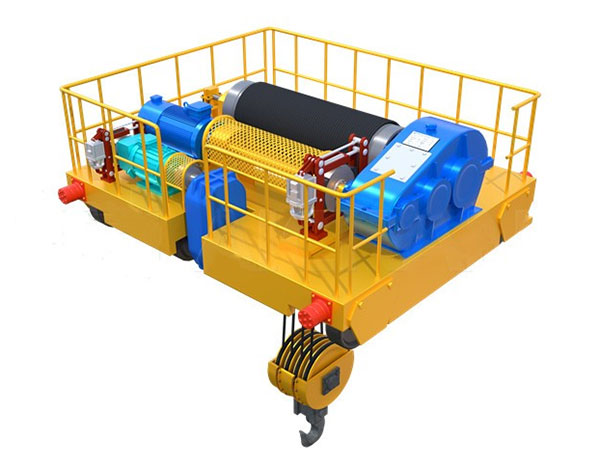
- The core component of the lifting system, usually composed of a motor, a reducer, a drum, a wire rope and a hook. The electric hoist is installed on the trolley between the double beams and is responsible for vertically lifting and lowering the weight. The wire rope is used to carry and transmit the lifting force. It is usually woven from high-strength steel wire and has strong tensile strength and wear resistance. The wire rope is wound around the drum, and the rotation of the drum is driven by the motor to control the lifting height of the weight. The hook device is connected to the end of the wire rope and is used to grab or fix the weight. The hook is usually designed with an anti-unhooking device to ensure safety.
- The motor is the power source of the lifting system. It usually uses a three-phase asynchronous motor to provide stable and reliable power output. The power of the motor depends on the rated lifting weight and lifting speed of the crane. The reducer is connected between the motor and the drum, which is responsible for reducing the output speed of the motor and increasing the torque to lift heavier objects. The lifting motor is equipped with a brake to quickly and safely keep the weight in the desired position when stopping the operation.
- The operator can directly control the lifting system through the handle or button. Manual control is usually simple and intuitive, suitable for operations with high precision requirements. Or through a wireless remote control, the operator can remotely control the operation of the lifting system within a certain range, which enhances the flexibility and safety of the operation. In addition, some high-end cranes are equipped with an automated control system, which can automatically complete the lifting task according to the preset program, improving the efficiency and safety of the operation.
- When the lifting weight exceeds the rated load, the overload protection device will automatically cut off the power supply or sound an alarm to prevent equipment damage and accidents. Limit switches are set at both ends of the lifting mechanism. When the lifting reaches the maximum or minimum height, the limit switch will automatically stop the lifting action to prevent over-range operation. In extreme cases, such as wire rope breakage or drum failure, the anti-fall device can be quickly locked to prevent the heavy object from falling.
3. End Carriages
- The end beams are usually transverse steel structures connected to both ends of the main beam to form the frame structure of the crane. They mainly bear the weight of the main beam and the lifting device, and transfer these loads to the ground or track. The end beams are generally designed with box-shaped or I-shaped sections to increase the strength and rigidity of the structure and to withstand bending and torsion under high load conditions.
- The end beams are connected to the main beams by high-strength bolts or welding to ensure the firmness and stability of the connection. The end beams are usually made of high-quality steel, such as Q235B or Q345B, to ensure their durability and fatigue resistance under high loads.
- In order to improve corrosion resistance, the surface of the end beams is usually sandblasted, painted or galvanized, which is very important when used outdoors or in humid environments. The main function of the end beams is to support and connect the main beams and transfer the load to the ground or track through the walking mechanism. Its design directly affects the overall structural stability and working efficiency of the crane.
- The end beams are usually equipped with wheels or drive devices, which are responsible for the walking of the crane on the track. These devices usually include driving wheels, driven wheels, reducers and motors, etc. The end beam walks on the track through the wheels to ensure that the crane maintains the correct direction and position during operation and prevents deviation.
4. Crane traveling mechanism
The crane running mechanism of a double-beam gantry crane is the system responsible for the movement of the entire crane on the track. The design and performance of this mechanism directly affect the operating stability, movement accuracy and overall operating efficiency of the crane. The following is a detailed introduction to the crane running mechanism of a double-beam gantry crane:
- Drive device: including motor, reducer and coupling, responsible for providing the travel power of the trolley. The motor transmits power to the wheel set through the reducer to drive the wheel to move on the track.
- Wheel set: The trolley running mechanism is usually equipped with multiple wheels, including driving wheels and driven wheels. The wheels are generally made of high-strength alloy steel to ensure their wear resistance and load-bearing capacity under high loads.
- Transmission system: including components such as gears, bearings and drive shafts to ensure that power is evenly distributed from the motor to each wheel to ensure the smooth operation of the crane.
- Track: The trolley running mechanism moves on the track, which is usually composed of steel rails or embedded steel plates and must have good flatness and durability.
5. Trolley traveling mechanism
- The trolley frame is the main structure of the trolley, which is usually welded with high-strength steel plates. The frame carries the lifting mechanism and its load, and evenly distributes the weight on the trolley wheels.
- Wheel set: The trolley is usually equipped with four or more wheels. The wheels can be rigid or elastic wheels, which move smoothly along the track of the main beam. The wheel set consists of a driving wheel and a driven wheel, and the driving wheel is powered by a drive device.
- Drive device: It includes an electric motor, a reducer, and a coupling, etc., which drives the wheels through gears or chains to make the trolley move on the main beam. The drive device is installed on the trolley frame to provide smooth horizontal movement.
- Track: The trolley moves along the track on the main beam. The track is usually made of steel, with high precision and wear resistance, ensuring the smoothness and accuracy of the trolley movement.
6. Crane wheel
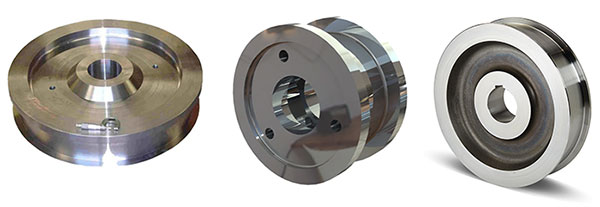
The wheels of a double-girder gantry crane are an important part of the entire crane’s mobile system, and are mainly responsible for supporting the weight of the crane and enabling it to move smoothly along the track. In a double-girder gantry crane, the wheels are usually divided into driving wheels and driven wheels. The driving wheel provides power through the drive device to move the crane along the track; the driven wheel passively follows and assists the crane’s movement. Most double-girder gantry cranes use rigid wheels made of high-strength materials, which are suitable for bearing heavy loads and providing stable travel on the track. In some occasions where shock absorption or noise reduction is required, wheels with an elastic layer may be used. Such wheels can absorb impact force to a certain extent and reduce vibration and noise during operation.
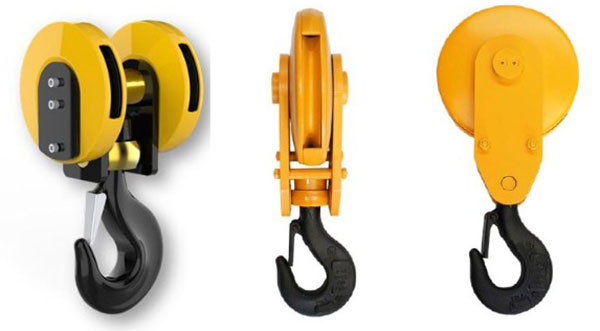
7. Crane hook
- Types of hooks: Single hooks are the most common type of hooks and are suitable for most general lifting operations. Single hooks are simple in design and easy to use, and are usually used to lift lighter or medium-weight objects. Double hooks consist of two symmetrical hooks and are usually used for heavier objects or objects that require two-point lifting. The double hook design provides a more even load distribution and is suitable for lifting large, long objects. Swivel hooks are equipped with a slewing device that allows the hook to rotate freely during the lifting process, preventing the sling from kinking and the object from rotating uncontrollably. Swivel hooks are usually used in situations where precise positioning is required.
- The surface of the hook is usually subjected to heat treatment such as quenching and tempering to improve its surface hardness and wear resistance. In addition, the surface of the hook may also be galvanized or painted to enhance its corrosion resistance and adapt to various environments.
- The hook is usually designed in a C-shape or S-shape to better grasp and stabilize the hoisted objects. The shape of the hook body is precisely designed to ensure that stress is evenly distributed under various load conditions to prevent fracture caused by stress concentration.
- When using the hook, the operator should ensure that the hook is completely hung on the lifting point and the force direction of the hook is parallel to the hook body to avoid oblique pulling or lateral force to prevent deformation or damage to the hook. The hook should always be used within its rated load range. Overloading may cause permanent deformation or fracture of the hook, resulting in serious accidents.
8. Motor
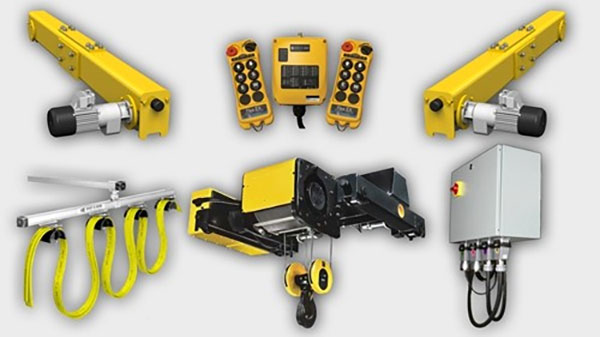
- The commonly used motor type for double-beam gantry cranes is a three-phase asynchronous motor. It generates a rotating magnetic field through the magnetic field of three-phase alternating current, drives the rotor to rotate, and outputs mechanical energy. In some specific applications, DC motors may be used, especially in cranes that require precise speed control or work in harsh environments. DC motors have good speed regulation performance and high starting torque.
- The power of the motor depends on the load capacity and operating requirements of the crane. The power of the hoisting motor is usually larger to ensure that it can provide sufficient lifting force, while the power of the running motor is selected according to the operating requirements of the trolley or trolley.
- The torque of the motor is directly related to its performance under different load conditions. The hoisting motor requires a higher starting torque to overcome the static inertia of the heavy object and achieve smooth lifting.
- Different operating scenarios have different requirements for the speed of the motor. The hoisting motor usually requires a lower speed for precise control, while the running motor requires a higher speed for fast movement.

9. Sound and light alarm system & limit switch
- Sound and light alarm system: The sound and light alarm system reminds the operator of the working status or abnormal conditions of the crane by emitting sound and flashing lights. This system is usually activated when the equipment approaches the limit position or fails, helping the operator to take timely measures. The system can issue different types of warning signals, such as high-pitched alarms, flashing lights, etc., to distinguish different warning levels (such as warnings, emergency stops).
- Some systems have multi-level alarm functions, which can emit different types of sound and light signals according to different abnormal conditions (such as overload, overspeed). The alarm system can be adjusted according to actual needs, such as adjusting the loudness of the sound, the frequency and color of the light signal, etc., to adapt to different working environments and needs.
- Limit switch: The limit switch is used to limit the range of motion of the crane to prevent the main beam, trolley, car and other components from exceeding the safe working range. By setting the upper and lower limit switches, the equipment can be ensured to operate safely within the predetermined range. The limit switch can prevent the crane from colliding with other equipment or structures during operation, reducing the risk of accidents.
- The setting and adjustment of the limit switch can be carried out according to actual needs to ensure that the equipment operates within a safe range. The equipment’s range of motion and load characteristics must be considered during setup to accurately set the switch trigger point. Limit switches are usually designed to be waterproof, dustproof, and corrosion-resistant to adapt to a variety of working environments and improve their durability and reliability.

10. Safety Devices
- Overload protection device: monitors the load of the crane to prevent it from exceeding the rated load, thus avoiding equipment damage or accidents. When an overload condition is detected, the overload protection device will sound an alarm and automatically stop the operation of the crane.
- Emergency stop device: In an emergency, the operator can immediately stop the operation of the crane through the emergency stop device to avoid accidents. The emergency stop device usually disconnects the power supply and cuts off the power supply to the crane.
- Motor overheat protection: monitors the operating temperature of the motor to prevent motor damage or fire risks caused by overheating. When the motor temperature exceeds the safe range, it automatically stops and sounds an alarm.
- Braking system: when the equipment stops or the load is suspended, keep the load stable to prevent slipping or shaking. Ensure that the load does not move accidentally when the crane is not in working condition.
- Insurance device: prevents the operator from starting the crane when the equipment is not ready, reducing operating errors. Ensure that the equipment does not start accidentally when it is under maintenance or in non-working condition.
- Electrical safety device: protects the electrical system from electrical faults such as short circuit and overload, preventing electrical fire or equipment damage. Automatically cut off power in case of electrical failure to protect equipment and personnel.
- Wind protection device: In outdoor or windy environments, prevent the impact of wind on the crane to ensure stable operation of the equipment. Prevent the load from swinging due to wind to ensure safe operation.
11. Control Mode
The control method of a double-girder gantry crane is an important aspect to ensure safe, precise and efficient operation of the crane. The following are common control methods and their characteristics for double-girder gantry cranes:
- Ground control: The ground control system allows the operator to operate on the ground near the crane, and is usually used to directly control the operation of the crane.
- Wireless remote control: Allows the operator to operate in a remote area near the crane, providing greater operational flexibility and safety.
- Automated control: Controls the various operations of the crane through computer programs to improve operating efficiency and accuracy.
- Hybrid control: Combines ground control, cab control, wireless remote control and other methods to provide more flexible operating options.

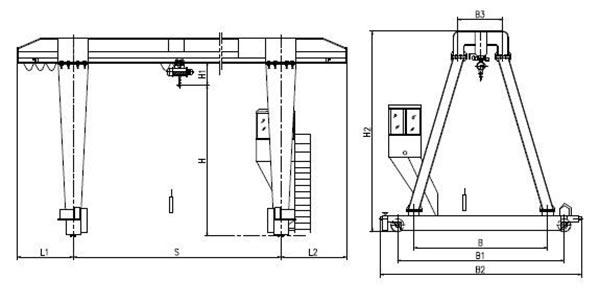
12. Sketch
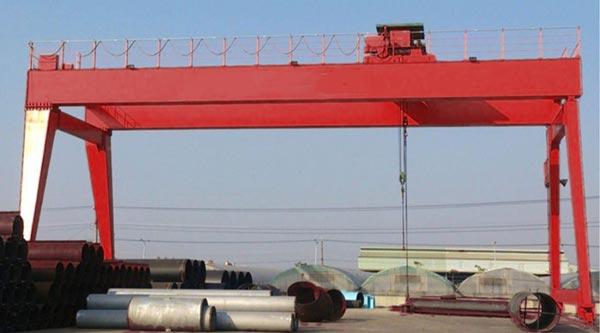
Application of portable gantry crane 5 ton
Double girder gantry cranes are widely used in many industries and places due to their superior load-bearing capacity and wide range of applications. The following are some of the main application areas of double girder gantry cranes:
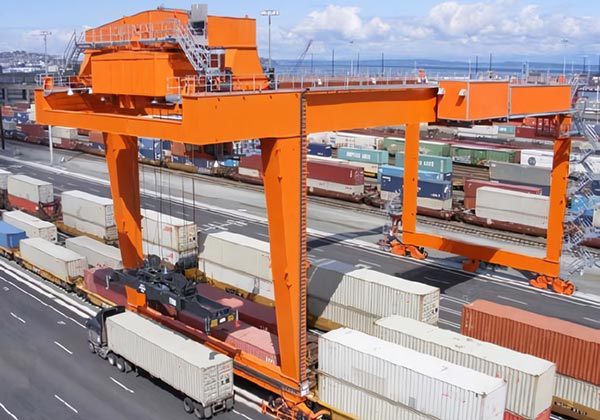
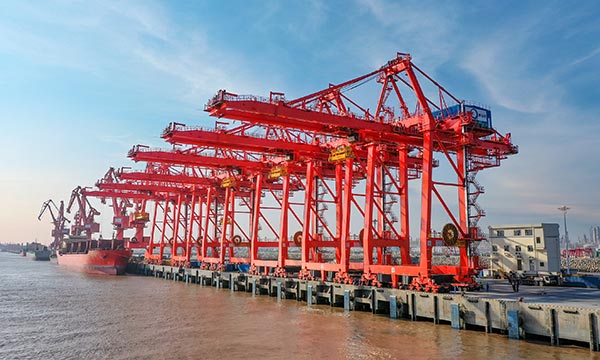
- Ports and docks: used for loading and unloading containers, especially in large ports and container terminals, which can handle the loading and unloading of containers quickly and efficiently. In port and dock areas, it is used to transfer various bulk goods such as coal, ore and liquid chemicals.
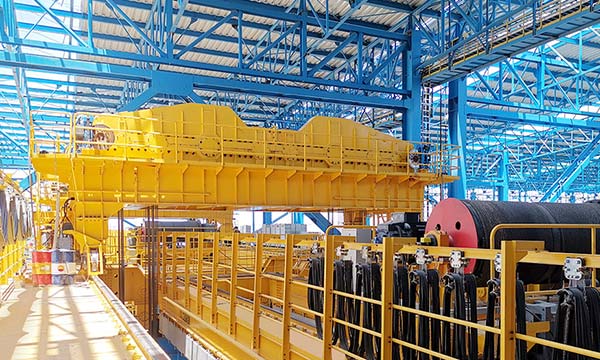
- Iron and steel metallurgical industry: used in steel smelters and steel processing plants to carry hot-rolled and cold-rolled steel coils, steel plates and other products. Handle furnace charges, waste and other heavy objects.
- Building and construction: used to lift building materials such as concrete, steel bars, prefabricated components on construction sites. In large construction projects, carry and install heavy machinery and equipment.
- Manufacturing industry: used to carry large machines and heavy components in manufacturing workshops. Handle various accessories and materials on production lines.
- Energy industry: used to install and maintain large power generation equipment such as generator sets and transformers. Carry and install heavy equipment and pipelines in the oil and gas industry.
- Transportation facilities: used for installation and transportation of heavy components in bridge and tunnel construction. Carry and install large transportation facilities and equipment such as signal lights and monitoring systems.
Advantages of portable gantry crane 5 ton
- Strong load capacity: Double-beam gantry cranes have two main beams, which can provide higher load capacity than single-beam cranes. Suitable for lifting large and heavy goods.
- Adapt to large span requirements: Double-beam gantry cranes are designed to cover larger spans and are suitable for wide working areas such as large warehouses, ports and manufacturing workshops.
- Improve production efficiency: It can quickly and efficiently complete the lifting and moving tasks of heavy objects, and improve the operating efficiency of the production line.
- Outdoor and indoor applicability: Double-beam gantry cranes are suitable for use in outdoor environments such as ports and warehouses and indoor environments such as manufacturing workshops, and can adapt to different working conditions. It can operate stably on uneven ground and is suitable for various complex terrains and working environments.
- Multiple safety protections: It is equipped with a variety of safety devices, such as limit switches, overload protection, sound and light alarm systems, etc., to ensure the safety of equipment and operators. The double-beam design increases the stability of the structure and reduces safety hazards caused by uneven loads or equipment failures.
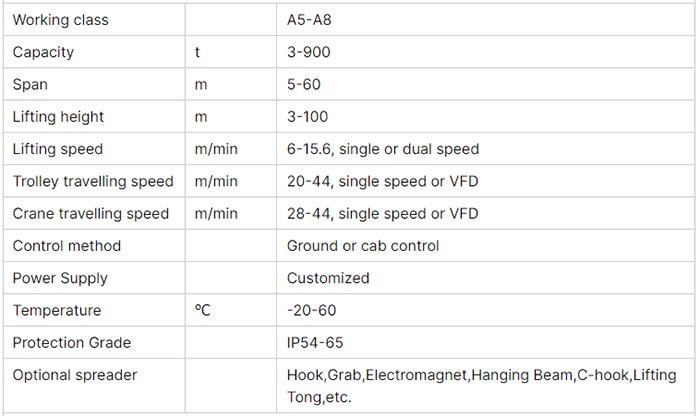
Main technical data
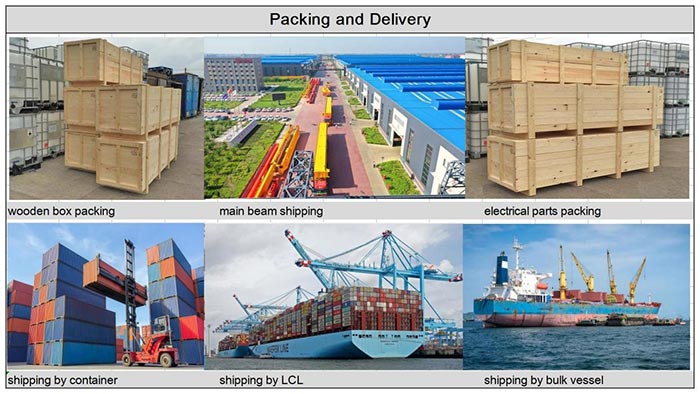
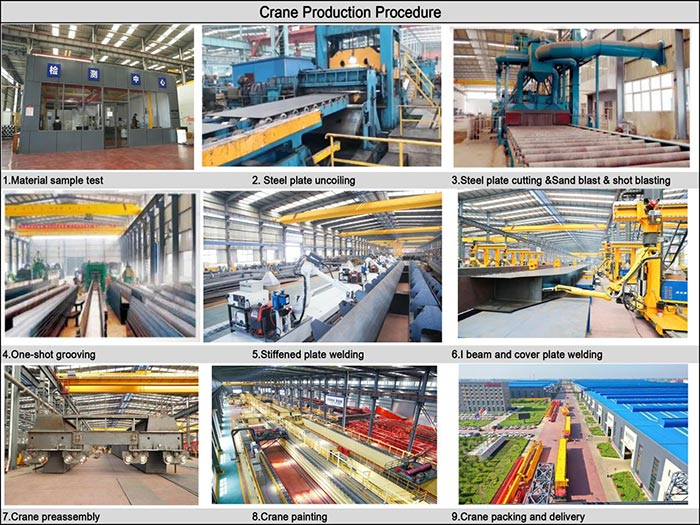
Crane production procedure
The production process of double girder gantry crane involves multiple steps, from design to manufacturing to final testing and delivery. The following are the general steps for producing double girder gantry crane:
- Demand analysis and design: Communicate with customers to clarify the specific needs of the crane, including load capacity, span, height, working environment, etc. Engineers develop detailed design plans based on the needs, including structural design, load calculation, material selection and technical specifications of the crane.
- Material procurement: Select appropriate materials such as steel, aluminum, wear-resistant materials, etc. according to design requirements. Purchase the required materials from qualified suppliers to ensure that the material quality meets the standards.
- Structural manufacturing: Cut and shape the raw materials into various components in the design drawings, such as main beams, end beams, support frames, etc. Use welding technology to weld the cut parts into structural components for preliminary assembly.
- Machining: Finish the welded and assembled parts, including drilling, milling and surface treatment, to meet the design accuracy requirements. Manufacture mechanical components such as lifting mechanisms, running mechanisms, wheels and hooks.
- Electrical system installation: Install electrical components such as motors, control systems, sensors, limit switches, etc. Carry out cabling and wiring to ensure the normal operation of the electrical system.
- System integration: Integrate all mechanical components, electrical systems and control systems to assemble a complete crane. Carry out preliminary commissioning to check whether each system functions properly, such as lifting, operation, braking, etc.
- Safety inspection: Carry out detailed safety inspection to ensure that the crane meets all safety standards and regulations. Carry out load testing to verify the load-bearing capacity and stability of the crane.
- Final commissioning and acceptance: Carry out final commissioning based on the test results to ensure that all systems are working properly. Carry out final acceptance with the customer to ensure that the crane meets all design requirements and specifications.
Global Market

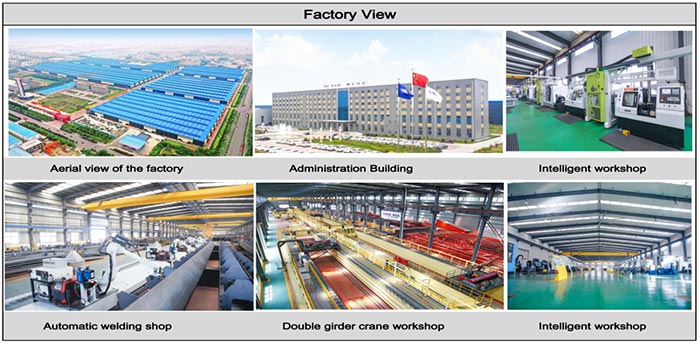
Workshop view
The company has installed an intelligent equipment management platform, and has installed 310 sets (sets) of handling and welding robots. After the completion of the plan, there will be more than 500 sets (sets), and the equipment networking rate will reach 95%. 32 welding lines have been put into use, 50 are planned to be installed, and the automation rate of the entire product line has reached.