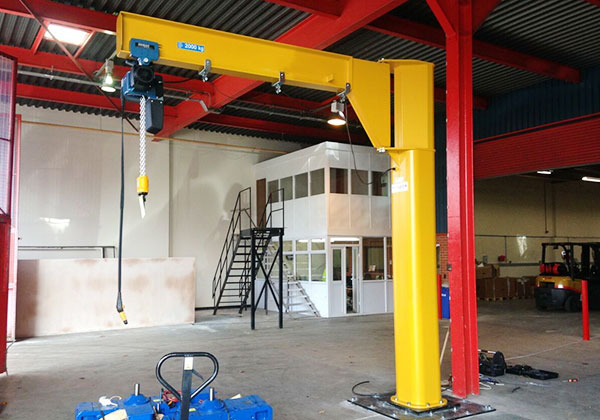

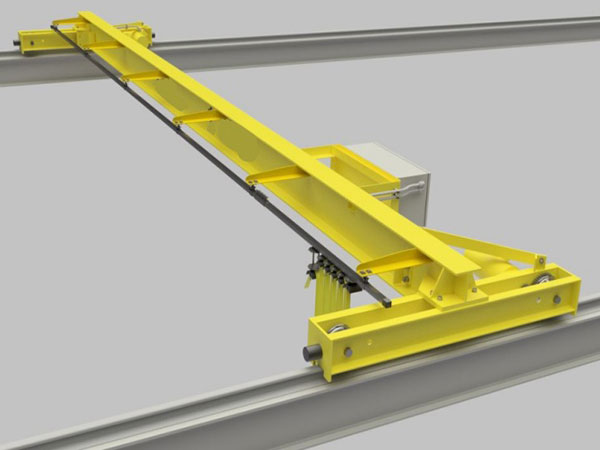
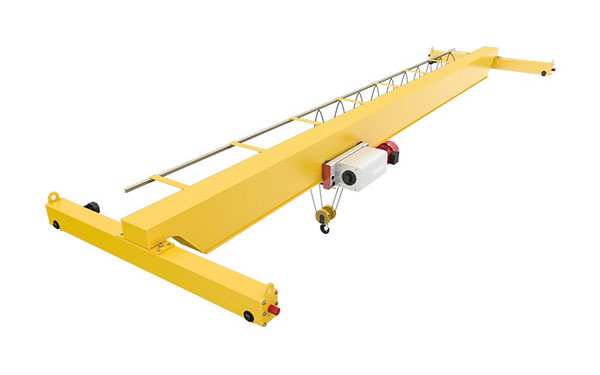

Description
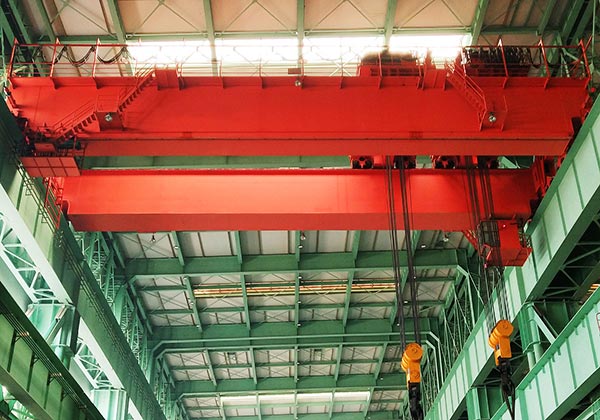
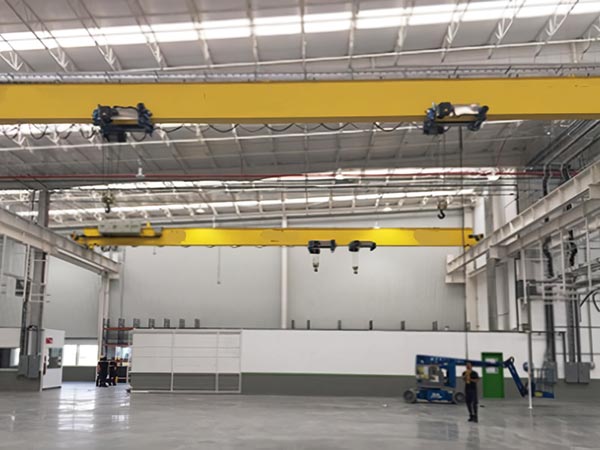
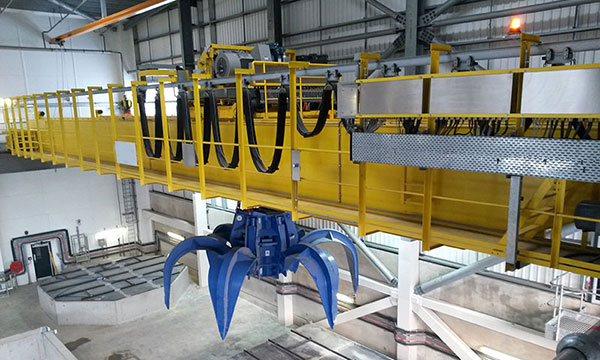
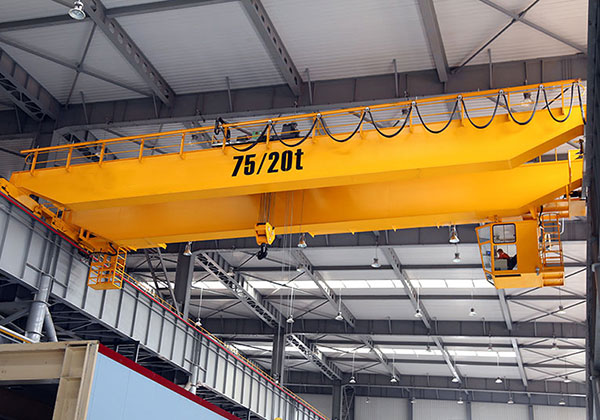
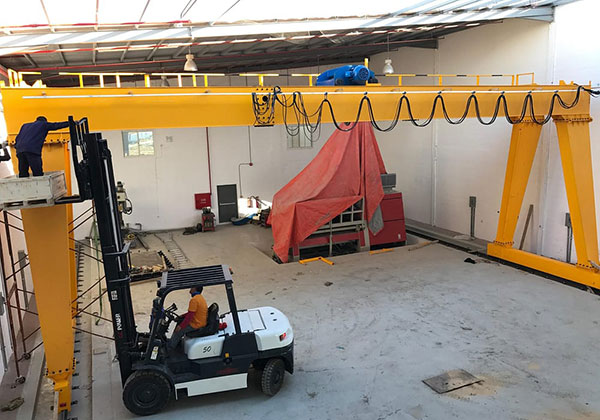
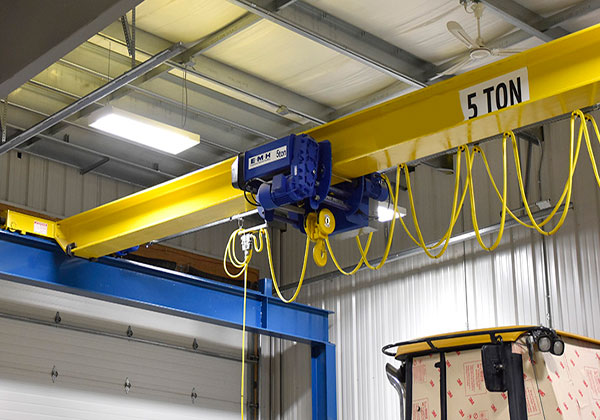
1. Single-beam bridge cranes consist of a main beam and two end beams. Their main function is to suspend and move loads in factories, workshops or warehouses through the main beam. It usually runs along the support rails of the workshop and can cover the entire working area of the workshop.
2. The single-beam design of this crane makes the crane structure relatively simple, reducing manufacturing and maintenance costs. It is suitable for working environments with small and medium-sized loads and smaller spans, which is economical and practical. It can be operated by ground control, cab control or wireless remote control, and is easy to operate.
3. It can cover a wide working area in the workshop and adapt to different operating needs. The structure is simple, and the installation and maintenance process is relatively easy, reducing downtime and maintenance costs. It is equipped with various safety devices such as limit switches and overload protection to ensure safe operation.
4. When choosing a single-beam bridge crane, the following factors need to be considered:
- Load capacity: Select the appropriate crane specifications according to the maximum load that needs to be transported.
- Span: Determine the span of the crane according to the width of the workshop and the working area.
- Working environment: Consider the special requirements of the working environment, such as temperature, humidity and corrosiveness.
- Control mode: Select the appropriate control mode according to the operator’s needs, such as ground control, cab control or wireless remote control.
Components of single beam suspension crane
1. Main girder
- The main part of the main beam, usually made of high-strength steel, has sufficient strength and rigidity to bear the load. Used to enhance the rigidity and stability of the main beam, including symmetrical support structures, stiffeners and crossbeams.
- The common main beam design is a box-type structure, consisting of two upper and lower steel plates and a reinforcing plate in the middle, with good load-bearing capacity and stability. Another design is the I-beam, which has high bending stiffness and deformation resistance and is suitable for various load conditions.
- The main beam is generally made of high-strength steel, such as Q235, Q345, etc. These materials have excellent mechanical properties and fatigue resistance. In some special applications, alloy steel or other high-performance materials may be used to meet special load and working environment requirements.
- Cut the raw materials into the required size and shape, and perform preliminary forming according to the design drawings.The various parts of the main beam are welded together to form a complete beam body. The welding process and quality need to be strictly controlled during the welding process to ensure the strength and integrity of the weld. The welded main beam is heat treated to eliminate welding stress and improve overall strength. Perform surface treatment on the main beam, such as sandblasting, rust removal and painting, to improve corrosion resistance and appearance.

2. Lifting System
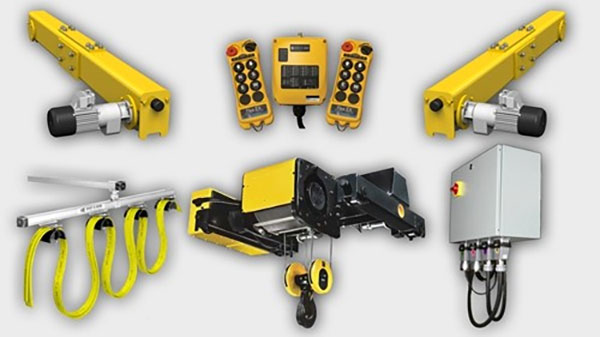
- The lifting system of a single-beam bridge crane is mainly composed of several parts, such as a motor, a hoist, a drum, a wire rope or chain, a hook or a grab.
- The rotation of the motor drives the hoist to rotate, causing the drum or sprocket to roll, and the wire rope or chain to wind or unwind on the drum. The wire rope or chain lifts or lowers the load through the movement of the drum. The load moves in the vertical direction with the support of the wire rope or chain. The operator adjusts the operation of the motor through the control system to achieve precise control of the load.
- The motor and hoist are reasonably designed to provide stable and smooth lifting operations and reduce vibration and swaying of the load. High-power motors and high-quality wire ropes or chains increase lifting speed and efficiency.
- The design of the lifting system is convenient for daily maintenance and overhaul, reducing the probability of failure and maintenance costs. Key components such as motors, brakes and limit switches are easy to inspect and replace.

3. End Carriages
- The end beam is usually made of steel and has sufficient strength to support the main beam of the crane and all additional components. Including support frames, connecting plates and fixings for connecting the main beam and the support rail.
- The common end beam design of single-beam bridge crane is a box-type structure, formed by welded or bolted steel plates, which has high strength and stability. Another design is an I-beam, which has high bending stiffness and good load-bearing capacity.
- The main function of the end beam is to support the main beam and transfer the load of the main beam to the support rail in the workshop. The end beam is connected to the support rail through wheels and axles, allowing the crane to move smoothly along the rail in the workshop.
- The design of the end beam takes into account strength and stability, and can effectively support the main beam and load, ensuring the stable operation of the crane. Good structural design and manufacturing process ensure the stability of the end beam during use, reducing failures and maintenance costs.
4. Crane traveling mechanism
- Motor: Provides power to drive the trolley mechanism, allowing the crane to move longitudinally on the track of the workshop. Commonly used motors include AC motors and DC motors, and the power and specifications are selected according to the load requirements and working environment of the crane.
- Wheels and axles: The wheels are installed at the bottom of the trolley and connected to the motor and transmission through the axle to support and rotate the crane. The wheels are usually made of high-strength steel and the surface is heat-treated to improve wear resistance. The axle is connected to the wheel to transmit the power of the motor.
- Transmission: Transmits the rotational motion of the motor to the wheel to drive the trolley along the track. The transmission includes gearboxes, couplings, and chains/belts, etc. The specific selection depends on the design requirements and the specifications of the crane.
- Trolley frame: Supports wheels, axles, motors and transmissions to ensure the stability of the entire trolley mechanism. The trolley frame is usually made of steel, and the structural design should take into account strength and rigidity to support the overall weight and operating load of the crane.
- Control system: Controls the start, stop and speed adjustment of the trolley mechanism. It includes control panel, buttons, switches, speed regulator and cables, etc., which are used to operate and monitor the operating status of the trolley.
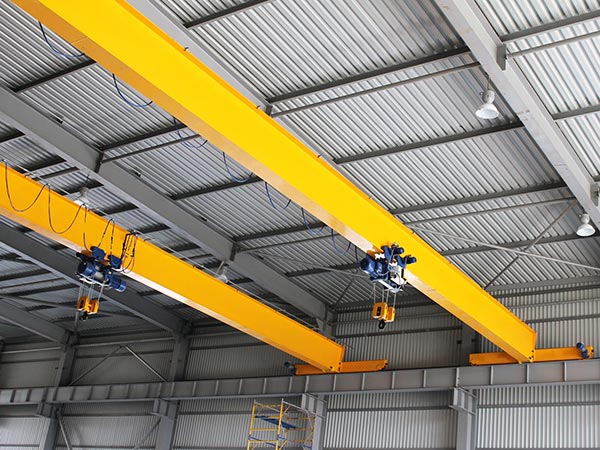
5. Trolley traveling mechanism
Working principle of the trolley running mechanism:
- Motor drive: Start the motor, and the motor transmits the rotational motion to the wheel through the transmission device. The rotation of the motor turns the wheel, thereby pushing the trolley to move along the main beam track.
- Motion control: The speed of the motor is adjusted by the control system to achieve acceleration, deceleration and constant speed operation of the trolley. The operating system can adjust the direction of movement of the trolley to achieve forward or reverse movement along the main beam.
- Stability and safety: The design should ensure that the trolley runs smoothly on the track and reduce vibration and noise. Equipped with various safety devices, such as limit switches and brakes, to prevent the trolley from exceeding the track or accidents.
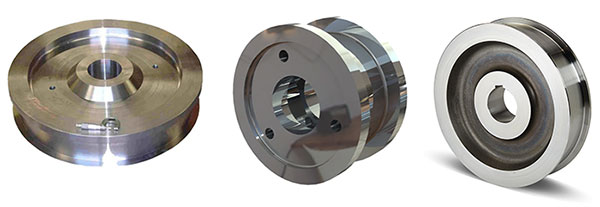
6. Crane wheel
The wheel of a single-girder bridge crane is a key component that supports and drives the crane to move on the track. The wheel consists of a wheel body, bearings, axles and wheel seats, and is driven by an electric motor to achieve smooth movement of the crane on the main beam. The manufacturing of the wheel requires the use of high-strength materials, precision processing and strict quality control to ensure its load-bearing capacity and durability. The installation and maintenance of the wheel also requires regular inspection and maintenance to keep the crane running efficiently and safely.
7. Crane hook
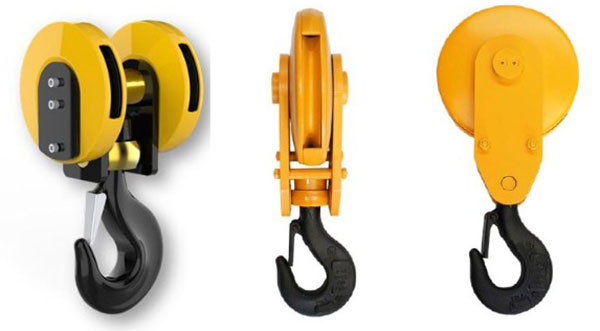
The hook of a single-girder bridge crane is an important component for hanging and lifting loads. The design and performance of the hook directly affect the operating efficiency and safety of the crane. The following is a detailed introduction to the hook of a single-girder bridge crane:
- Material selection: The hook body usually uses high-strength alloy steel, such as 35CrMo, 42CrMo, etc., which has good strength and toughness. Some hook parts may be treated with wear-resistant materials to improve durability and extend service life.
- Processing steps: Cut the steel into the basic shape of the hook and process it into shape. Heat treat the hook body to improve its strength and wear resistance. The heat treatment process needs to be strictly controlled to ensure the mechanical properties of the hook body. Assemble the hook body, hook seat and rotating mechanism together, and debug and inspect them.
- Quality control: Check the size and shape of the hook to ensure that it meets the design requirements. Perform strength test on the hook to verify its load-bearing capacity and durability. Check the function and performance of the safety device to ensure that it can effectively prevent the load from falling off.
- Installation: Install the hook to the lifting mechanism and ensure that the connection between the hook seat and the lifting mechanism is stable. Ensure that the hook’s rotating mechanism and hook body are well aligned to ensure smooth operation.
- Maintenance: Regularly check the wear of the hook, the operating status of the rotating mechanism, and the working condition of the safety device. Lubricate the rotating mechanism and other moving parts, and repair any damaged or worn parts in time.
8. Motor
- Efficiency: High-quality motors provide stable power output to ensure efficient operation of the crane. High-quality motors have low noise during operation and improve the working environment.
- Economy: High-efficiency motors reduce energy consumption and operating costs. The maintenance and repair costs of high-quality motors are relatively low.
- Flexibility: The motor can provide different speeds and torques to meet the needs of different working scenarios of the crane. It is suitable for single-beam bridge cranes of various models and specifications, providing flexible power support.

9. Sound and light alarm system & limit switch
- Sound and light alarm system: The sound and light alarm system is mainly used to issue warnings during the operation of the crane to remind the operator and surrounding personnel of potential dangerous situations. By emitting sound and flashing light signals, the crane is prevented from colliding with other equipment or personnel. When the crane approaches the limit position or an abnormal situation occurs, the system will automatically trigger an alarm to enhance the safety of the operation.
- Working principle: When the crane approaches the set dangerous area or encounters an abnormal situation during operation, the sound and light alarm system is automatically triggered and emits sound and light signals. The sound and light signals can be transmitted to the operator and surrounding personnel to remind them to take necessary safety measures.
- Limit switch: The limit switch is used to limit the range of motion of the crane to prevent the crane components from exceeding the safe working area and avoid collision or damage. When the crane components approach or reach the set limit position, the limit switch will automatically cut off or change the circuit to protect the crane and the load.
- Working principle: The limit switch detects the position change of the crane components through mechanical contact or sensors. When the components approach or reach the set limit position, the limit switch triggers a signal. The signal emitted by the limit switch is used to cut off the circuit or trigger an alarm to prevent the crane from continuing to move and protect the equipment and load.

10. Safety Devices
- Brake system: Ensure that the load does not slide down during lifting or moving. In the event of motor failure or shutdown, the brake system ensures that the load remains in the current position.
- Over-high/under-low position protection: Protect crane components from damage beyond the design range. Prevent the lifting mechanism from colliding with the upper structure when it rises to the limit position. The limit switch is used to detect the highest and lowest positions of the lifting mechanism. The alarm device sounds an alarm when approaching the limit position to alert the operator.
- Power-off protection device: In the event of an emergency, it can quickly cut off the power supply and stop all operations of the crane. Provide protection in the event of electrical failure or other emergencies to reduce the risk of accidents.
- Overheat protection: Monitor the temperature of the motor and other key components to prevent equipment damage or fire due to overheating. Ensure that the equipment operates within the normal temperature range to reduce failures and maintenance costs.
- Wind protection device: Prevent unnecessary movement of the load and crane in a windy environment. Increase the stability of the crane under wind force to avoid operational errors or accidents caused by wind force.
- Safety protection system: Comprehensive management of all safety devices of the crane to ensure the effectiveness of the overall safety system. Real-time monitoring of all parts of the crane to automatically detect and handle potential safety risks.
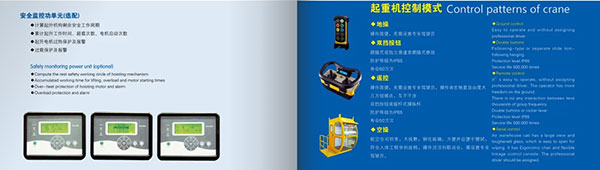
11. Control Mode
The control method of a single-girder overhead crane determines the convenience and accuracy of operation. Different control methods are suitable for different operating requirements and operating environments. The following are common control methods and their characteristics for single-girder overhead cranes:
- Manual control: The operator controls the various functions of the crane through a manual control device. Suitable for occasions that require basic operations and simple control. Easy to operate, suitable for simple crane operation needs.
- Electric control: The electric control system is used to achieve precise operation of the crane. Suitable for occasions that require frequent operation and high-precision control. Suitable for complex operation needs, providing precise control and feedback.
- Remote control: The operator controls the crane through a remote control at a distance from the crane. Improves the flexibility of operation and is suitable for occasions where space is limited or remote monitoring is required. Allows operators to operate at a distance from the crane to avoid approaching dangerous areas.
- Automatic control: Automatic control and monitoring are achieved through a computer system or PLC (programmable logic controller). Reduce manual intervention and improve operational accuracy and efficiency.
- Centralized control: Multiple cranes are managed and operated uniformly through a centralized control system. Improve the coordination between multiple cranes and optimize the operation process. Ability to uniformly dispatch multiple cranes to improve overall operation efficiency.
12. Sketch

Application of single beam suspension crane
Single girder bridge cranes are widely used in various industrial and warehousing environments due to their superior performance and economy. The following are some of the main application areas of single girder bridge cranes:
- Factory workshop: used to move raw materials and finished products between production lines. Helps to move parts and semi-finished products in the assembly area to improve assembly efficiency. Can quickly and accurately move heavy objects to increase the speed of production lines.
- Warehousing and logistics: used for loading, unloading, sorting and stacking of goods in warehouses. Handle and manage various goods and materials in logistics centers. Can handle large quantities of goods and improve the efficiency of warehousing and logistics operations.
- Machinery manufacturing: Handle large machine tools and heavy materials in machine tool workshops. Help install and maintain large machinery and equipment. Can accurately move and position heavy machinery parts to ensure the accuracy of processing and maintenance.
- Construction site: Handle construction materials such as steel, concrete blocks, etc. on construction sites. Support various lifting and handling tasks during construction. Can perform a variety of operations on construction sites to improve construction efficiency.
- Shipyards and ports: Used for loading, unloading and moving ship parts and heavy objects in shipyards. Handle containers and cargo in ports. Can handle heavy cargo and parts in ports and shipyards.

Advantages of single beam suspension crane
- Simple structure: The structure of the single-girder bridge crane is relatively simple, which reduces the complexity of production and maintenance, thereby reducing costs. Due to the simple structure, the installation process is relatively quick and convenient.
- Small footprint: The design of the single-girder bridge crane allows efficient operation in a smaller space, which is suitable for environments with limited space. It can work efficiently in limited spaces such as workshops and warehouses without occupying a large amount of ground space.
- Efficient performance: Even in a smaller space, the single-girder bridge crane can still provide high lifting capacity and efficiency. Lifting and moving operations can be completed quickly, improving work efficiency.
- Economical: Compared with double-girder bridge cranes, single-girder bridge cranes have lower costs, but still provide good performance and reliability. Design optimization reduces energy consumption and reduces operating costs.
- Wide range of applications: It can be used in a variety of environments and applications, such as workshops, warehouses and assembly lines. The working parameters of the crane can be adjusted as needed to adapt to different operating requirements.
- High operational safety: It is usually equipped with various safety devices such as overload protection, limit switches and alarm systems to ensure safe operation. The structural design ensures stability during operation and reduces the occurrence of accidents.

Main technical data

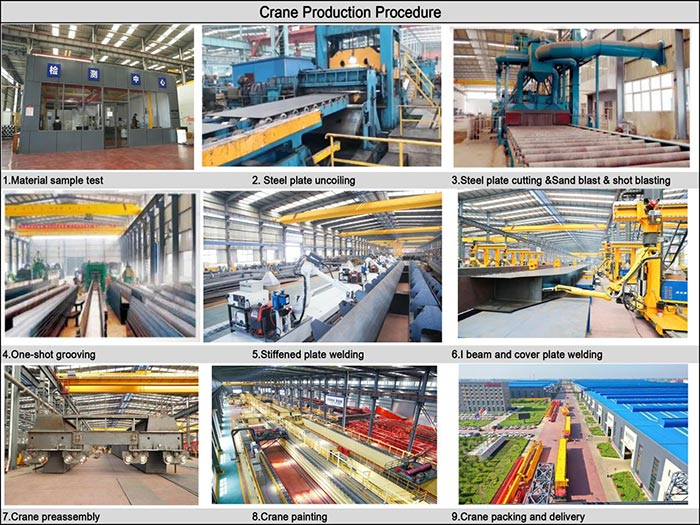
Crane production procedure
- Design stage: Determine the basic parameters of the crane according to the specific needs of the customer, such as lifting capacity, span, lifting height and working environment. Assess the environmental conditions of the installation site, including space limitations, power supply, etc. After the design drawings are completed, internal review and customer confirmation are carried out to ensure that all technical requirements and standards are met.
- Material procurement: List all required materials and parts according to the design drawings, including steel, motors, controllers, wire ropes, etc. Select reliable suppliers to purchase high-quality raw materials and components. After receiving the materials, quality inspection is carried out to ensure that all materials meet the design specifications and quality standards. Qualified materials are put into storage according to the production plan and are ready to enter the production stage.
- Processing and manufacturing: According to the design drawings, the steel is cut and cut to form the basic shape of structural components such as the main beam and end beam. The cut steel is welded and assembled into components such as the main beam and end beam. The welding process must ensure accuracy and strength. After welding is completed, the welds and surfaces are polished and polished to ensure smoothness and defect-free.
- Surface treatment: All steel structure components are sandblasted to remove rust and oxide layers on the surface. Apply primer to enhance corrosion resistance and prepare for final painting.
- Assembly: Pre-assemble the main components such as the main beam, end beam, trolley, and trolley running mechanism, and check the fit and installation accuracy. Perform functional tests on the pre-assembled parts to ensure good fit between the components. Assemble all components into a complete crane and ensure that each component is installed in place. Complete the final connection of all electrical components to ensure the integrity and functionality of the electrical system.
- Final inspection: Perform a comprehensive inspection of the entire machine to ensure that all components, systems, and functions are working properly. Organize internal acceptance and customer acceptance to ensure that the crane meets all technical requirements and quality standards.
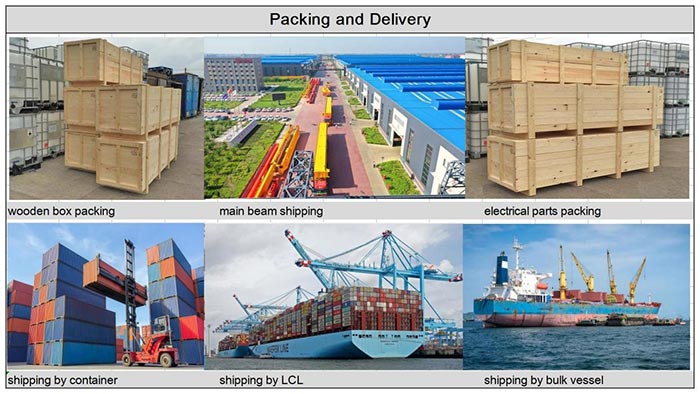
- Packaging and transportation: Safely package the crane and its components to prevent damage during transportation. Mark clear product information, installation instructions, and precautions on the packaging. Arrange appropriate transportation methods according to customer requirements and delivery locations. Ensure that the equipment is stable and safe during loading and transportation.
- Installation and commissioning: After transporting the crane to the customer’s site, use appropriate lifting equipment to install it in place. Adjust the installation accuracy of the crane to ensure track alignment and smooth operation. After the installation is completed, on-site commissioning and trial operation are carried out to ensure that the equipment can operate normally under actual working conditions. The customer conducts final acceptance of the equipment to confirm that the equipment meets all requirements and can be put into use.
Global Market

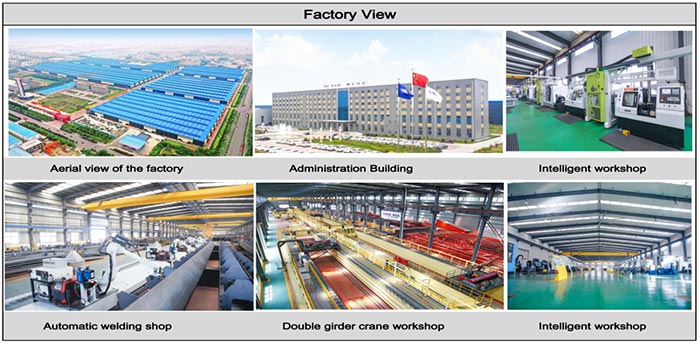
Workshop view
The company has installed an intelligent equipment management platform, and has installed 310 sets (sets) of handling and welding robots. After the completion of the plan, there will be more than 500 sets (sets), and the equipment networking rate will reach 95%. 32 welding lines have been put into use, 50 are planned to be installed, and the automation rate of the entire product line has reached.

Get A Free Quote
[formidable id=3